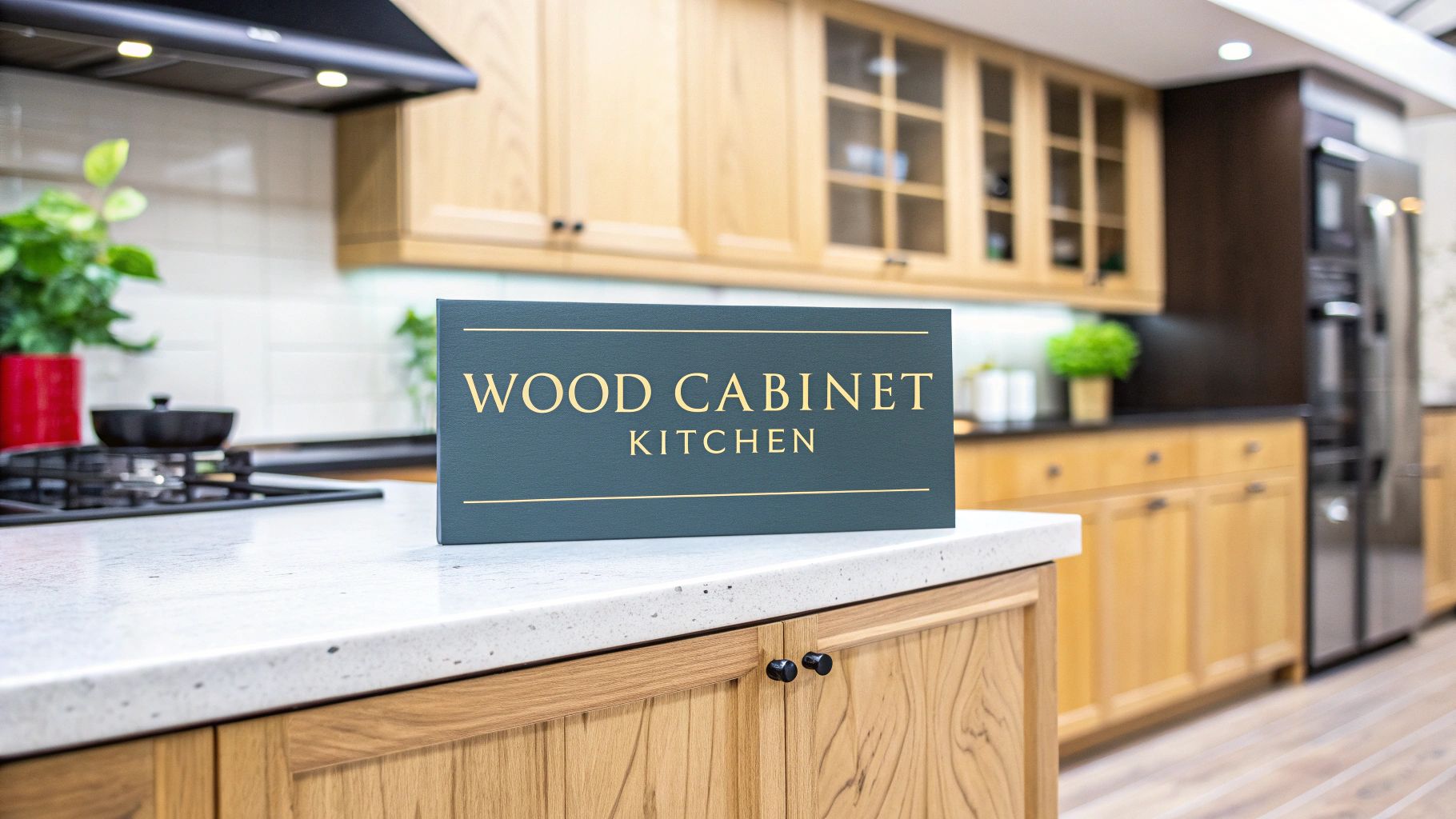
A wood cabinet kitchen offers a classic appeal that is hard to beat, rooted in a natural warmth and durability that synthetic materials can't replicate. The unique grain in every piece of wood ensures no two kitchens look exactly the same, creating a space that feels personal, inviting, and truly yours.
Why Wood Cabinets Create a Timeless Kitchen
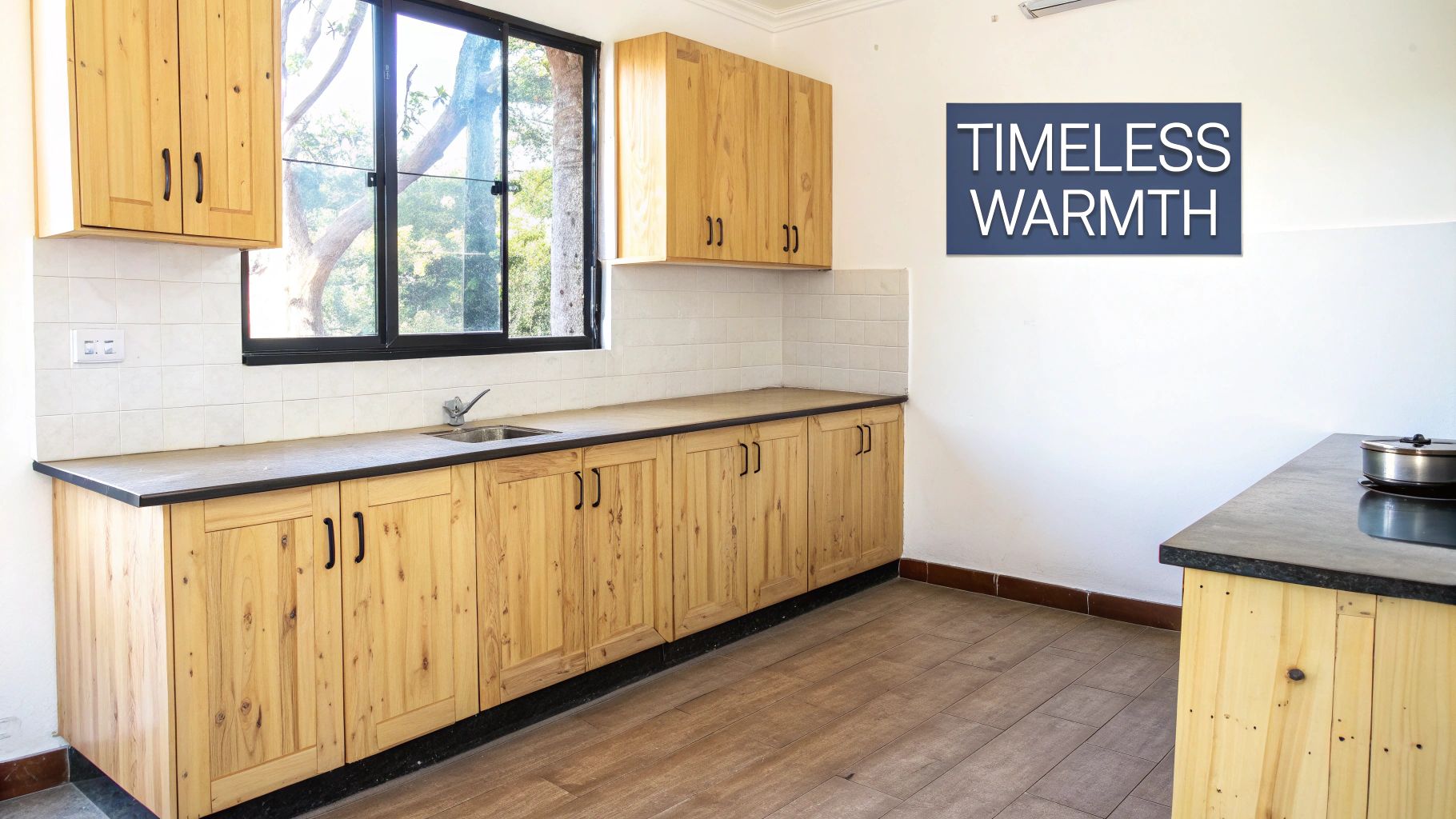
In a world of fast-moving design trends, wood is a constant. Its popularity isn't just about looks; it’s about the tangible feeling of warmth and authenticity it brings into a home. We've seen a clear shift among our Singapore clients, who are increasingly drawn to materials that feel genuine and create a welcoming atmosphere.
Unlike laminate or acrylic, which offer flat, uniform surfaces, wood tells a story through its grain, knots, and subtle shifts in colour. This character adds a layer of depth that makes a kitchen feel less like a sterile showroom and more like the true heart of the home.
The Practical Appeal of Natural Materials
The desire to connect with nature is a powerful force in interior design right now. A wood cabinet kitchen fills that need, grounding a space with a sense of calm and stability. But the benefits go well beyond aesthetics:
- Longevity and Durability: Properly crafted solid wood cabinets can last for decades. They can be sanded down and refinished to match new styles, making them a smart, long-term investment. For example, a 15-year-old oak kitchen can be given a completely new lease of life with a modern paint colour and new hardware, saving thousands over a full replacement.
- Versatility in Style: From a rustic farmhouse vibe to a sleek, modern aesthetic, wood is incredibly adaptable. The choice of wood species, finish, and hardware can completely transform its look. For instance, light maple with flat-panel doors and no visible hardware creates a minimalist Scandinavian look, while dark walnut with raised panels and brass knobs feels classic and luxurious.
- Increased Home Value: A quality wood kitchen is almost always seen as a premium feature by potential homebuyers. It is an upgrade that can genuinely contribute to your property's resale value.
A Growing Local Craftsmanship Scene
Singapore's wooden furniture market has shown incredible resilience and growth lately. This move toward domestic production means we’re less reliant on imports, leading to faster turnarounds for custom projects.
It also supports our local artisans who are skilled in working with sustainable hardwoods like oak and maple—excellent choices for Singapore's humid climate. You can get a deeper dive into the local furniture market on IndexBox.io. This trend is empowering homeowners to get a truly bespoke space built with exceptional local talent.
Choosing the Right Wood for Singapore's Climate
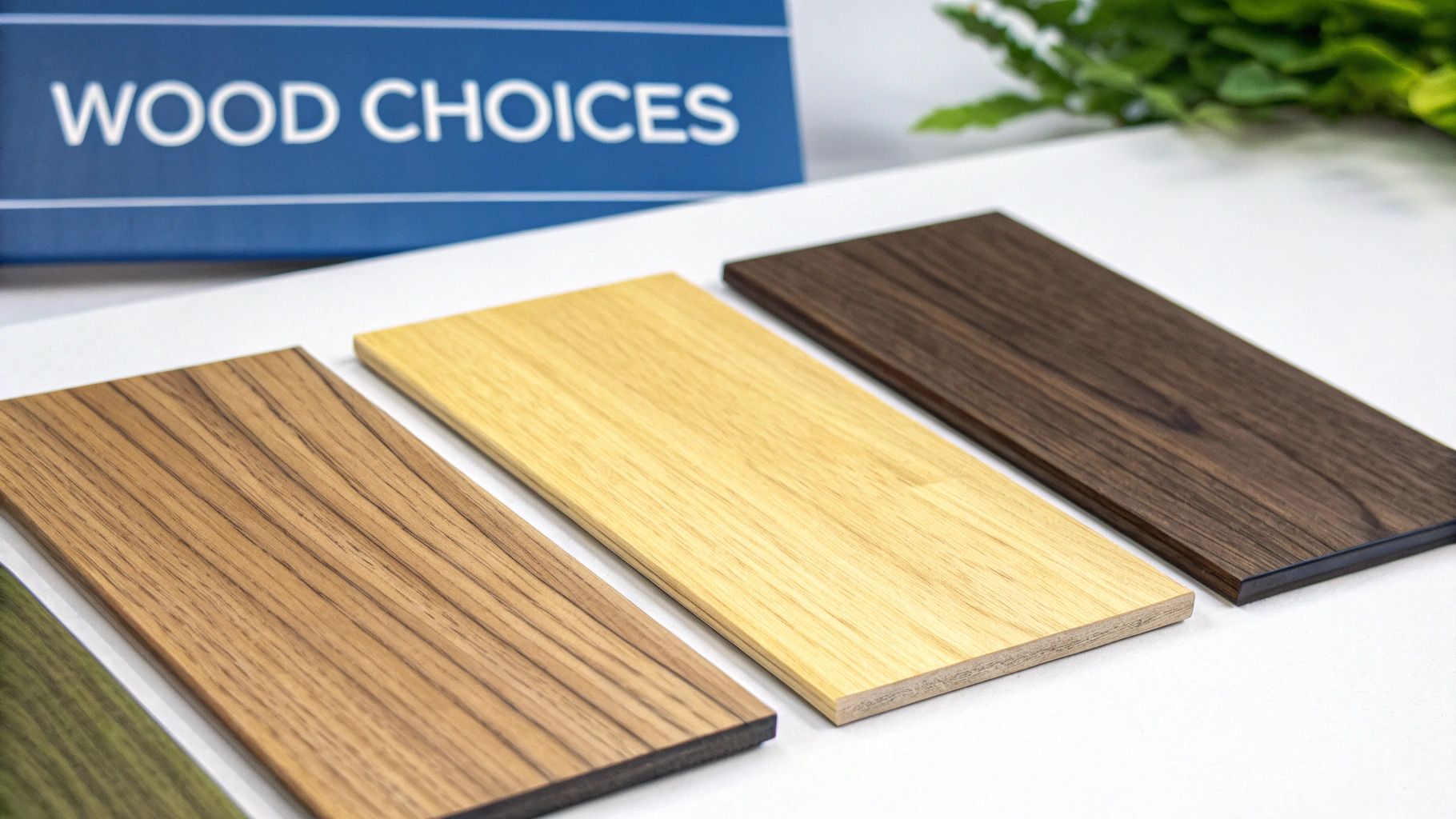
Picking the right material for a wood cabinet kitchen in Singapore is about more than just colour; it's a strategic move against our relentless humidity. The wrong wood can lead to warping, swelling, and a tragically short life for your kitchen. The key is to choose a wood species that’s naturally built to handle moisture and constant temperature swings.
Think of it this way: each type of wood has its own personality. Some, like teak, are naturally dense and oily, acting as if they’re wearing a permanent raincoat. Others, like oak, are incredibly tough but need a solid protective finish to keep moisture out. Understanding these traits is the first step to ensuring your kitchen not just looks amazing on day one but stays functional for years to come.
Top Hardwood Contenders for Local Kitchens
When we design a kitchen, we almost always steer our clients toward hardwoods celebrated for their stability and resilience. While countless options exist, a select few consistently prove their mettle in Singapore's demanding climate. These timbers strike that perfect balance between durability, looks, and everyday practicality.
Here are the main players we recommend and work with:
- Teak: Often hailed as the gold standard for humid environments. Its high natural oil content makes it fantastically resistant to moisture, rot, and even pests like termites.
- Oak: A timeless classic, loved for its brute strength and gorgeous, prominent grain patterns. As a very hard and durable wood, it's perfect for a busy, high-traffic kitchen.
- Maple: Valued for its smooth, fine grain and lovely light, creamy colour. Maple gives a clean, uniform look and is incredibly sturdy, holding up well against dents and dings.
- Walnut: A premium choice, prized for its rich, deep brown hues and elegant, flowing grain. It brings a luxurious, sophisticated vibe to a room.
Each wood’s grain is like a fingerprint; no two pieces will ever be exactly the same. This natural variation is what gives a solid wood kitchen its incredible depth and character—something manufactured materials just can't imitate.
Practical Comparisons for Your Home
Making the final call means weighing the unique pros of each wood against your lifestyle, personal taste, and budget. A family with young kids, for example, might prioritise the sheer toughness of oak. Someone looking to create a show-stopping statement kitchen might be drawn to the luxurious feel of walnut.
To make this decision easier, here's a breakdown of how these popular woods stack up, specifically for a Singaporean home.
Comparing Popular Woods for Kitchen Cabinets in Singapore
This table gives you a side-by-side look at the key characteristics of our top wood choices. Consider what matters most to you—is it low maintenance, a specific look, or ultimate durability?
| Wood Species | Appearance and Grain | Durability and Humidity Resistance | Maintenance Level | Best For |
|---|---|---|---|---|
| Teak | Rich, golden-brown colour that deepens with age. Straight, consistent grain with a naturally oily feel. | Excellent. High oil content provides superior natural resistance to moisture, rot, and insects. | Low. Requires minimal upkeep, but occasional oiling can maintain its lustre. | Homeowners prioritising maximum durability and low maintenance in a high-moisture area. |
| Oak | Light to medium brown with a very distinct, pronounced grain pattern (often called "cathedral" grain). | Very Good. A dense, strong hardwood that resists wear and tear well. Proper sealing is essential to prevent moisture absorption. | Medium. Requires a quality finish to protect the open grain from moisture and staining. | High-traffic kitchens where strength and a classic, textured wood look are desired. |
| Maple | Creamy white to light reddish-brown colour. Features a subtle, smooth, and fine grain for a clean, uniform look. | Good. It's a very hard and dense wood, resistant to dents. Must be well-sealed to avoid damage from moisture. | Medium. Its light colour can show dirt, so regular cleaning is needed. Prone to yellowing if not finished correctly. | Modern and minimalist kitchens where a bright, clean, and smooth appearance is key. |
| Walnut | Deep, chocolate brown with lighter streaks and a smooth, often wavy or straight grain. | Good. A strong and stable hardwood. Its darker colour helps hide minor wear and requires a good protective finish. | Low to Medium. Its rich colour is forgiving of small stains. Becomes lighter over time with sun exposure. | Creating a luxurious, high-end look with a touch of warmth and sophistication. |
Ultimately, this comparison should help you align the wood's natural talents with your kitchen dreams, ensuring you choose a material that you'll love for the long haul.
Understanding How Your Cabinets Are Built
The true value of a wood cabinet kitchen is often hidden in plain sight. While the wood species gives your kitchen its character, it’s the construction that determines whether it will stand the test of time. Knowing a few key principles can help you spot the difference between an average set of cabinets and true, lasting craftsmanship.
Many homeowners get caught up in the solid wood versus wood veneer debate. The truth is, both have a place in high-quality carpentry. The secret is knowing how and where each one is used.
Solid wood is exactly what it sounds like: a single piece of timber. It's typically used for cabinet doors, frames, and drawer fronts. Its biggest advantage is its raw strength and the fact that you can sand and refinish it multiple times over its long life.
Wood veneer is a thin slice of real wood bonded to a stable core like plywood. Far from being a cheap shortcut, high-quality veneer is a strategic choice. It allows for stunning, consistent grain patterns that would be incredibly difficult or expensive to achieve with solid wood alone, especially on large surfaces like pantry doors or end panels.
The Unsung Hero: The Cabinet Box
Doors and drawer fronts get all the glory, but the cabinet box—also called the carcass—is the structural foundation holding your entire kitchen together. This is where your choice of material is absolutely critical, especially in Singapore’s humid climate.
We build our cabinet boxes exclusively with high-quality plywood. Cheaper materials like particleboard or MDF don't stand a chance against moisture. Plywood is made from multiple layers of wood veneer glued together, with the grain of each layer running perpendicular to the next. This cross-graining method gives it incredible structural stability and makes it far more resistant to warping, sagging, and moisture damage.
A well-built cabinet is like a well-built house: its strength comes from a solid foundation. In a kitchen, the plywood cabinet box is that foundation, ensuring everything stays square and functional for decades.
Why Joinery Is a Mark of Quality
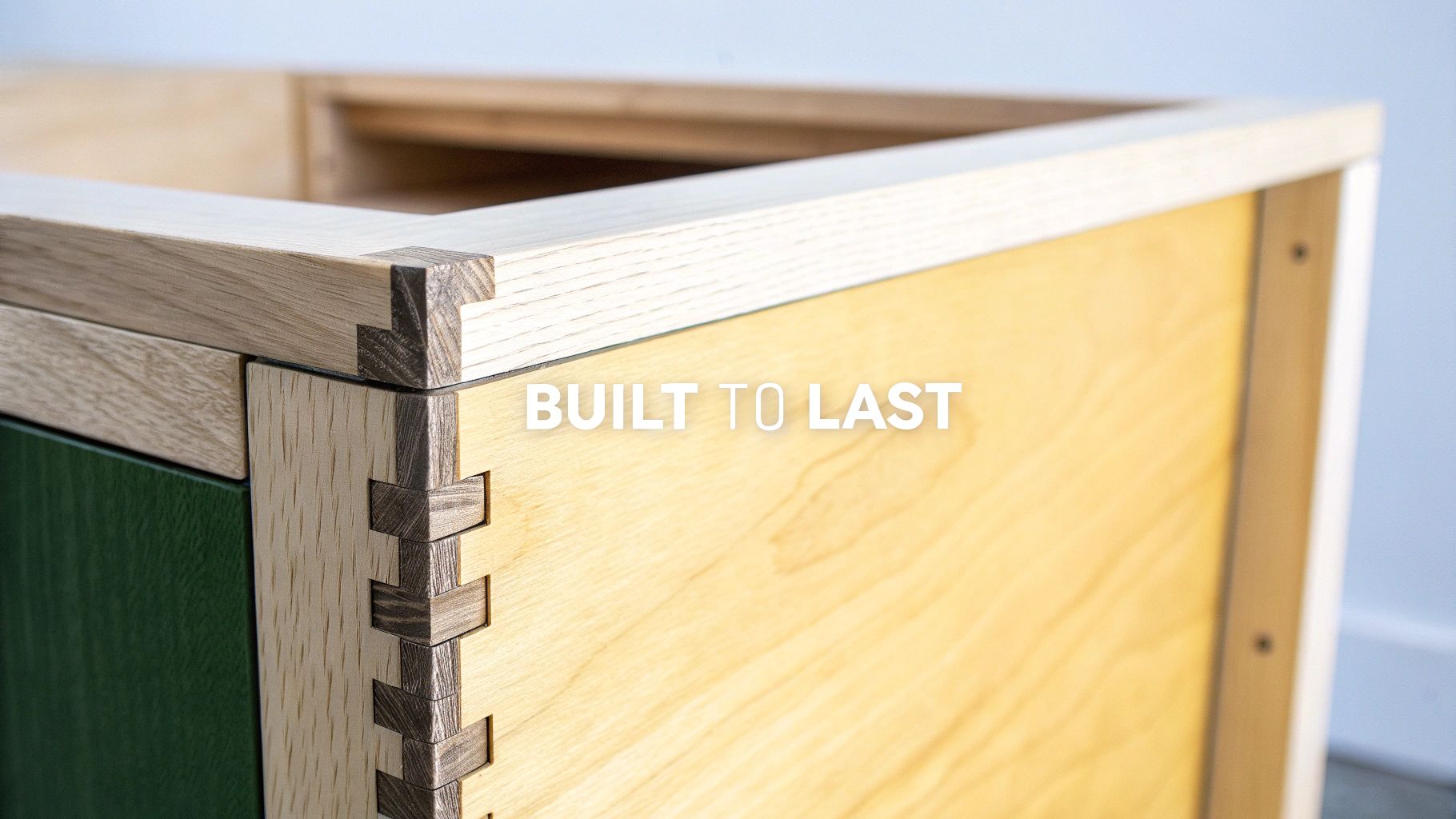
How the pieces of a cabinet are joined together is another dead giveaway of its quality. Proper custom carpentry aims to create joints that are strong on their own, relying on interlocking wood rather than just glue and screws.
Think of it like building with LEGO bricks versus simply gluing smooth blocks together. The interlocking studs create a bond that’s much stronger. In woodworking, we achieve this through traditional joinery.
Here are two examples of superior joinery to look for:
- Dovetail Joints: Used mainly for building drawer boxes, these joints feature a series of interlocking "pins" and "tails." This creates an incredibly strong mechanical lock that resists being pulled apart, which is why it's the gold standard for drawers that will see daily use.
- Mortise and Tenon Joints: This classic technique is the go-to for joining the rails and stiles of cabinet door frames. A projecting piece of wood (the tenon) fits tightly into a hole (the mortise), creating a rigid and robust connection that won't twist or loosen over time.
When you see details like these, you know you’re looking at cabinetry built for the long haul. Asking a potential carpenter about their joinery methods is a great way to gauge their commitment to quality.
Selecting Finishes and Hardware to Define Your Style
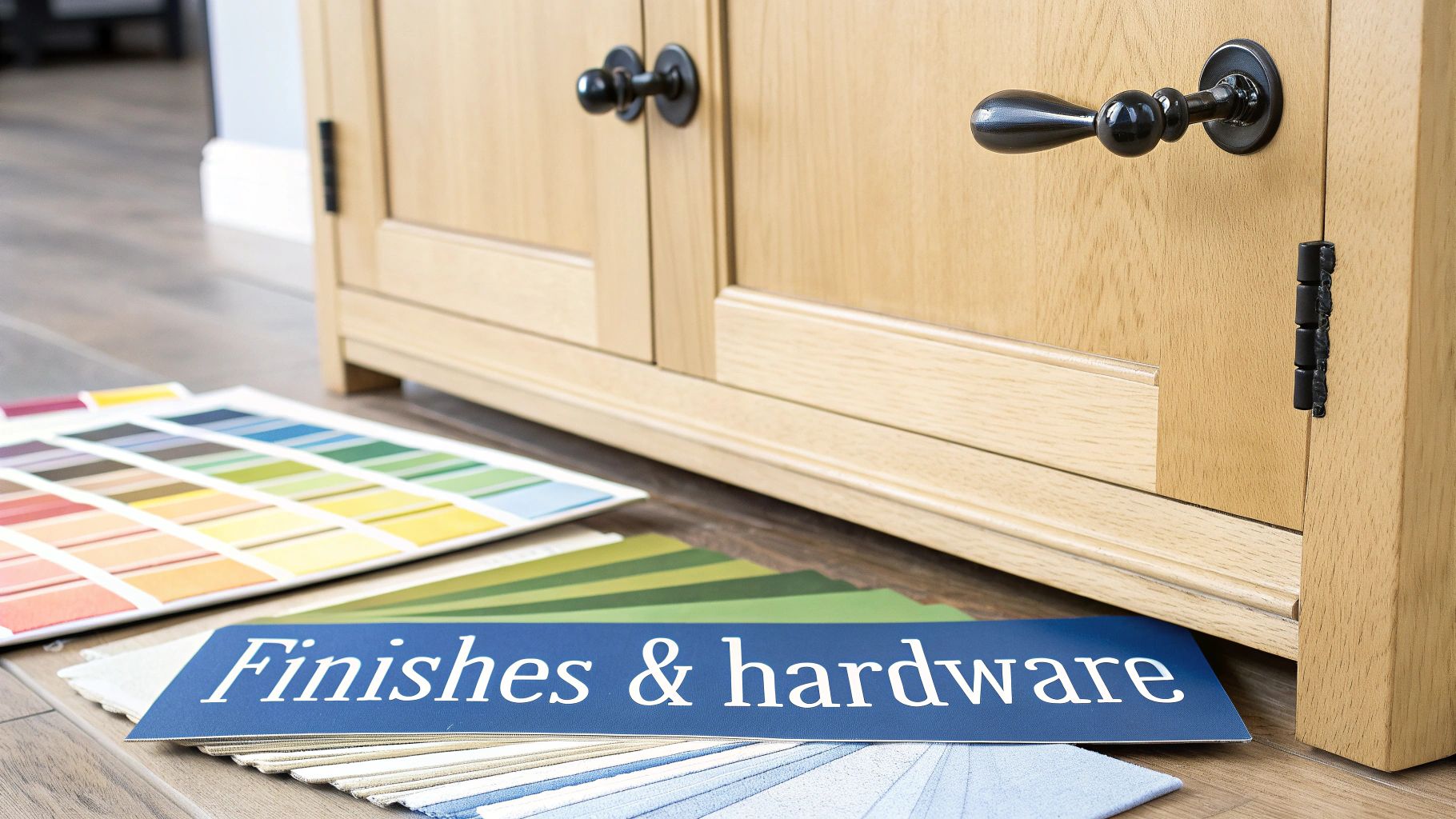
This is where the magic happens. The final touches transform a wood cabinet kitchen from a set of beautifully built boxes into a space with real personality. Finishes and hardware are the details that dictate whether your kitchen feels modern and sharp, warm and traditional, or somewhere perfectly in between.
A cabinet finish does double duty: it protects the wood from moisture, grease, and wear, and it sets the entire aesthetic tone. These aren't just superficial coatings; they're the first line of defence for your investment.
Choosing a Finish to Enhance or Transform
The finish you choose can either celebrate the natural character of the wood or completely reinvent it. We always ask our clients: do you want to show off the wood, or create a specific colour story?
Transparent Finishes (Stains, Lacquers, Varnishes): This is the way to go if you truly love the inherent beauty of your chosen wood. A clear lacquer acts like a protective shield, letting the grain and natural colour shine through. Stains can gently nudge the wood's tone—making a light maple feel a bit warmer or giving oak a deeper hue—without masking its gorgeous texture.
Opaque Finishes (Paints): Painting your cabinets opens up a universe of colour possibilities. It’s a brilliant option for nailing a specific style, like a crisp white for a Scandinavian vibe or a deep navy for a dramatic, contemporary kitchen. A high-quality paint job still lets the subtle texture of the wood grain come through, adding a depth you just don’t get with laminates.
Think of hardware as the jewellery of your kitchen. It's a small detail with a massive impact, capable of tying the entire room together or creating a striking point of contrast.
How Hardware Shapes Your Kitchen's Personality
Cabinet hardware—the knobs, pulls, and hinges—is where you can really let your personal style shine. The right choice completes the picture, but the wrong one can make the whole design feel off. When choosing hardware, it helps to dive into the options, like understanding the different types of cabinet door hinges which can have a big impact on both the look and function of your space.
Let’s take a simple, shaker-style oak cabinet door. That exact same door can give off completely different vibes depending on its hardware:
Example 1: Classic & Warm: Pair it with aged brass knobs, and the oak cabinet instantly feels timeless and a touch traditional. The warm metal complements the natural tones of the wood, creating a welcoming, classic look.
Example 2: Modern & Minimalist: Now, fit it with sleek, matte black bar pulls. Suddenly, the same oak cabinet feels sharp and contemporary. The clean lines and bold contrast make a minimalist statement.
Example 3: Rustic & Industrial: Add some cast iron cup pulls, and the cabinet’s personality shifts again, this time towards a rustic, industrial feel. The hefty, textured hardware gives the kitchen a sturdy, hardworking character.
The key is to make sure your hardware choice works in harmony with other elements in the kitchen, like your tapware, lighting, and even your appliances. This creates that polished, intentional design where every single detail feels like it belongs.
How to Budget for Your Wood Kitchen Renovation
Setting a clear, realistic budget is the single most important thing you can do before diving into your dream wood cabinet kitchen. In Singapore, renovation costs can swing wildly, so an honest conversation about your budget from day one saves a lot of headaches later.
The final price tag isn't just one number; it's a sum of many parts. The size of your kitchen, the type of wood you choose, the intricacy of the design, and how bespoke you want to go all play a huge role. A simple galley-style kitchen using readily available materials will land in a completely different ballpark than a sprawling U-shaped kitchen with custom walnut joinery.
Getting your head around this early on turns budgeting from a stressful guessing game into a smart, strategic part of the design process.
Breaking Down Kitchen Cabinet Costs
When clients ask for a quote, the first thing we do is figure out which of three main cabinet categories fits their project. Understanding these tiers is the best way to start shaping your budget.
Stock Cabinets (S$3,000 - S$8,000): These are pre-made in standard sizes with a limited menu of styles. They are the most budget-friendly choice, but you get what you get—there’s very little room for personalisation.
Semi-Custom Cabinets (S$8,000 - S$20,000): This is the sweet spot for many homeowners. You’re working with standard cabinet frameworks but get a much wider choice of finishes, door profiles, and clever storage add-ons. It strikes a great balance between a personalised look and keeping costs in check.
Full Custom Carpentry (S$20,000+): This is our specialty. We design and build everything from the ground up to fit your space like a glove. Every dimension, material choice, and feature is tailored to you, delivering unmatched functionality and a look that's one-of-a-kind.
While custom carpentry comes with a higher upfront cost, it's truly a long-term investment. You're not just paying for cupboards; you're investing in superior craftsmanship, a workflow that fits your life perfectly, and a design that makes the most of every last centimetre.
Allocating Your Renovation Funds Wisely
Cabinets are a big slice of the pie, but they're not the whole pie. A common pitfall is forgetting to budget properly for labour, plumbing, and electrical work. Knowing how the total cost typically breaks down helps you plan better and decide where you want to save and where you want to splurge.
Here’s a sample breakdown for a typical mid-range kitchen renovation in Singapore. It helps to see where the money goes.
Sample Budget Allocation for a Mid-Range Kitchen Renovation
This table shows how a S$25,000 kitchen renovation budget could be carved up. Think of it as a starting guide, not a strict rule.
| Component | Percentage of Budget | Estimated Cost (S$) | Notes |
|---|---|---|---|
| Cabinetry & Hardware | 35% | S$8,750 | The core of your kitchen's look and function. |
| Countertops | 15% | S$3,750 | Materials like quartz or granite can vary costs significantly. |
| Labour & Installation | 20% | S$5,000 | Includes carpentry, hacking, and assembly. |
| Appliances | 15% | S$3,750 | Hood, hob, oven, fridge, etc. |
| Plumbing & Electrical | 5% | S$1,250 | For sink, tap, dishwasher, and new lighting/power points. |
| Tiling & Backsplash | 5% | S$1,250 | Can be a major design statement. |
| Contingency Fund (10%) | 5% | S$1,250 | Crucial. For unexpected issues that arise during renovation. |
Your priorities might look different. You might invest more in a statement countertop and find great-value appliances. The key is having a complete plan that accounts for every piece of your new wood cabinet kitchen, ensuring you get the results you want without any nasty surprises.
When Custom Carpentry Makes All the Difference
While off-the-shelf cabinets have their place, a one-size-fits-all approach often falls short in the unique layouts of Singaporean homes, from the odd-angled walls of a condo to the compact footprint of an HDB flat.
Standard-sized cabinets are built for perfectly standard rooms, which almost nobody has. This mismatch leads to awkward gaps, dead corners, and kitchens that feel inefficient. A custom wood cabinet kitchen flips the script, treating your space as a blank canvas and building everything to the exact millimetre.
Solving Unique Spatial Puzzles
Every home has its challenges: a low beam, a structural pillar right where a cabinet should go, or a narrow galley layout. A skilled carpenter sees these not as problems, but as design opportunities.
For massive renovation projects that require integrated building services beyond just woodworking, partnering with a comprehensive construction firm can be a smart move. But for a kitchen that fits like a glove, custom carpentry is where the magic happens.
Here are a few scenarios where a bespoke solution truly shines:
- Maximising Awkward Layouts: We can build clever corner units that reclaim every last inch, design cabinets that seamlessly wrap around columns, or create floor-to-ceiling pantries that tuck perfectly under a sloped ceiling.
- Accommodating Your Lifestyle: Need a pull-out spice rack right next to your hob? A hidden charging nook for gadgets? Or a drawer deep enough for your stand mixer? Custom work builds these features right into your kitchen’s DNA.
- Achieving a Flawless, Integrated Look: Bespoke carpentry delivers a seamless, high-end finish. We can build cabinetry that aligns perfectly with windows and doorways, creating a polished, intentional look that mass-produced options simply can’t match.
Custom work is really the art of problem-solving. It’s about looking at a challenging space not as a limitation, but as a chance to create something clever, functional, and totally unique to you.
A Real-World Example from an HDB Kitchen
We recently worked with a client in an older HDB estate whose kitchen was long, narrow, and poorly lit. They dreamed of a bright, open space that didn't feel like a corridor, but off-the-shelf cabinets would have eaten up precious floor space.
Our solution was entirely custom. We designed and built base cabinets that were shallower than standard along one wall, instantly widening the walkway. To make up for the lost depth, we installed full-height pantry cabinets on the opposite wall, fitting them with pull-out larders for amazing storage density. By using a light-coloured maple for all the cabinetry, we helped reflect what little light there was, making the whole room feel bigger and brighter.
The final result transformed a tricky HDB kitchen into a beautiful, hyper-efficient space that perfectly fits their lifestyle—something only possible through meticulous, hands-on craftsmanship.
Common Questions We Hear About Wood Kitchens
When you're diving into the details of a new kitchen, questions are bound to pop up. Here are some of the most common queries we get from homeowners, with clear, straightforward answers to help you plan your project with confidence.
Can I Just Paint My Wood Cabinets Later On?
Absolutely. This is one of the best things about choosing solid wood. If you get the itch for a new look in five or ten years, your cabinets can be sanded down, primed, and given a fresh coat of paint. It’s a fantastic way to evolve your kitchen’s style without a complete overhaul.
Just keep in mind that woods with a really strong grain, like oak, will still show some of that beautiful texture through the paint. Some people love this added character, but if you're after a super-smooth finish, a wood like maple might be a better starting point.
Are Wood Cabinets a Hassle to Maintain in Singapore?
They are much less work than most people think, as long as you make the right choices from the start. The secret is picking a humidity-resistant wood (like teak or a properly sealed hardwood) and making sure it has a high-quality protective finish.
Day-to-day care is actually quite simple:
- Wipe up spills quickly: Use a soft, damp cloth to take care of any liquids, especially around the sink.
- Go easy on the chemicals: Stick to mild soap and water for cleaning. Abrasive cleaners or scouring pads can damage the finish.
- Manage moisture: Always use your cooker hood when you’re on the hob. It makes a huge difference in cutting down steam and grease buildup.
With these simple habits, your wood cabinets will stay looking great for years to come.
What’s the Most Durable Wood for a Kitchen?
For sheer toughness in Singapore’s climate, teak is a standout choice. Its natural oils make it incredibly resistant to moisture and pests. That said, hardwoods like oak are also phenomenally durable and can handle the knocks and bumps of a busy family kitchen, provided they are sealed properly.
Ultimately, the "best" choice is about balancing durability with the look you love. A dense hardwood paired with a quality polyurethane or lacquer finish will give you fantastic, long-lasting protection for any active household.
The most important decision isn't just the wood itself, but the combination of a stable wood species and a high-performance finish. This pairing is what truly creates a durable and long-lasting kitchen.
Ready to create a kitchen that perfectly balances timeless beauty with flawless function? The team at KIVO combines decades of artisan experience with a deep understanding of modern design to build bespoke spaces that last. Let's start the conversation about your dream kitchen today.
Explore our custom carpentry and design services at https://kivo.com.sg.