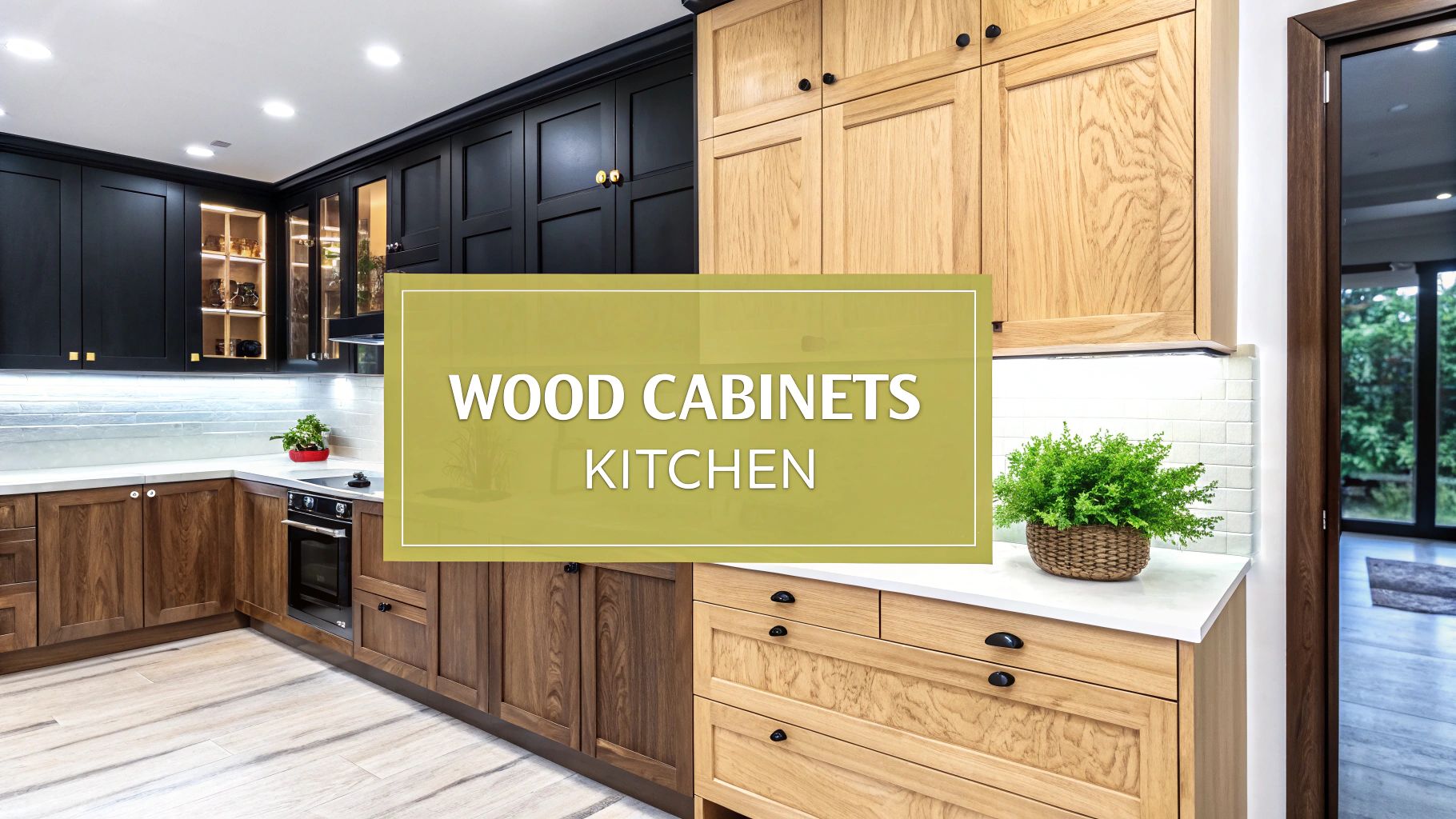
When planning a kitchen renovation, wood cabinets are a top contender for good reason. Their timeless appeal and incredible functionality are hard to beat. A kitchen built around well-crafted wood cabinets isn’t just a practical decision for your Singapore home; it’s an investment in its warmth and character.
Why Wood Cabinets Are the Heart of Singaporean Kitchens
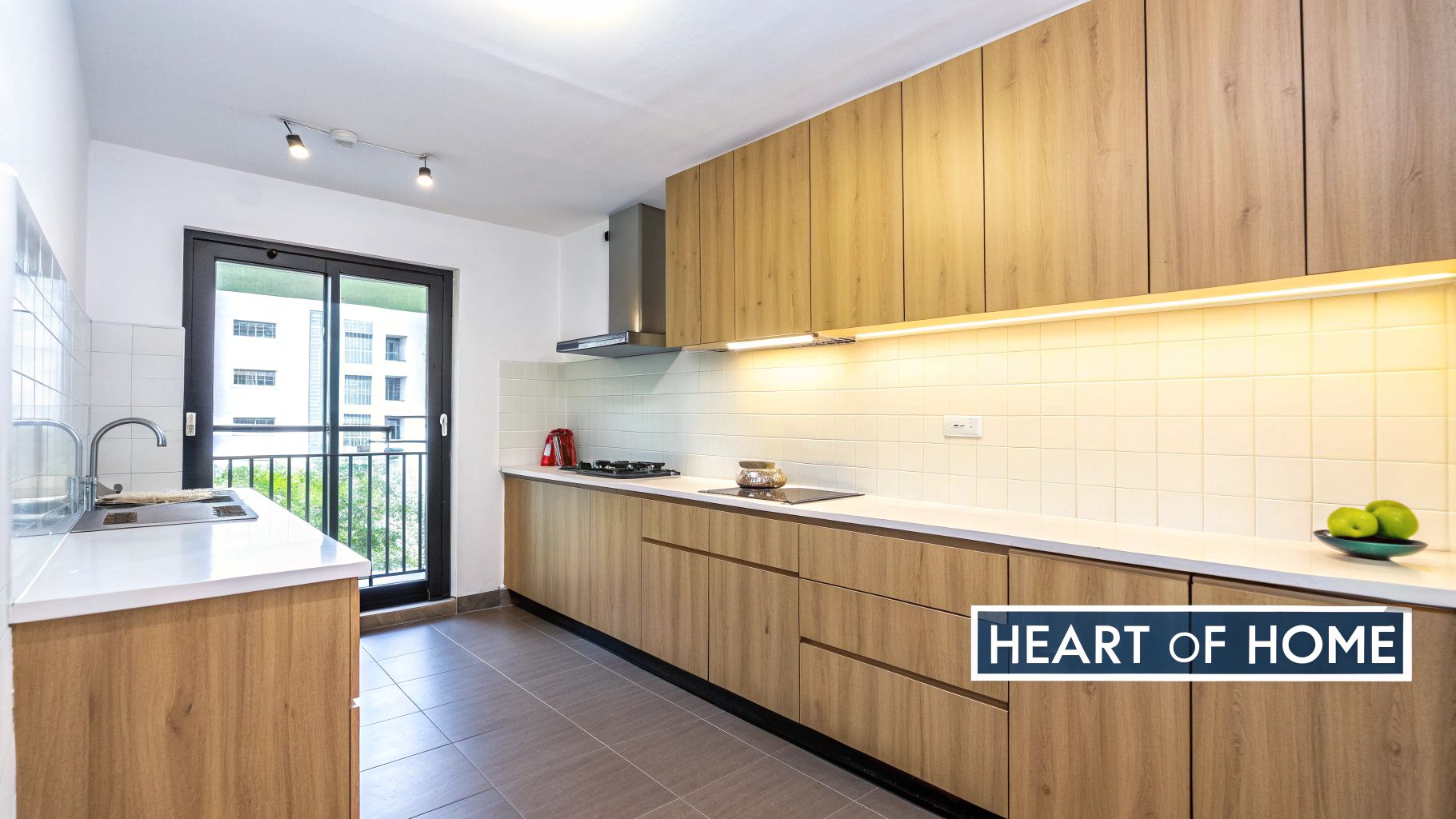
Here in Singapore, whether you're in a compact HDB flat or a sprawling condo, the kitchen is often the hub of daily life. Wood's staying power speaks to a desire for natural elegance and a welcoming vibe. The warmth of wood brings a sense of calm into the urban hustle, turning a purely functional room into a space where the family naturally gathers.
From our experience with clients, there is a growing demand for materials with unique character. Unlike synthetic options, every piece of wood has its own distinct grain and texture. This means no two kitchens are ever exactly the same, allowing you to create a design that is truly yours.
The Unmatched Versatility of Wood
One of the greatest strengths of wood is its adaptability. It can anchor nearly any interior design theme.
- For a Sleek, Modern Look: We often specify light-toned woods like maple or light oak with flat-panel doors and minimalist hardware. This creates a clean, uncluttered look that is perfect for making smaller HDB kitchens feel more spacious and bright.
- For a Cosy, Traditional Feel: Darker woods like walnut or cherry, crafted into Shaker or raised-panel doors, bring a sense of classic sophistication. This is a fantastic way to create a warm, inviting atmosphere in a larger home.
This design flexibility is precisely why a wood cabinets kitchen remains a top choice for discerning homeowners.
A Smart and Lasting Investment
Aesthetics are important, but durability is critical. High-quality wood cabinets are built to last, easily handling the daily wear and tear of a busy kitchen. This durability makes them a solid financial decision that adds tangible value to your property.
Market data supports this. In Singapore's modular kitchen market, wood cabinets are the clear leader, accounting for roughly 73% of total market revenue. This overwhelming preference shows a clear demand for premium, customisable kitchens that blend function with timeless style, especially for floor cabinets. If you're interested, you can find out more about Singapore's kitchen market trends.
Ultimately, choosing wood cabinets is about creating a space that isn't just beautiful but is also deeply personal and built to endure.
Choosing the Right Wood for Your Climate and Style
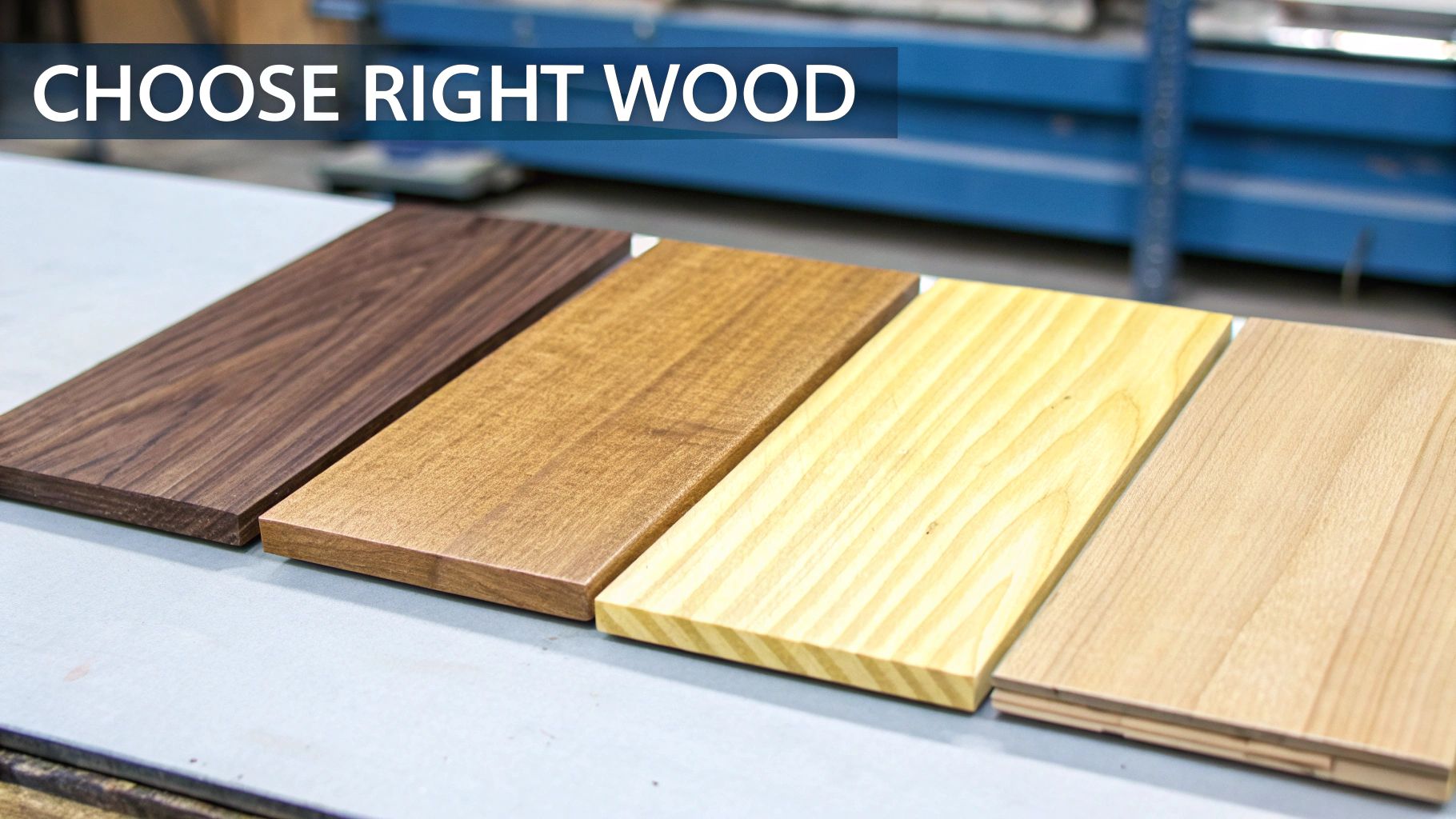
Selecting the right wood for your kitchen cabinets goes beyond aesthetics; it's a practical decision that impacts their longevity, especially in Singapore’s humid climate. The wrong choice can lead to warped doors, swollen frames, or mould issues. A successful wood cabinets kitchen starts with a material that can withstand local conditions.
Your wood choice is the foundation of your kitchen. From years of experience, we’ve identified which timbers perform best in our climate.
Matching Wood Species to Singapore's Climate
In our tropical environment, moisture resistance is the number one priority. Certain hardwoods have a natural advantage due to their dense grain structures and natural oils that help repel water.
- Teak: This is the top performer for humid conditions. Teak contains natural oils that make it incredibly resistant to moisture and pests. It’s also extremely stable, making it far less likely to warp or crack—a premium, long-lasting investment.
- Oak: A timeless classic, white oak in particular has a closed-grain structure that offers good resistance to water. Its distinct grain patterns look fantastic with various stains, fitting everything from rustic to modern designs.
- Walnut: Known for its deep, luxurious colour and smooth grain, walnut is a dense hardwood that holds up beautifully. It adds an instant touch of sophistication and is a durable choice when properly sealed.
The appeal of these high-quality woods is reflected in market trends. Singapore's wooden kitchen furniture market, valued at around $56 million, has remained stable, showing consistent demand for materials built to last.
Aligning Wood with Your Design Vision
Beyond function, the wood you choose sets the aesthetic tone. Each species has a unique character that complements specific design styles. When selecting the right wood for your kitchen cabinets, it helps to understand the unique characteristics of different hardwood types.
- Practical Example 1: For a client aiming for a bright, airy Scandinavian theme in their HDB flat, Maple is a perfect match. Its subtle grain and pale tones create a clean, minimalist look that makes smaller spaces feel larger.
- Practical Example 2: For another client wanting a modern-luxe feel in a spacious condo, we suggested Walnut. Its rich, dark chocolate hues and elegant grain patterns delivered a dramatic, high-end finish.
The goal is to find the sweet spot where practicality and personality meet. The wood must perform in our climate first, and then it needs to tell your personal style story.
A Practical Comparison of Popular Cabinet Woods
To help you visualise how these materials differ, here is a simple comparison of the woods we use most often for kitchen cabinet projects in Singapore.
| Wood Species | Hardness (Durability) | Grain and Colour | Ideal Kitchen Style | Humidity Resistance |
|---|---|---|---|---|
| Teak | Very High | Straight grain, golden to medium brown | Tropical, Modern, Luxury | Excellent |
| White Oak | High | Pronounced grain, light to medium brown | Scandinavian, Farmhouse, Modern | Very Good |
| Walnut | High | Smooth, straight grain, rich dark brown | Mid-Century Modern, Contemporary, Luxe | Good |
| Maple | Very High | Fine, subtle grain, creamy white to light brown | Minimalist, Contemporary, Scandinavian | Moderate (Requires excellent sealing) |
| Cherry | Medium-High | Smooth, fine grain, reddish-brown (darkens with age) | Traditional, Transitional, Classic | Moderate (Best for well-ventilated kitchens) |
Think of this table as a starting point. During a consultation, we always bring physical samples so you can see and feel the differences. This ensures the material you pick for your wood cabinets kitchen is one you’ll be happy with for decades.
Matching Cabinet Styles to Your Home's Aesthetic
Once you’ve settled on the right wood, the next step is choosing a cabinet style. The door profile you select for your wood cabinets kitchen sets the tone for the entire space, influencing everything from mood to functionality.
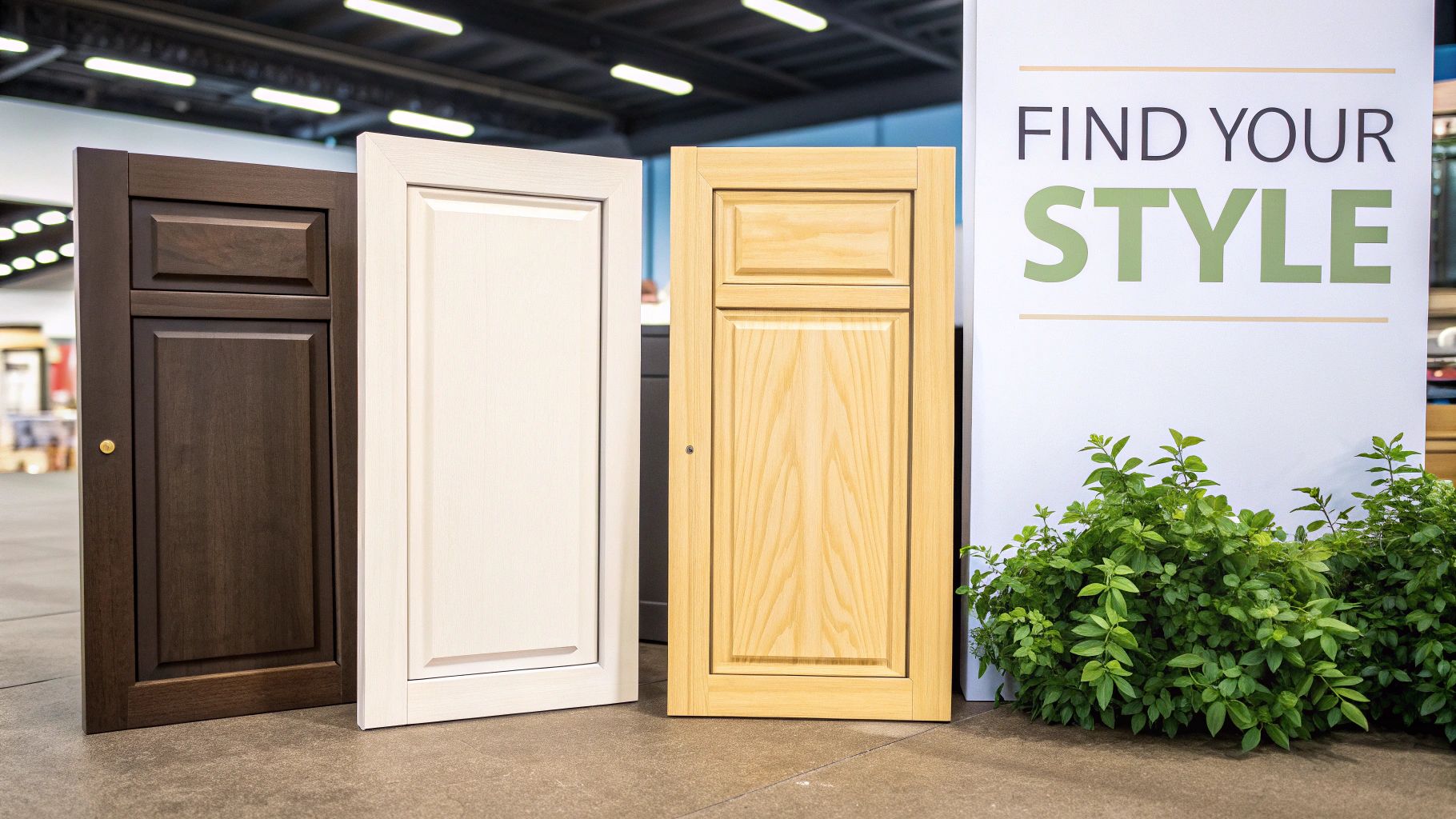
The key is to pick a style that feels like a natural extension of your home's character.
The Timeless Appeal of Shaker Cabinets
The Shaker door is the ultimate design chameleon, defined by its simple frame and recessed centre panel. Its understated elegance blends effortlessly into almost any decor.
- Practical Example: In a spacious landed property, we paired dark walnut Shaker cabinets with classic brass hardware to create a sophisticated, timeless look. In a modern condo, that same door style in a light oak finish feels fresh and current.
This versatility is why the Shaker style remains a favourite among Singaporean homeowners. It offers a perfect balance of traditional craftsmanship and modern simplicity.
Flat-Panel Cabinets for a Modern and Minimalist Look
For those who prefer clean lines and an uncluttered aesthetic, the flat-panel (or slab) cabinet door is the definitive choice. This style is a single, solid flat panel without ornamentation, creating the sleek, seamless surface that defines minimalist and contemporary design. This is particularly effective in smaller homes like HDB flats, where simplicity can make a space feel larger.
- Practical Example: In a recent HDB BTO project, we used light oak flat-panel cabinets to create an airy, open-plan kitchen. The uninterrupted wood grain and lack of visible hardware—we used integrated handles—established a streamlined look that maximised the sense of space.
Flat-panel doors are also fantastic for showcasing the natural beauty of the wood itself. Without frames or bevels to distract the eye, the unique grain and colour of a timber like teak or walnut become the main feature.
Raised-Panel Cabinets for Traditional Elegance
If your home’s aesthetic leans towards the traditional or classic, raised-panel cabinets are an excellent option. These doors feature a raised centre panel with a grooved, decorative profile. This creates depth and shadow, lending a sense of formal elegance.
This style adds architectural detail, making it a superb fit for larger kitchens or homes with classic interior themes. The intricate detailing on raised-panel doors can transform a kitchen from a purely functional space into a decorative statement piece.
Ultimately, choosing a style is about deciding the feeling you want to create. Answering that question is the key to creating a wood cabinets kitchen that truly feels like home.
The Finishing Touches That Elevate Your Design
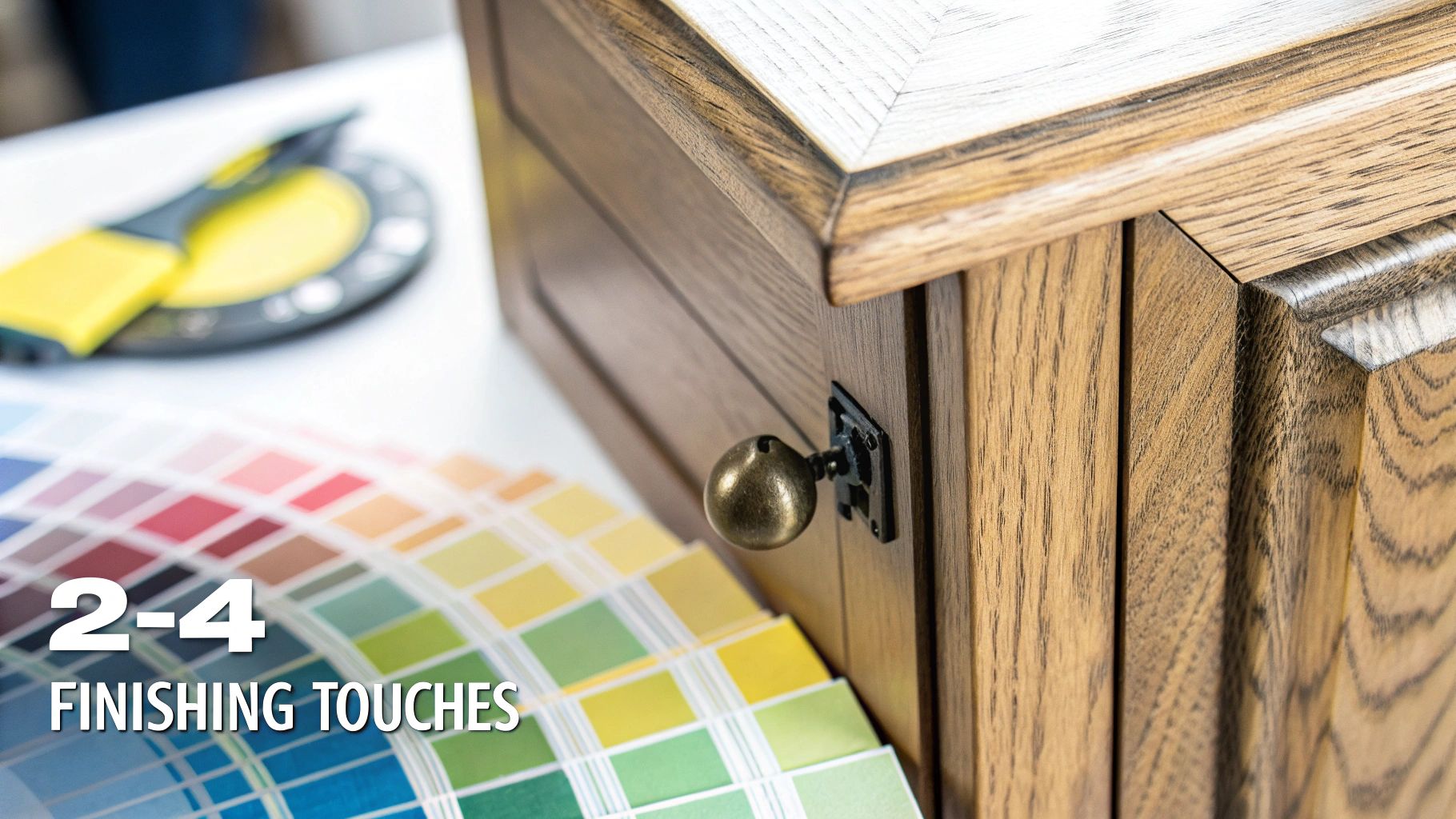
Once the wood and cabinet style are locked in, we move to the finishes and hardware—the details that transform a well-made wood cabinets kitchen into a personal and polished space. These decisions have a massive impact on the final look, feel, and daily experience of your kitchen.
The Great Debate: Stains vs. Paints
Choosing between stain and paint is one of the biggest aesthetic decisions. Each offers a completely different result.
A wood stain soaks into the timber, enhancing its natural grain and texture. Stains are the perfect choice when you want the inherent beauty of the wood to be the hero.
- Practical Example: On a project with stunning teak cabinets, the client wanted to showcase the wood's rich tones. We opted for a clear, satin-finish stain that provided excellent moisture protection while letting the gorgeous natural grain stand out.
Paint, on the other hand, creates an opaque layer on top of the wood, opening up an endless colour palette. From a deep navy to a soft sage green, paint delivers a clean, uniform look.
Your choice defines your kitchen's personality. A stain celebrates the wood's natural story, while paint creates a new colour story.
Selecting Hardware: The Jewellery of Your Kitchen
Hardware—knobs, pulls, and handles—are key decorative accents you interact with daily. From our experience, current client preferences favour creating either intentional contrast or seamless harmony.
- For Contrast: Matte black handles on light oak cabinets create a sharp, modern anchor that defines clean lines.
- For Harmony: Brushed brass pulls on dark walnut cabinets introduce warmth and classic luxury, softening the overall look.
The right hardware can truly transform the look and feel of your kitchen; you can find some great tips for choosing cabinet hardware to help you make a confident decision.
Durability: A Non-Negotiable Factor
Beyond looks, the finish on your kitchen cabinets must be tough. It has to stand up to steam, grease, splashes, and constant use. This is why we exclusively use professional-grade, multi-layer sealant systems built for high-traffic environments.
A truly durable finish must deliver:
- Moisture Resistance: Essential for preventing warping in Singapore's humid climate.
- Scratch and Chip Resistance: A hard-wearing topcoat is your best defence against daily wear and tear.
- Easy Maintenance: The finish should be simple to wipe clean without harsh chemicals.
Picking a durable finish ensures your beautiful wood cabinets kitchen stays that way for the long haul.
How to Budget for Your Wood Cabinet Investment
Establishing a realistic budget is the most critical first step in planning your wood cabinets kitchen. Understanding the real costs involved will keep your project on track and prevent surprises. Think of your cabinets as a long-term investment that adds tangible value to your home.
The final price depends on a few key factors. The wood species is the biggest variable; a premium, moisture-resistant timber like teak will cost more than other options. The complexity of the design—such as intricate details or custom pull-out pantries—also plays a significant role.
Breaking Down the Costs
To plan properly, it helps to know where your money is going. The total investment for a custom wood kitchen generally breaks down into three main areas:
- Materials (40-50%): This covers the raw timber, plywood for cabinet boxes, and any veneers. The wood species is the primary driver here.
- Labour and Craftsmanship (30-40%): This is for the skilled work of carpenters who build, finish, and install your cabinets. More complex designs require more time and precision.
- Hardware and Finishes (10-20%): This includes handles, soft-close hinges, drawer runners, and the professional-grade sealants and stains that protect the wood.
Wood Cabinet Cost and Value Snapshot
This table provides a general cost comparison and highlights the long-term investment value of different wood cabinet materials for Singapore homeowners.
| Wood Type | Typical Cost Range | Primary Benefits | Impact on Property Value |
|---|---|---|---|
| Plywood with Laminate | $$ | Budget-friendly, vast colour/pattern options, easy to clean. | Modest |
| Solid Pine or Ash | $$$ | Natural wood grain, good for staining, affordable solid wood. | Good |
| Solid Oak or Maple | $$$$ | Extremely durable, classic appeal, beautiful grain patterns. | Strong |
| Teak or Walnut | $$$$$ | Premium luxury, natural moisture resistance, rich colour. | Excellent |
The best choice balances your budget with your aesthetic goals and the daily demands on your kitchen.
Where to Invest and Where to Save
Smart budgeting is about knowing where to spend and where to save without compromising quality.
- Where to Invest: A durable, high-quality wood for the doors and drawer fronts is a must. These are the high-visibility, high-touch surfaces.
- Where to Save: For the internal cabinet boxes (carcasses), which are hidden from view, a high-grade plywood provides excellent structural integrity at a lower cost. This frees up more of your budget for premium hardware or a more luxurious countertop.
A transparent, detailed quotation is the foundation of any successful project. We break down every cost—from the price per square foot of timber to the specific model of hinge—so you know exactly what you’re paying for. This clarity eliminates guesswork and prevents unexpected costs.
How We Bring Your Dream Kitchen to Life
Creating a custom wood cabinets kitchen is a collaborative journey. We’ve refined our process to be clear, transparent, and centred on your vision.
It all starts with a conversation to understand your needs, lifestyle, and design preferences. Think of it as the start of a creative partnership, where we lay the foundation for the kitchen you've always wanted.
Visualising Your Space in 3D
After our initial chat, our designers create a detailed 3D visualisation of your new kitchen. This photorealistic rendering lets you experience the space before we build. This step is a crucial checkpoint, allowing you to see how your chosen wood, cabinet style, and hardware come together. It gives us a chance to fine-tune everything in real-time. For instance, we can:
- Switch the stain on your oak cabinets to see if a lighter or darker tone feels right.
- Swap out matte black handles for brushed brass to instantly change the mood.
- Rethink the island layout to improve workflow.
This digital prototyping phase removes all guesswork. You get to refine every detail and give confident approval before a single piece of timber is cut.
Artisan Craftsmanship and Meticulous Installation
Once the design is locked in, our seasoned craftsmen take over. Each cabinet is built with a focus on detail, ensuring it’s constructed to last for generations. Our in-house team handles the entire installation for a flawless fit and finish. We manage the project from start to finish, keeping you updated so you always know what’s happening.
The journey of creating your dream kitchen should be as seamless and enjoyable as the final result. Clear communication is at the heart of everything we do.
Common Questions We Hear About Wood Kitchens
When planning a kitchen renovation, questions are inevitable. Here are some of the most common ones we get from homeowners in Singapore, with straightforward answers to help you plan your wood cabinets kitchen project.
How Do I Stop Singapore's Humidity From Wrecking My Wood Cabinets?
The key is a two-part approach: proper material selection and daily care.
First, the real defence starts with how the cabinets are built. We use woods known for their stability in tropical climates and finish them with professional-grade, moisture-resistant sealants. This creates a durable barrier against humidity from day one.
For daily care, good ventilation is your best friend. Always use your cooker hood to pull steam out of the air. For cleaning, a soft, damp cloth is sufficient—just wipe dry immediately. Avoid harsh chemicals that can strip the protective finish.
Are Wood Cabinets Actually a Sustainable Choice?
Yes, provided the wood is sourced responsibly. When you choose timber from managed forests—often verified by certifications like the FSC (Forest Stewardship Council)—you’re opting for a renewable resource. Wood's durability also means your cabinets can last for decades, reducing waste from frequent replacements. We are committed to sourcing materials responsibly and can guide you through certified options.
What's the Real Difference Between Solid Wood and Wood Veneer?
It comes down to construction. Solid wood cabinets are crafted entirely from solid planks of timber. They are incredibly durable and can be sanded and refinished multiple times.
Wood veneer cabinets are made by bonding a thin slice of real wood to a stable core material, like high-quality plywood. A well-made veneer provides the same look as solid wood but often with better dimensional stability, meaning it is less prone to warping in humid conditions—a significant advantage in Singapore's climate.
The "best" choice depends on your design goals, lifestyle, and budget. We often help clients find a practical balance, perhaps using solid wood for frames and high-quality veneer for large door panels to achieve both beauty and stability.
Ready to create a kitchen that perfectly blends timeless style with lasting quality? The team at KIVO is here to guide you through every step, from design to installation. Explore our custom carpentry and interior design services to start your transformation today.