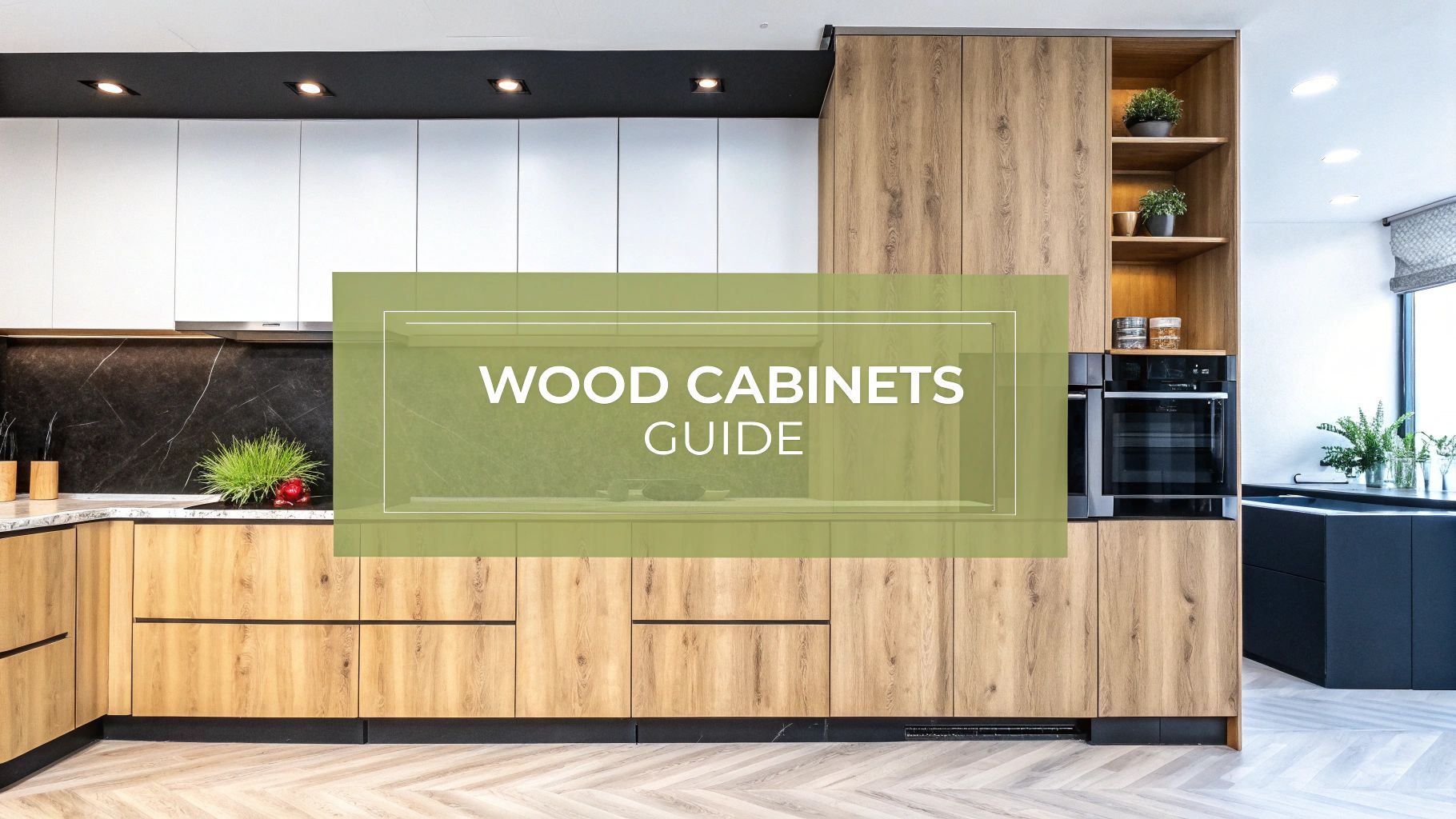
When planning a kitchen renovation, one element single-handedly sets the tone for the entire space: the cabinets. And among all the choices, wood kitchen cabinets consistently prove their value. Their enduring popularity isn't a mystery—they offer a warmth, durability, and classic appeal that synthetic materials simply cannot replicate.
Why Wood Cabinets Are a Foundational Kitchen Choice
Wood brings an organic, grounding feeling into the heart of the home. Unlike laminate or thermofoil, which can sometimes feel cold or impersonal, the natural grain and texture of wood add tangible depth and authenticity to your kitchen.
This inherent warmth makes a room feel genuinely inviting. From our experience with homeowners here in Singapore, achieving that comfortable, welcoming quality is a primary goal.
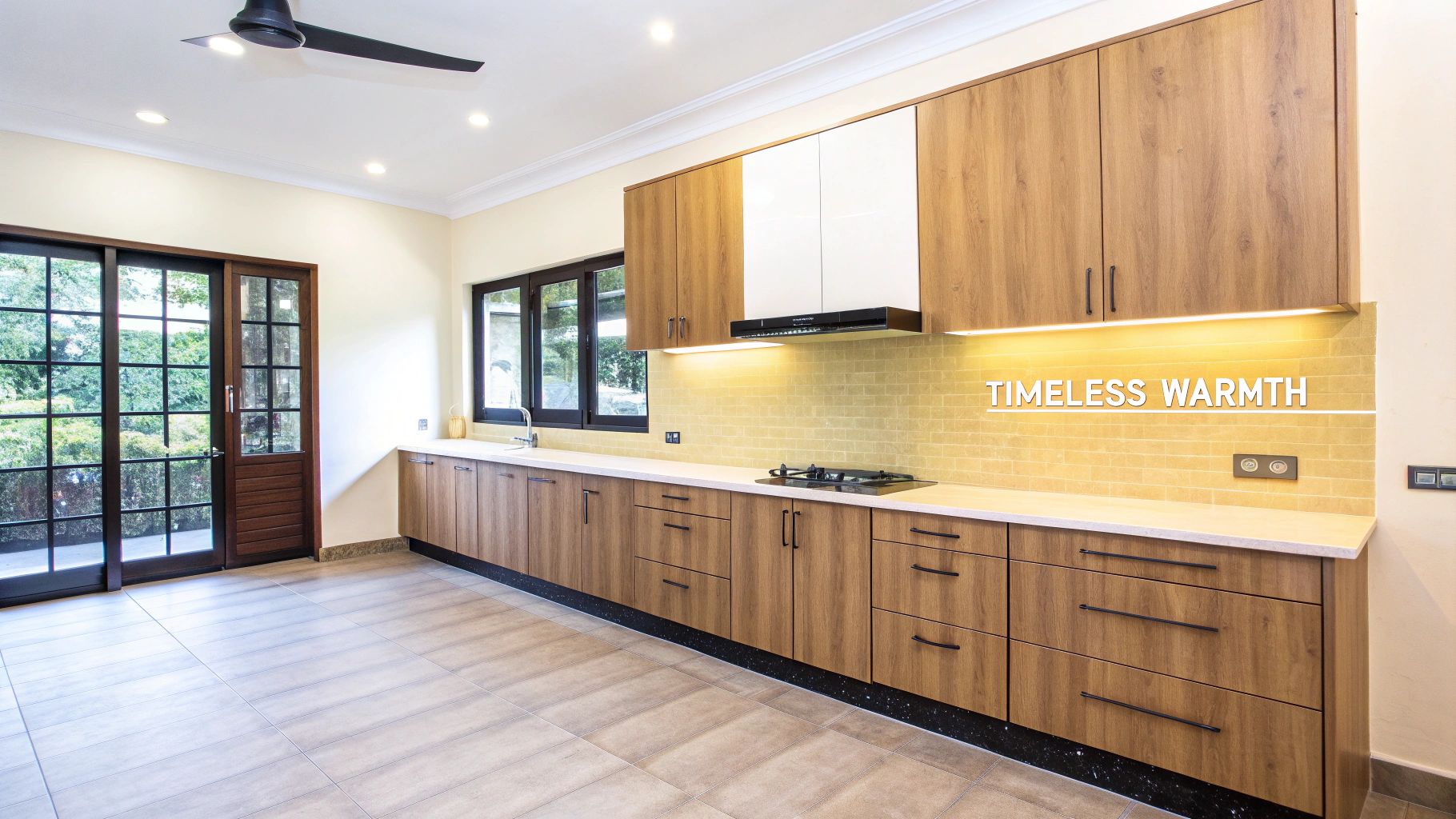
This guide provides a clear roadmap for choosing the perfect cabinets. We’ll cover everything from selecting wood species that can handle Singapore's climate to understanding modern construction techniques. This is your practical starting point for making decisions you’ll feel good about for years to come.
The Lasting Value of Wood
One of the biggest advantages of wood kitchen cabinets is their longevity. Solid wood and high-quality wood veneers are incredibly tough and can easily withstand the daily demands of a busy kitchen for decades.
Even more importantly, they are adaptable. While other materials might show their age with chips or peeling that are nearly impossible to fix, wood cabinets can be completely reimagined.
Wood's greatest asset is its ability to evolve with your style. A simple refinishing or a new coat of paint in ten years can give your kitchen a complete refresh, making it a sustainable and cost-effective investment over the long term.
This adaptability means your kitchen never has to feel dated. For instance, a client with classic oak cabinets from the early 2000s wanted a modern update. We sanded them down and applied a deep grey stain, completely transforming the kitchen's aesthetic without the cost and waste of a full replacement. This flexibility is why we confidently recommend wood as the foundation for a kitchen that’s truly built to last.
Choosing the Right Wood and Cabinet Construction
Selecting the right materials for your wood kitchen cabinets is a foundational decision that impacts the entire renovation. It's about more than just a colour. You're choosing how your kitchen will stand up to daily life, how it will feel, and its overall character. Get this right, and you're setting the stage for a kitchen that’s not only beautiful but truly durable.
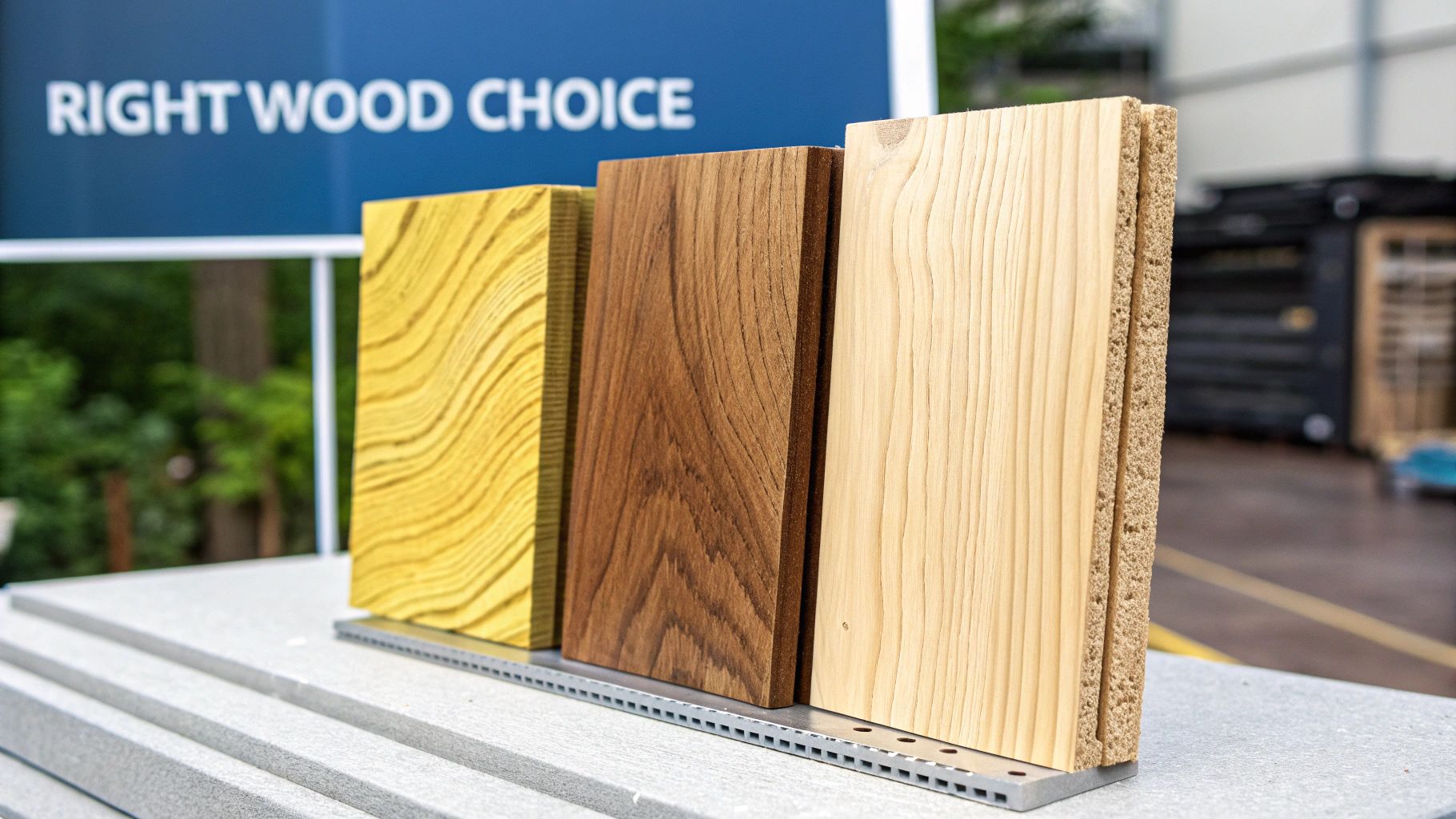
Here in Singapore, the preference for natural materials is strong. It's a global trend, too—wood kitchen cabinets make up about 65% of the entire cabinet market. This figure reflects what we see on the ground: a real desire for the warmth and strength you only get from quality hardwoods and veneers.
Interestingly, the market for semi-custom wood cabinets has captured a 40% market share, which tells us that homeowners are looking for the sweet spot between a fully bespoke design and a practical price point. You can dig deeper into these cabinet market trends at Mordor Intelligence.
Solid Hardwoods vs Engineered Plywood
The first critical choice is between solid wood and a high-quality engineered alternative like plywood. Each has distinct advantages, especially when dealing with Singapore’s humidity.
Solid Hardwoods like teak, oak, and walnut are prized for their strength and unique grain patterns—no two pieces are ever identical, giving your kitchen an exclusive feel. Teak, for example, is naturally resistant to moisture and pests due to its high oil content, making it a brilliant (though premium) choice for our local climate.
Engineered Plywood, on the other hand, is constructed from thin layers of wood veneer glued together, with the grain of each layer running perpendicular to the next. This cross-grain construction makes it exceptionally stable. It’s far less likely to warp, swell, or shrink with humidity changes—a massive advantage here. We often specify high-grade, moisture-resistant plywood for cabinet carcasses (the boxes) to provide a rock-solid, stable foundation.
For many of our projects, a hybrid approach works best. We might use solid oak for the cabinet doors to showcase its beautiful grain, while using moisture-resistant plywood for the internal structure to guarantee long-term stability and manage costs effectively.
Key Wood Species for Your Kitchen
Different woods bring completely different personalities to a room. To help you navigate the options, we've put together a quick comparison of the woods we specify most often for our clients.
Comparing Popular Wood Types for Kitchen Cabinets
This table breaks down the essentials, giving you a clearer picture of what each wood species brings to the table—from its toughness to its visual appeal and how it fares in our climate.
| Wood Species | Hardness (Durability) | Grain & Appearance | Relative Cost | Best For |
|---|---|---|---|---|
| Teak | Very High | Rich, golden-brown colour that deepens over time. Straight, tight grain. | Premium | Ultimate durability and moisture resistance, ideal for Singapore's humidity. |
| Oak | High | Prominent, wavy grain. Colours range from light beige to rich brown. | Mid to High | Versatile looks, from rustic farmhouse to modern. Stains beautifully. |
| Walnut | Medium-High | Luxurious deep brown with a smooth, fine, and often straight grain. | High | Sophisticated, high-end kitchens with a modern or classic aesthetic. |
| Maple | Very High | Light, creamy colour with a subtle, fine grain. Very smooth texture. | Mid-Range | Bright, clean looks and is an excellent canvas for painted finishes. |
Choosing a wood really is like casting the main character for your kitchen's story. A rustic, knotty oak tells a very different tale than a sleek, dark walnut. It all comes down to the atmosphere you want to create.
Framed vs Frameless Cabinet Construction
Beyond the wood itself, the cabinet's construction method is a game-changer. The two main approaches are framed and frameless construction, each offering a distinct look and practical benefits.
Framed Cabinets
This is the traditional method where the cabinet box has a solid wood "face frame" attached to the front. Doors and drawers are mounted onto this frame.
- Pros: Incredibly sturdy and durable, with a classic, timeless aesthetic.
- Cons: The frame slightly reduces the opening size and interior storage space.
Frameless (European-Style) Cabinets
This modern approach has no face frame. The doors are mounted directly onto the sides of the cabinet box, creating a sleek, contemporary look with minimal gaps.
- Pros: Maximises every bit of interior storage and accessibility. It offers a clean, seamless look.
- Cons: Requires precise installation to ensure perfect alignment.
For compact HDB flats and condos where every centimetre is precious, frameless cabinets are often the clear winner. Their full-access design makes retrieving items much easier—a huge bonus for optimising smaller kitchen layouts. However, if you have a larger kitchen and are aiming for a traditional or farmhouse vibe, the robust look of framed cabinets can be the perfect fit.
Finding Your Perfect Cabinet Style and Finish
Once you've settled on the wood and construction, it's time to define your kitchen's personality through its style and finish. These are the details you'll see and touch every day, turning raw wood into a design that feels distinctly yours. Whether it's the clean lines for a modern HDB flat or the rich detailing in a classic bungalow, getting this combination right is everything.
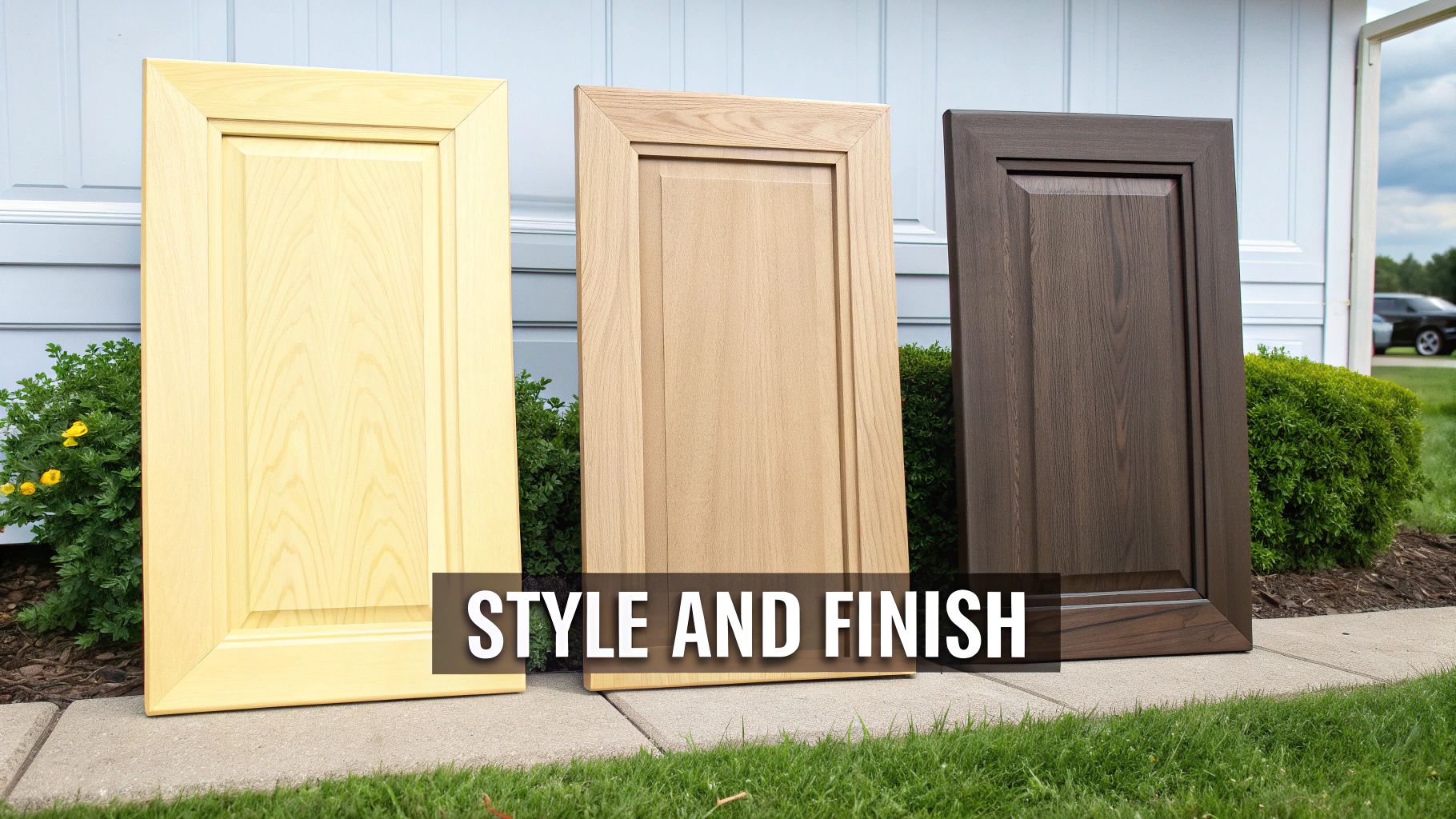
Think of the cabinet door as the architecture and the finish as the final coat of paint. Nailing this duo ensures your wood kitchen cabinets don't just fit into your space—they elevate it.
Popular Cabinet Door Styles We Recommend
After years of designing kitchens for Singaporean homes, a few styles consistently come out on top. They’re popular because they’re versatile, timeless, and suit a wide range of aesthetics.
Shaker Cabinets: This is, by far, the most requested style we work with. Its simple, elegant design—a flat centre panel with a clean four-piece frame—is a true chameleon. Shaker doors look just as good in a minimalist Scandi-inspired kitchen as they do in a more traditional one.
Flat-Panel (Slab) Cabinets: For a sleek, modern, and seamless look, nothing beats a flat-panel door. It’s a single, solid slab of wood without embellishments. This style is perfect for showcasing a beautiful wood grain, like a rich walnut or pale maple, and it’s exceptionally easy to keep clean.
Inset Cabinets: A true mark of fine craftsmanship, inset doors sit perfectly flush within the cabinet frame. This precision creates a smooth, continuous surface with incredibly tight, even gaps. It’s a premium choice that delivers an unmistakable look of quality and heritage.
Your cabinet door style does more than just look good; it sets the rhythm for your entire kitchen design. A simple flat-panel door allows other elements like a dramatic countertop to take centre stage, while a more detailed inset door becomes a feature in its own right.
The right style often comes down to the home’s existing architecture. For instance, a new-build condo almost always calls for the clean lines of flat-panel doors, while a home with classic details can beautifully support the timeless feel of Shaker or inset cabinets.
Selecting the Ideal Finish for Durability and Aesthetics
The finish is the final, critical layer. It protects your cabinets from daily wear and brings your design vision to life. It’s not just about colour—it’s about texture, sheen, and how well it stands up to the demands of a busy kitchen, especially in Singapore’s humid climate.
There are three primary ways to finish wood cabinets:
Clear Lacquer or Varnish: This finish acts as an invisible shield, protecting the wood from moisture, grease, and scratches while letting its natural beauty shine through. We often use a high-quality, non-yellowing satin lacquer on woods like teak or oak where the timber itself is the star.
Stain: A stain soaks into the wood fibres to change their colour while keeping the grain completely visible. Stains can deepen a wood’s natural hue, even out colour variations, or impart a whole new look, from a light grey wash to a deep espresso. It’s a brilliant way to customise colour without hiding the wood's character.
Paint: For the ultimate in customisation, an opaque painted finish is unbeatable. It covers the wood grain, allowing you to introduce any colour imaginable into your kitchen, from classic whites and greys to bold blues or greens. Modern cabinet paints are incredibly tough, forming a hard-wearing shell that’s easy to wipe clean. For those considering this route, a detailed guide on how to paint kitchen cabinets offers practical tips for a professional result.
In Singapore, durability is paramount. We almost always recommend factory-applied finishes over on-site painting. The controlled environment allows for a much harder, more resilient cure. A catalysed conversion varnish, for instance, provides exceptional resistance to moisture and chemicals, making it one of the best choices for a hardworking kitchen.
Caring for Your Wood Cabinets So They Go the Distance
Choosing quality wood kitchen cabinets is a long-term investment. Unlike other materials that can look worn out after just a few years, wood is built to last for decades. With simple, consistent care, you’re not just maintaining your cabinets; you’re protecting their value.
The real beauty of wood is its renewability. If a laminate or thermofoil cabinet gets badly scratched, your only option is replacement. Solid wood, however, can be refinished or repainted, giving it a new lease on life. This resilience is a key reason why natural materials remain so sought-after.
This trend is visible across the region. The Asia-Pacific market for kitchen cabinets is growing at about 5.9% CAGR, driven by a boom in renovation projects and a growing appreciation for high-quality interiors. Homeowners are increasingly seeing their cabinetry not just as a utility, but as a core asset of their property.
Your Simple Cleaning and Maintenance Routine
Keeping your wood cabinets looking pristine doesn’t require harsh chemicals or intense scrubbing. A gentle approach is always best.
For daily cleaning, use a soft, lint-free cloth dampened with water and a drop of mild dish soap. Wipe the surfaces, then immediately follow with a separate dry cloth. The key is to never let moisture sit on the wood.
- Avoid Harsh Cleaners: Steer clear of abrasive pads, scouring powders, or any all-purpose cleaners containing ammonia or bleach. These can strip the protective finish and damage the wood.
- Tackle Spills Immediately: Wipe up spills as soon as they happen, especially acidic liquids like vinegar or lemon juice, which can eat into the finish.
- Manage Grease Build-Up: For the sticky film that can build up near the stove, a solution of equal parts white vinegar and warm water works well. Remember to wipe the surface completely dry immediately after cleaning.
Protecting Wood Cabinets in Singapore’s Climate
Singapore is humid, and this can be a challenge for natural wood. However, it's easily managed with good habits. Proper ventilation is your best defense.
Make it a rule to use your kitchen’s extractor hood every time you cook. This pulls steam and airborne grease away from your cabinetry. Opening a window when possible also encourages airflow, significantly reducing the risk of warping or swelling over time.
A huge advantage of professionally crafted wood cabinets is the quality of the seal. A tough, expertly applied lacquer acts as a crucial barrier, shielding the timber from ambient moisture and keeping it stable for years.
Of course, life happens, and small nicks are inevitable. For minor damage, this helpful guide to restoring scratched wood has some great tips. Addressing these small issues promptly will keep your cabinets looking their best for many years.
A Realistic Budget Guide for Wood Cabinets
Setting a realistic budget is the most important first step in any kitchen renovation. Understanding the real-world costs of quality wood kitchen cabinets helps you make smart decisions from the start, avoiding budget blowouts later.
The desire for a beautiful, functional kitchen has never been stronger. Here in Singapore, the cabinet market is booming, with imports jumping by 9.31% between 2023 and 2024 alone. This reflects a real shift in how we value our homes, with wood remaining the top choice for its timeless appeal. You can dive deeper into the latest Singapore cabinet market outlook from 6wresearch.com.
This growing demand makes it crucial to understand exactly where your money goes when you invest in new cabinetry.
Key Factors That Influence Cabinet Costs
The final price of your cabinets is a mix of several key components. Every choice, from the wood species to the handles, plays a part. Knowing what drives the price helps you decide where to spend and where you can save.
Here are the main cost drivers we walk our clients through:
- Wood Species: This is a major factor. Solid teak is a premium choice known for its durability and moisture resistance—perfect for our climate, but it comes with a higher price. Options like high-quality plywood with a wood veneer offer a similar aesthetic for a more accessible price.
- Construction Type: Off-the-shelf, semi-custom, or fully bespoke? This decision will heavily impact your budget. Fully custom cabinets, built from scratch to fit your space perfectly, are a bigger investment than standard-sized stock options.
- Door Style and Finish: More intricate designs like inset doors require more skilled labour and precision, which adds to the cost compared to simpler flat-panel styles. The finish also matters; a durable, multi-layered factory paint job will be priced differently from a straightforward clear lacquer.
- Hardware and Accessories: Don't forget the details. The cost of handles, knobs, and internal organisers like pull-out pantry systems can add up. High-end hardware might seem like a splurge, but it elevates both the look and function of your kitchen.
Typical Budget Ranges for Singaporean Homes
To make things more concrete, here are some typical budget estimates for kitchen cabinet projects in Singapore. These figures are based on our experience and cover both supply and installation of quality wood cabinets.
Think of these as a starting point. Your final investment will always depend on the size of your kitchen, design complexity, and your specific material and hardware choices.
Illustrative Budget Estimates
| Property Type | Material Example | Estimated Cost Range (SGD) | Best Suited For |
|---|---|---|---|
| Standard HDB | High-Quality Plywood with Laminate | $6,000 - $10,000 | Homeowners needing a durable, stylish, and budget-friendly solution for a compact kitchen. |
| Premium HDB/Condo | Plywood with Wood Veneer/Solid Wood Doors | $10,000 - $18,000 | Those wanting the authentic look of real wood, combined with excellent stability and a flawless finish. |
| Luxury Condo/Landed | Solid Hardwood (e.g., Oak, Teak) | $18,000+ | Projects demanding the best materials, bespoke craftsmanship, and ultimate longevity. |
In practice, a kitchen using veneered plywood provides the beauty of real wood grain with the added structural stability of an engineered core—a very practical choice for Singapore's humidity. A kitchen built entirely from solid teak, while a bigger investment, offers a luxurious feel and durability that will last a lifetime. Understanding these trade-offs allows you to allocate your budget where it delivers the most value.
Designing a Cohesive and Functional Kitchen
Beautiful wood kitchen cabinets are the heart of your kitchen, but a truly great space is one where every element works in harmony. This is where thoughtful design transforms high-quality components into a cohesive, functional room that feels made just for you. The process doesn't start with materials; it starts with how you live.
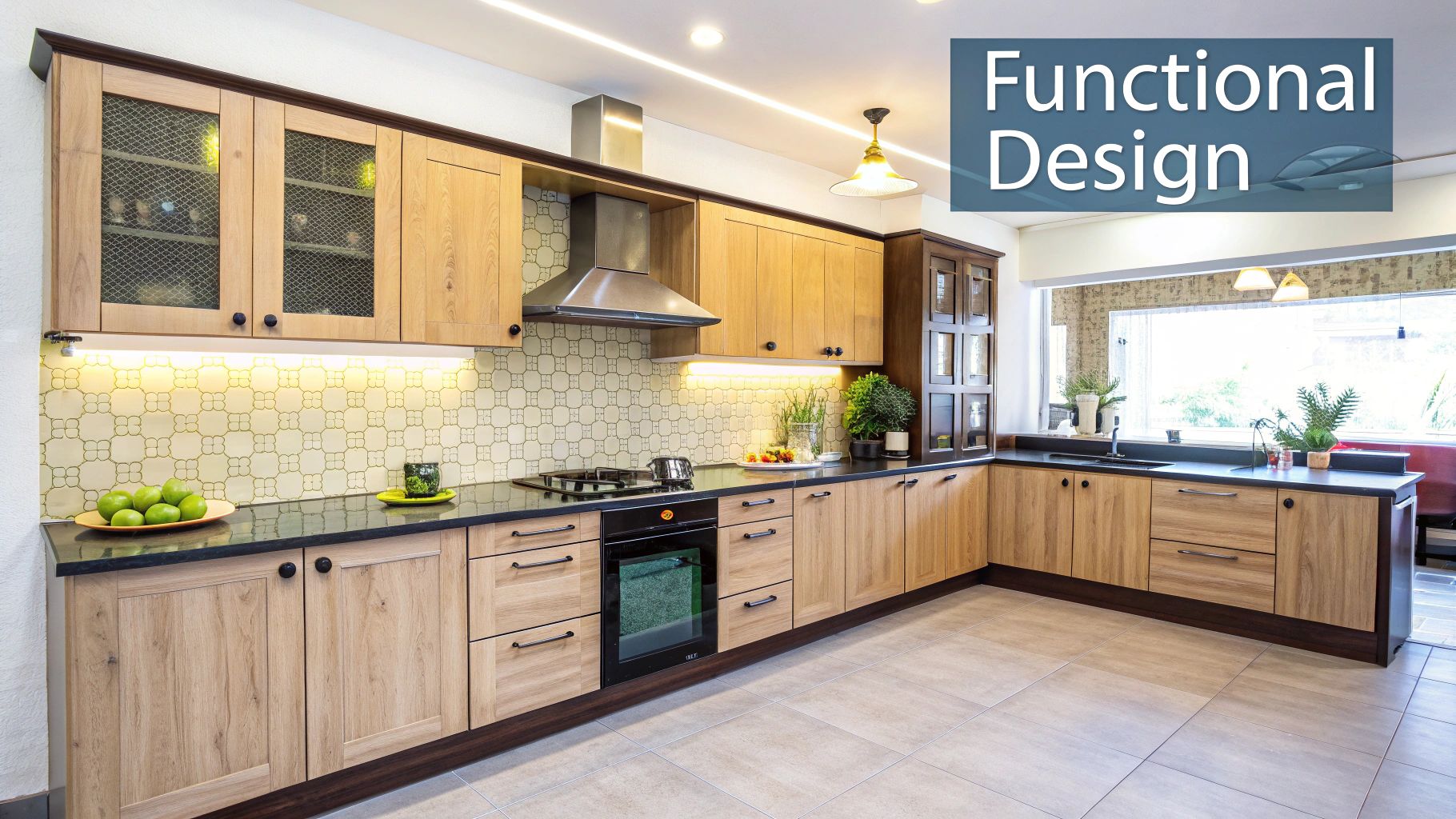
We first need to understand your daily rhythm. Are you a passionate home chef who needs an efficient workflow? Or is your kitchen a central hub for family gatherings? Your routines dictate the layout and flow of the room.
Optimising Layouts for Singaporean Homes
In many Singaporean homes, space is a precious commodity. A smart layout is essential. The classic ‘work triangle’—the path between the sink, stove, and refrigerator—remains a fundamental principle of efficient kitchen design.
Our goal is to make this triangle feel effortless, reducing wasted steps. For example, in a compact galley kitchen, placing the sink and stove on one wall with the fridge directly opposite creates a tight, effective workflow that makes the most of a narrow space.
A successful kitchen layout is invisible. You don't notice it because everything is exactly where you intuitively expect it to be, making everyday tasks feel effortless and natural.
This careful planning eliminates common frustrations, like not having enough landing space next to the oven or a fridge door that blocks a walkway.
Creating a Unified Aesthetic
Once the layout is locked in, we create a cohesive visual story. Your chosen wood cabinets set the tone, but they need the right supporting cast. This involves selecting complementary materials that enhance the wood’s beauty, rather than competing with it.
We guide you in pairing your cabinets with the perfect partners:
- Countertops: A light quartz countertop can create a stunning contrast against dark walnut cabinets, making the room feel brighter. A warm-toned granite can beautifully complement the golden hues of teak.
- Backsplashes: This is your chance to inject personality. A simple, glossy tile can create a clean, modern look, while a patterned Peranakan-style tile can add a unique, localised touch.
- Lighting: Lighting is a crucial, often overlooked element. We layer different types of lighting for function and ambience. Under-cabinet task lighting illuminates your prep areas, while statement pendant lights over an island can serve as a stunning focal point.
By thoughtfully bringing these elements together, we ensure your wood cabinets are part of a beautifully orchestrated design. The final result is a kitchen that is not just highly functional and tailored to your lifestyle, but also a true reflection of your personal taste.
Common Questions About Wood Kitchen Cabinets
Even after weighing the options, it's normal to have more questions. A new kitchen is a significant investment, and you want to be sure about every detail. Here are some of the most common queries we get about wood cabinets, with straightforward answers.
Can I Paint My Existing Wood Cabinets?
Yes, absolutely. This is one of the biggest advantages of wood. Unlike laminate or thermofoil, solid wood and wood veneer cabinets can be sanded, primed, and painted. This means you can easily adapt to new trends or update your kitchen's style years from now without a full replacement.
For a lasting finish, the application method matters. In our experience, a factory-sprayed finish provides a much harder, more resilient surface than can be achieved by brush-painting on-site. However, if you’re planning a DIY project, remember that preparation is everything.
The secret to a durable painted finish isn't just the paint quality. It’s the meticulous prep work. A thorough cleaning to remove all grease, followed by a light sanding to give the primer something to grip—these steps are non-negotiable for a professional result.
Which Wood Is Best for Singapore's Humid Climate?
In Singapore, humidity is a primary concern for any natural material. To avoid issues like warping, some woods perform much better than others.
- Teak: It is naturally rich in oils that make it highly resistant to moisture and pests, making it a top-tier choice for a kitchen that will last a lifetime.
- Engineered Plywood: For the cabinet boxes (carcasses), a high-quality, moisture-resistant plywood core is often the smartest choice. Its cross-laminated structure is incredibly stable, preventing it from swelling or shrinking with weather changes.
A popular and effective combination is using a beautiful solid wood like teak or oak for the doors, paired with a tough plywood carcass. This approach gives you the best of both worlds: stunning aesthetics and a core structure built to handle our local climate.
How Long Do Wood Cabinets Last?
With proper care, good quality wood kitchen cabinets can easily last for 20 to 30 years, and often much longer. This longevity is one of their main selling points compared to other materials. You might choose to refresh the finish every ten years or so, but the structure itself will remain solid.
This durability makes them a fantastic long-term investment. They don’t just stand up to daily use; they add real, tangible value to your property in a way that synthetic alternatives cannot match over time.
Ready to create a kitchen that combines timeless beauty with lasting quality? The team at KIVO has decades of experience in bespoke carpentry and interior design. We guide you through every step, from selecting the perfect materials to flawless installation. Visit us at kivo.com.sg to schedule your personal consultation and start designing the kitchen of your dreams.