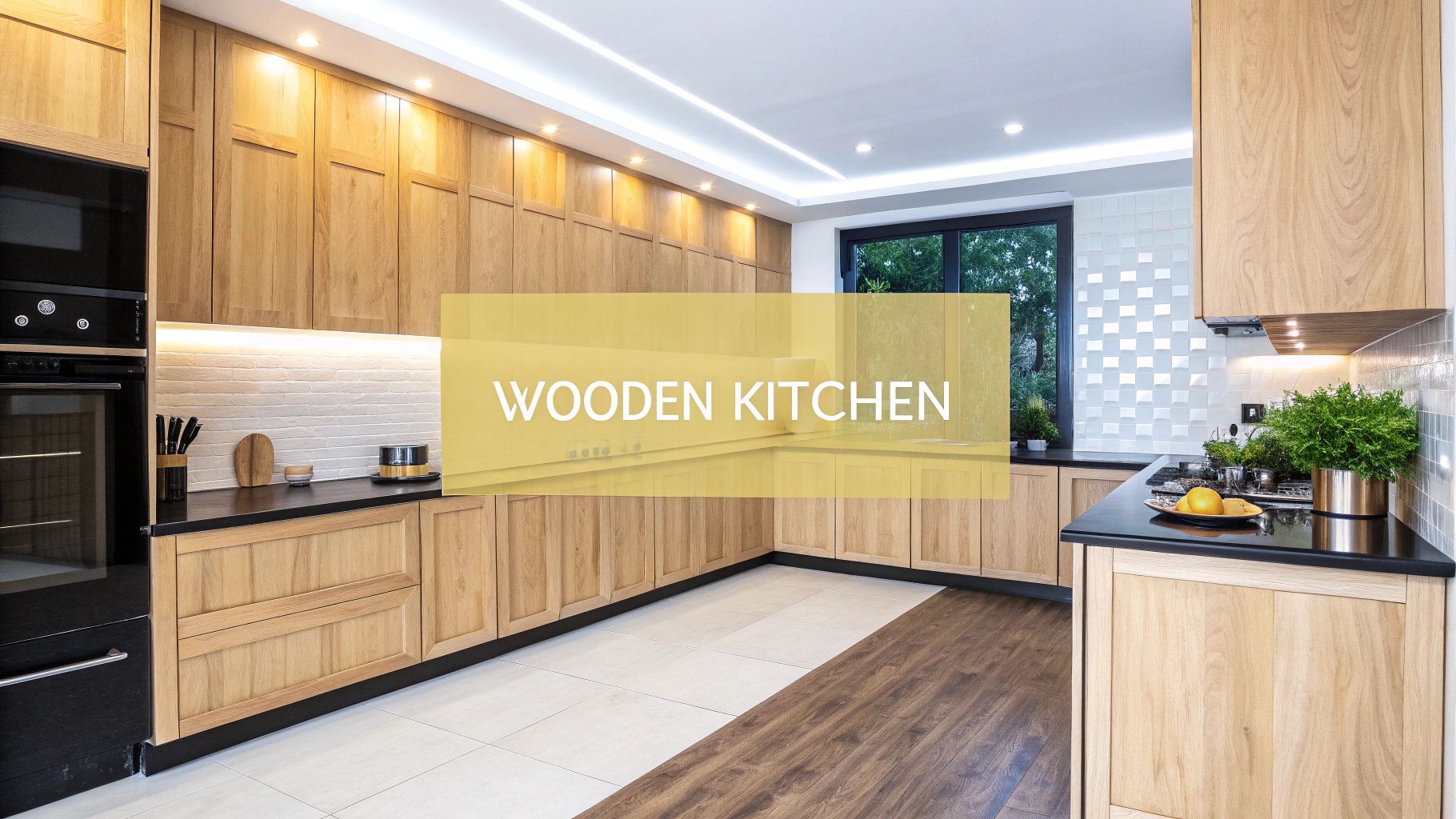
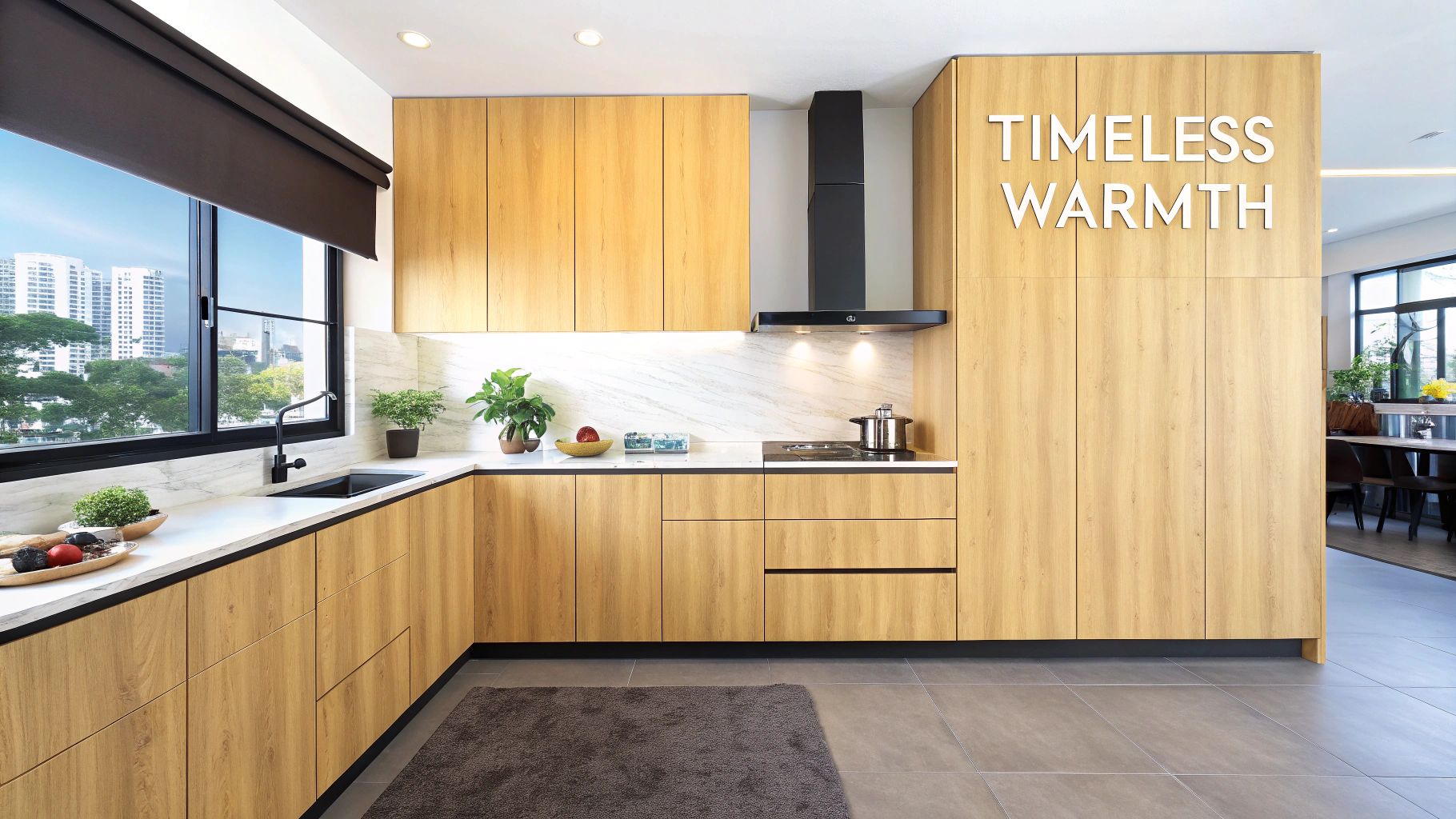
Walk into any thoughtfully designed Singapore kitchen, and you’ll likely notice a common element: the undeniable warmth of wooden kitchen cabinets. While design trends shift, wood remains a foundational choice for the modern kitchen. It brings a natural texture, depth, and a sense of permanence that synthetic materials can't replicate.
This guide provides actionable insights for creating your ideal kitchen. We’ll cover everything from material selection to maintenance, ensuring your investment is both beautiful and practical for Singaporean living.
Why Wooden Cabinets Are a Smart Choice for Singapore Homes
Wooden cabinets are more than just storage; they are the architectural backbone of your kitchen. Their key strength is versatility, fitting seamlessly into a minimalist Scandi BTO flat or a classic landed property. Unlike fleeting trends, the appeal of natural wood is lasting, adding tangible value and a welcoming atmosphere to your home.
Enduring Appeal and Market Strength
The preference for wooden cabinetry isn't just about aesthetics; it's a stable market trend. The global household furniture and kitchen cabinet market is projected to reach $524.17 billion USD by 2029, growing at a steady 5.4% CAGR. A key driver for this growth is the demand for multifunctional, space-efficient designs—a necessity in many Singapore homes. This data confirms that investing in quality wooden cabinetry aligns with long-term homeowner preferences. To see the data, you can read the full research about the household furniture market.
What We Will Cover in This Guide
This guide is structured to help you make informed decisions, focusing on practical application.
- Material Selection: A realistic look at solid vs. engineered woods for Singapore’s climate.
- Construction Quality: How to identify craftsmanship that ensures longevity.
- Finishes and Hardware: Actionable tips for choosing details that define your style.
- Budgeting and Investment: A breakdown of costs and long-term value.
- Care and Maintenance: Simple, effective routines to protect your investment.
Choosing the Right Wood for Your Kitchen Cabinets
Selecting the right wood is the most critical decision for your kitchen. It impacts durability, maintenance, and the overall aesthetic. The choice between solid hardwoods and high-performance engineered woods sets the stage for a kitchen that lasts.
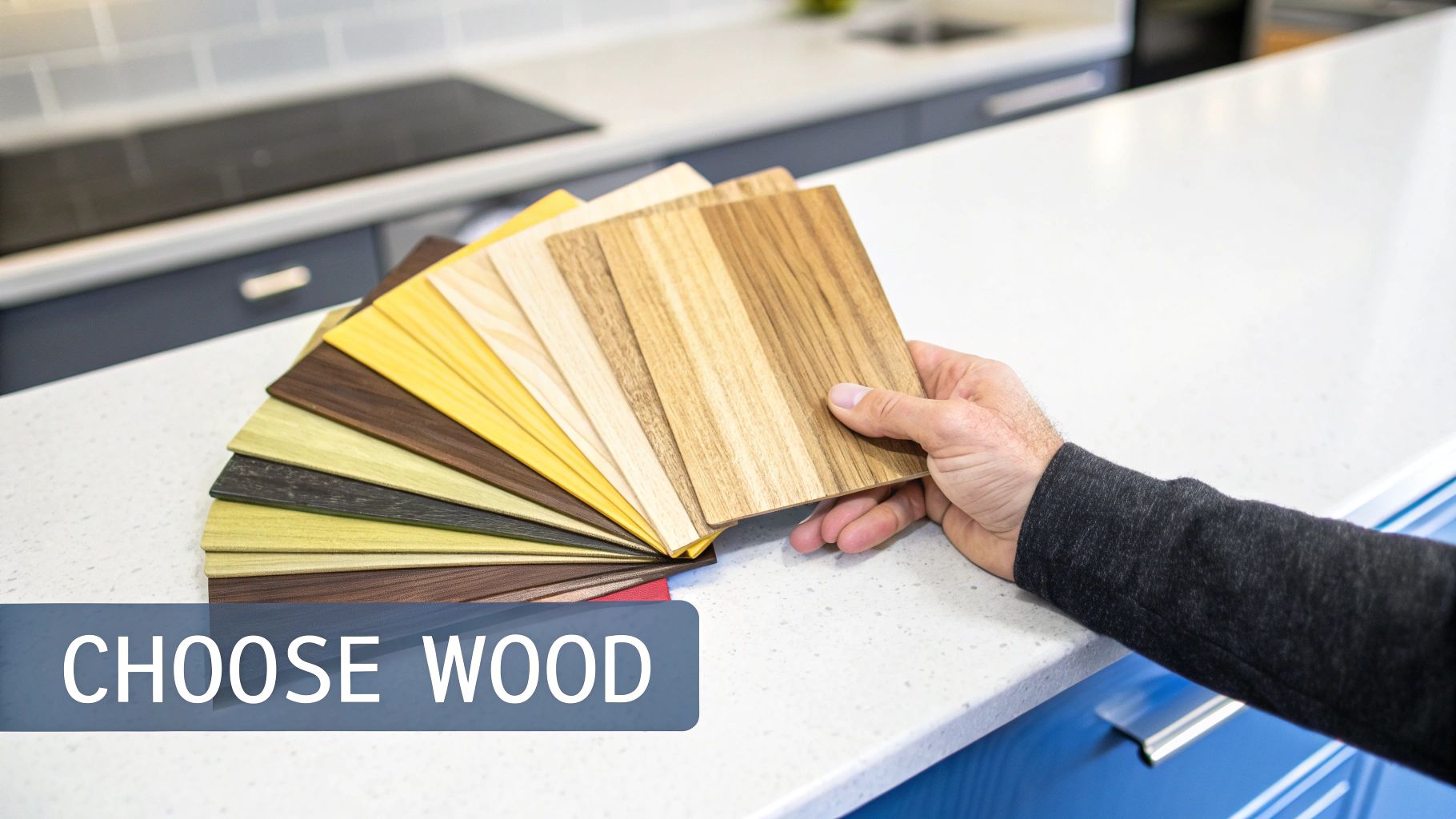
Your material choice influences everything from your cleaning routine to the resale value of your home. Let's examine the two primary categories: classic solid hardwoods and modern engineered woods. Both are excellent options for a wooden cabinets kitchen when used correctly.
Timeless Appeal of Solid Hardwoods
Solid wood is prized for its authenticity and strength. Each plank is unique, with natural variations in grain that give your cabinets a distinct character. For Singapore's humidity, selecting a dense, durable hardwood is non-negotiable.
Here are the most reliable options we recommend to clients:
- Oak: A true workhorse, oak is known for its strength and prominent grain. It's versatile enough for both traditional and modern farmhouse designs. Its grain can be straight for a clean look or feature "cathedral" patterns for more visual texture.
- Walnut: For a touch of luxury, walnut is unmatched. Its smooth, fine grain and deep chocolate tones create a sophisticated feel. It tends to lighten subtly over time, developing a rich patina that enhances its character.
- Maple: Ideal for painted finishes or light, natural stains. Maple has a subtle, uniform grain that provides a smooth canvas. It is also exceptionally hard, making it a practical choice for high-traffic family kitchens.
Practical Insight: Many clients are drawn to the aesthetic of a particular wood seen online. However, functionality is key. A softwood like pine, for example, looks beautiful but will dent easily in a busy kitchen. Our approach is to match a hardwood's durability to your lifestyle, not just your inspiration photos.
The Practicality of Engineered Woods
Engineered wood, specifically high-quality plywood or moisture-resistant MDF with a real wood veneer, offers significant advantages in a humid climate like Singapore's. Its core strength is stability.
The construction method—bonding thin layers of wood together with alternating grain directions—counteracts the natural tendency of wood to warp or swell. This makes it an exceptionally reliable choice for kitchen cabinets.
Comparing Popular Woods for Kitchen Cabinets
This table provides a clear comparison to help you weigh your options based on practical considerations.
| Wood Type | Hardness & Durability | Typical Cost | Best For (Aesthetic) | Maintenance Level |
|---|---|---|---|---|
| Oak | Very Hard & Durable | Mid-Range | Traditional, Farmhouse | Low to Medium |
| Walnut | Hard | High-End | Modern, Luxury | Low to Medium |
| Maple | Very Hard & Durable | Mid-Range | Contemporary, Painted | Low |
| Veneered Plywood | Excellent Stability | Mid-Range | Versatile, All Styles | Low |
This table serves as a starting point. The optimal choice will balance your aesthetic goals, budget, and functional needs.
The Best of Both Worlds: Veneered Plywood
For many of our projects, veneered plywood is the ideal solution, offering the look of solid wood with enhanced structural integrity. This material consists of a thin layer of genuine hardwood (like oak or walnut) bonded to a core of high-grade plywood.
This hybrid approach delivers key benefits:
- Superior Stability: The cross-grained plywood core resists expansion and contraction from humidity. This means your cabinet doors remain perfectly aligned year-round.
- Authentic Look and Feel: The surface is real wood, providing the same beautiful grain and texture as a solid panel. There is no aesthetic compromise.
- Cost-Effective Luxury: Veneered plywood is often a more budget-friendly way to achieve a high-end look, particularly with premium timbers.
The choice between solid and engineered wood isn't about which is "better," but which is better suited to your specific kitchen, budget, and lifestyle. Understanding these materials is the first step toward a wooden cabinets kitchen that is both beautiful and built to last.
Understanding Cabinet Construction and Craftsmanship
After selecting your wood, the next focus is construction. The quality of wooden kitchen cabinets is determined by how they are built—the joinery and structural methods that ensure they function smoothly and withstand daily use for decades.
Understanding these fundamentals helps you recognize quality craftsmanship and make a sound investment.
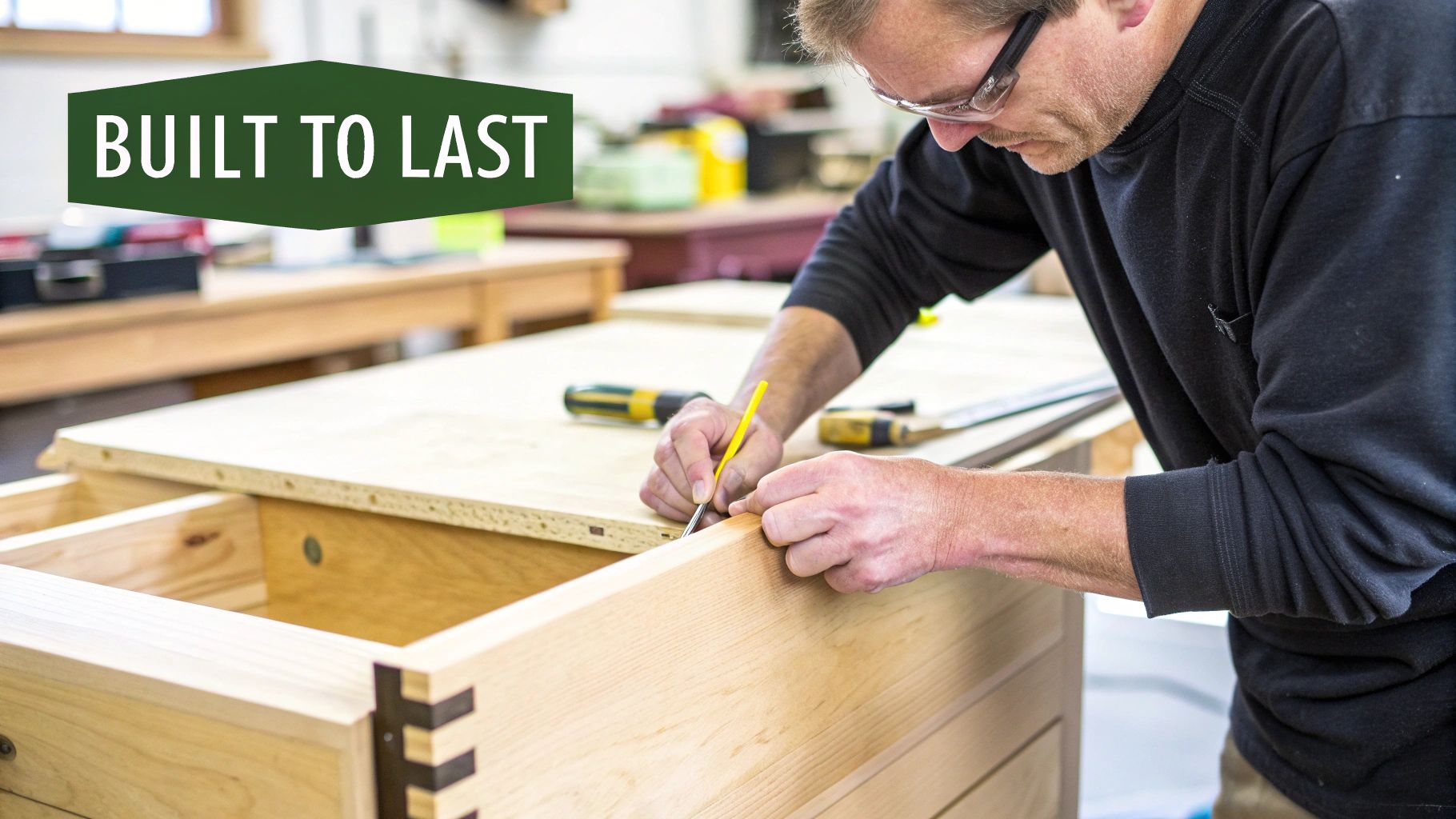
Think of cabinet construction like a building's foundation. A beautiful exterior is meaningless without a solid structure. In cabinetry, this comes down to two main styles—framed and frameless—and the joinery that holds them together.
Framed vs Frameless Cabinets
One of the first design decisions is choosing between framed and frameless construction. Each offers a distinct aesthetic and functional profile.
Framed Cabinets: A Traditional Approach
Framed cabinets feature a solid wood face frame on the front of the cabinet box. Doors and drawers are mounted to this frame.
- How it works: The frame provides exceptional rigidity and a classic, detailed look.
- Aesthetic: This style creates a more traditional, layered appearance. It accommodates various door styles, like inset (flush with the frame) or overlay (covering the frame).
- Durability: The solid wood frame adds significant structural strength, making these cabinets extremely robust.
Frameless (Euro-Style) Cabinets: A Modern Solution
Popular in contemporary European design, frameless cabinets consist of a cabinet box without a face frame. The doors are mounted directly to the sides of the box.
- How it works: This method relies on thicker side panels for stability, resulting in a clean, seamless look.
- Aesthetic: The aesthetic is modern and minimalist, with minimal gaps between doors and drawers. This style is ideal for showcasing a continuous wood grain.
- Storage: A key practical benefit: the absence of a frame provides slightly more interior storage and easier access—a valuable advantage in compact Singapore kitchens.
Client Trend: We've observed that homeowners aiming for a minimalist or Scandinavian aesthetic consistently choose frameless cabinets. The clean lines and full-overlay doors create an uninterrupted visual that makes a kitchen feel larger and more streamlined.
The Art of Joinery: Why It Matters
Joinery is the craft of connecting wood pieces. It's the difference between a cabinet that lasts a lifetime and one that sags after a few years. Proper joinery is the hallmark of skilled carpentry.
Traditional techniques provide a level of strength that modern fasteners and adhesives alone cannot match. Drawer construction is a key indicator of quality. A well-built drawer must withstand thousands of cycles while holding heavy items. This is where a dovetail joint is essential. Its interlocking pins and tails create a strong mechanical bond that resists being pulled apart—a standard in high-end furniture and our custom projects.
Another critical joint is the mortise and tenon, used for cabinet doors and face frames. A projecting tenon fits into a mortise (hole), forming a powerful, rigid connection. This time-tested method ensures your cabinet doors remain square and stable, preventing warping in humid conditions. Identifying these details signifies an investment in lasting craftsmanship.
Selecting Finishes and Hardware That Define Your Style
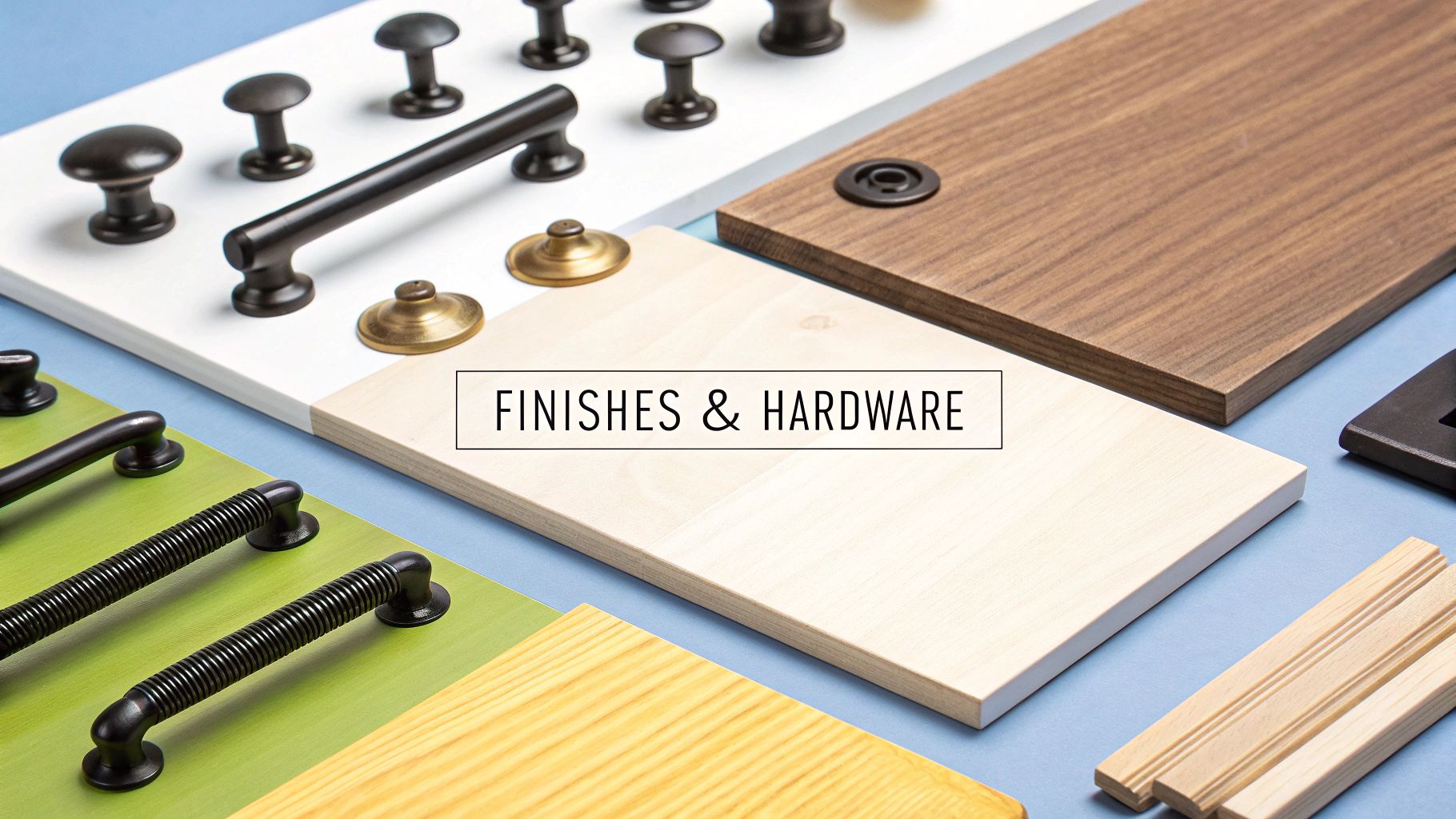
With wood and construction decided, the final stage is selecting finishes and hardware. This is where your wooden cabinets kitchen develops its unique personality. These details transform a functional space into a statement of your personal style, whether it's sleek and modern, warm and rustic, or timelessly elegant.
The finish acts as the cabinet's protective layer, while the hardware is its functional jewellery. Both must complement the wood and your overall design vision.
Choosing the Perfect Cabinet Finish
A cabinet finish does more than add colour; it's a crucial defense against moisture, stains, and daily wear. The right finish can highlight the wood's natural grain or create a uniform, coloured surface.
Here are the primary options we discuss with clients:
Natural Oil Finishes: These penetrate the wood, nourishing it and creating a warm, matte look that enhances natural texture. They are ideal for an organic aesthetic but may require reapplication every few years to maintain protection.
Stains: Stains alter the wood's colour without obscuring its grain. From a light wash to a deep espresso, stains allow for customisation while celebrating the wood's character. They are absorbed into the wood, offering good durability.
Lacquers and Polyurethanes: For maximum durability, these are the industry standard. They form a hard, protective film on the wood's surface, offering excellent resistance to moisture, heat, and scratches. Available in sheens from matte to high-gloss, these wood coatings can achieve any look from subtle and modern to bold and reflective.
Practical Insight: A family with young children often prefers a durable satin lacquer for its easy-to-clean surface. In contrast, a homeowner who appreciates the raw beauty of timber might opt for a natural oil finish, which is easy to touch up themselves.
The Finishing Touch: Hardware Selection
Hardware is a key opportunity to inject personality into your kitchen. Knobs, pulls, and handles are functional necessities that also serve as critical decorative accents, completing your design narrative.
The importance of these details is reflected in market data. The wooden furniture market for kitchens in Singapore was valued at 56 million USD in 2024, indicating consistent demand for high-quality, beautifully finished wooden kitchens.
Creating a Cohesive Look with Hardware
Matching hardware to your cabinet style is crucial for a polished result. Here are common pairings we use to achieve specific aesthetics for our clients:
- Modern Scandinavian: For light woods like oak or maple, we recommend minimalist matte black or brushed nickel handles. Their clean lines provide a crisp contrast that feels fresh and contemporary.
- Luxurious and Moody: Dark walnut or cherry cabinets pair perfectly with brushed brass or satin gold pulls. The warm metallic tones pop against the deep wood, adding glamour and sophistication.
- Timeless Traditional: For classic framed cabinets, polished nickel knobs or cup pulls offer timeless elegance. Their soft lustre complements detailed craftsmanship.
Choosing finishes and hardware is a balance of aesthetics, durability, and personal taste. These final decisions unify your kitchen design, ensuring your wooden cabinets kitchen is a true reflection of you.
Budgeting for Your Custom Wooden Cabinets in Singapore
A successful kitchen renovation begins with a clear financial plan. Understanding the costs associated with a custom wooden cabinets kitchen in Singapore is essential to realizing your vision without unexpected financial stress. This is not just a purchase; it's a long-term investment in your home.
The value placed on quality kitchens is clear: Singapore's modular kitchen market, dominated by wooden cabinetry, was valued at 175.47 billion USD in 2024 and is projected to grow significantly. You can review the details in the Singapore modular kitchen market report.
Key Factors Driving Cabinet Costs
The final cost of your custom cabinets is determined by several key factors. Understanding them allows you to make informed decisions that align with your budget.
- Wood Species: The choice of wood is a primary cost driver. Solid walnut, for example, is significantly more expensive than high-quality veneered plywood or common hardwoods like oak.
- Design Complexity: Simpler designs are more cost-effective. A flat-panel door in a frameless style requires less labour and material than a traditional inset door with intricate moulding. Features like curved cabinets or complex internal organisers also increase costs.
- Finishes and Hardware: A multi-step, high-gloss lacquer finish is more labour-intensive and costly than a simple oil finish. Similarly, premium hardware from brands like Blum or Häfele carries a higher price than standard options.
Understanding Per-Foot-Run Estimates in Singapore
In Singapore, the term per-foot-run (PFR) is a standard metric used by carpenters and designers to provide initial estimates. It refers to a linear measurement of your cabinetry's length and serves as a useful baseline for budgeting.
Practical Insight: A PFR price is an excellent starting point for budget planning. However, it's crucial to remember that this is an estimate. The final cost will depend on your specific choices of materials, complexity, and finishes.
As a general guideline, a basic laminate-finish cabinet might start around $120 PFR. In contrast, a high-quality wood veneer or solid wood design can range from $250 PFR to over $500 PFR. This wide range highlights the importance of a detailed consultation with your designer.
Why Custom Cabinets Are a Long-Term Investment
While the upfront cost is higher than off-the-shelf options, custom wooden cabinets deliver lasting value.
Three Core Investment Benefits:
- Perfect Fit and Function: Customisation ensures every centimetre of your kitchen is optimised for your lifestyle, creating efficient storage and workflow.
- Superior Durability: High-quality materials and expert craftsmanship result in cabinets built to last for decades, saving you the cost and hassle of future replacements.
- Increased Home Value: A beautiful, highly functional kitchen is a major selling point. Prospective buyers recognize and value quality carpentry, often increasing a home's market value.
Keeping Your Wooden Cabinets Looking Timeless
Your new wooden kitchen is a significant investment designed to last for decades. Proper care is simple and ensures your cabinets remain in pristine condition. A consistent, gentle maintenance routine is all it takes to protect your carpentry from daily use and Singapore’s humidity.
The Gentle Art of Routine Cleaning
For wood, a gentle approach is always best. Harsh chemicals and excess water can damage the finish.
- Weekly Dusting: Use a soft, dry microfibre cloth to wipe down cabinets. This prevents the build-up of dust and airborne kitchen grease.
- Mild Cleaning Solution: For fingerprints or minor spills, mix a few drops of pH-neutral dish soap with warm water. Dampen a soft cloth, clean the spot, and immediately dry the surface with a separate clean cloth. Never let water sit on the wood.
Practical Mistake to Avoid: Homeowners often use all-purpose kitchen sprays or vinegar-based solutions. These products are typically too acidic and can slowly degrade the protective lacquer, leaving the wood vulnerable. Always use a cleaner specifically formulated for wood.
Managing Everyday Wear and Tear
Minor scratches and dings are inevitable. Address them promptly. A touch-up marker or wax repair stick matched to your cabinet’s finish can conceal small surface scratches. For deeper gouges, it is best to consult a professional for proper filling and sealing.
Wood naturally expands and contracts with changes in humidity. In Singapore, ensuring good kitchen ventilation is crucial to prevent swelling or warping. A simple habit like running the exhaust fan during cooking makes a significant difference.
Being prepared for emergencies is also part of maintenance. Knowing what to do in a pipe burst emergency can prevent catastrophic damage to your joinery. Quick action in such situations can save your cabinets. With these simple habits, your kitchen will remain the functional and beautiful heart of your home for years to come.
Got Questions About Wooden Kitchens? We've Got Answers
Embarking on a kitchen renovation can be overwhelming. To provide clarity, here are answers to the most common questions we receive from clients about designing a wooden cabinets kitchen.
How Long Will My Custom Wooden Cabinets Really Last?
With proper care, high-quality custom wooden cabinets are built to last 20 to 30 years or more. Their longevity is due to superior materials and craftsmanship, such as solid joinery techniques. This is a significant step up from off-the-shelf cabinets, which often use particleboard and may show wear within a decade. The key to longevity in Singapore is selecting a suitable wood and a durable finish that protects against moisture.
Is Solid Wood Always the Best Choice?
Not necessarily. While solid wood has a unique charm, high-quality engineered wood (like moisture-resistant plywood with a real wood veneer) often performs better in humid climates. It is more stable and less prone to warping or swelling, making it a highly practical choice for cabinet doors and panels.
The "better" choice depends on your priorities:
- For authentic character and the ability to refinish in the future: Solid wood is an excellent option.
- For superior stability, durability, and often better value: Engineered wood is frequently the smarter choice for a busy kitchen.
Will Wooden Cabinets Make My Kitchen Look Dated?
This is a common concern, but wood's appeal is timeless. While specific trends fade, the natural beauty of wood grain remains a design staple. The key to avoiding a dated look lies not in the material, but in the design of the doors and cabinet structure.
Actionable Tip: Choose classic door profiles. A simple Shaker door or a sleek flat-panel design is timeless for a reason. Overly ornate details, like the raised-arch doors popular in the 1990s, are what tend to date a kitchen, not the wood itself.
How Much Work Is It to Clean Wooden Cabinets?
It's easier than you might think. The main rule is to avoid harsh, abrasive chemicals and excessive water.
Your Simple Care Routine:
- Dust regularly with a soft, dry microfibre cloth.
- For spills or fingerprints, use a cloth lightly dampened with a mild soap-and-water solution.
- Always wipe the surface completely dry immediately with a clean cloth. This is the most critical step.
- Avoid scouring pads and strong all-purpose cleaners, which can damage the protective finish.
Following these simple steps will keep your wooden kitchen cabinets looking beautiful for years. A well-maintained wooden kitchen is a lasting investment that adds warmth and value to your home.
Ready to create a kitchen that perfectly balances timeless style with modern functionality? At KIVO, our team of artisans and designers is here to guide you through every step, from material selection to the final installation. We believe in creating spaces that are not only beautiful but are built to last a lifetime.