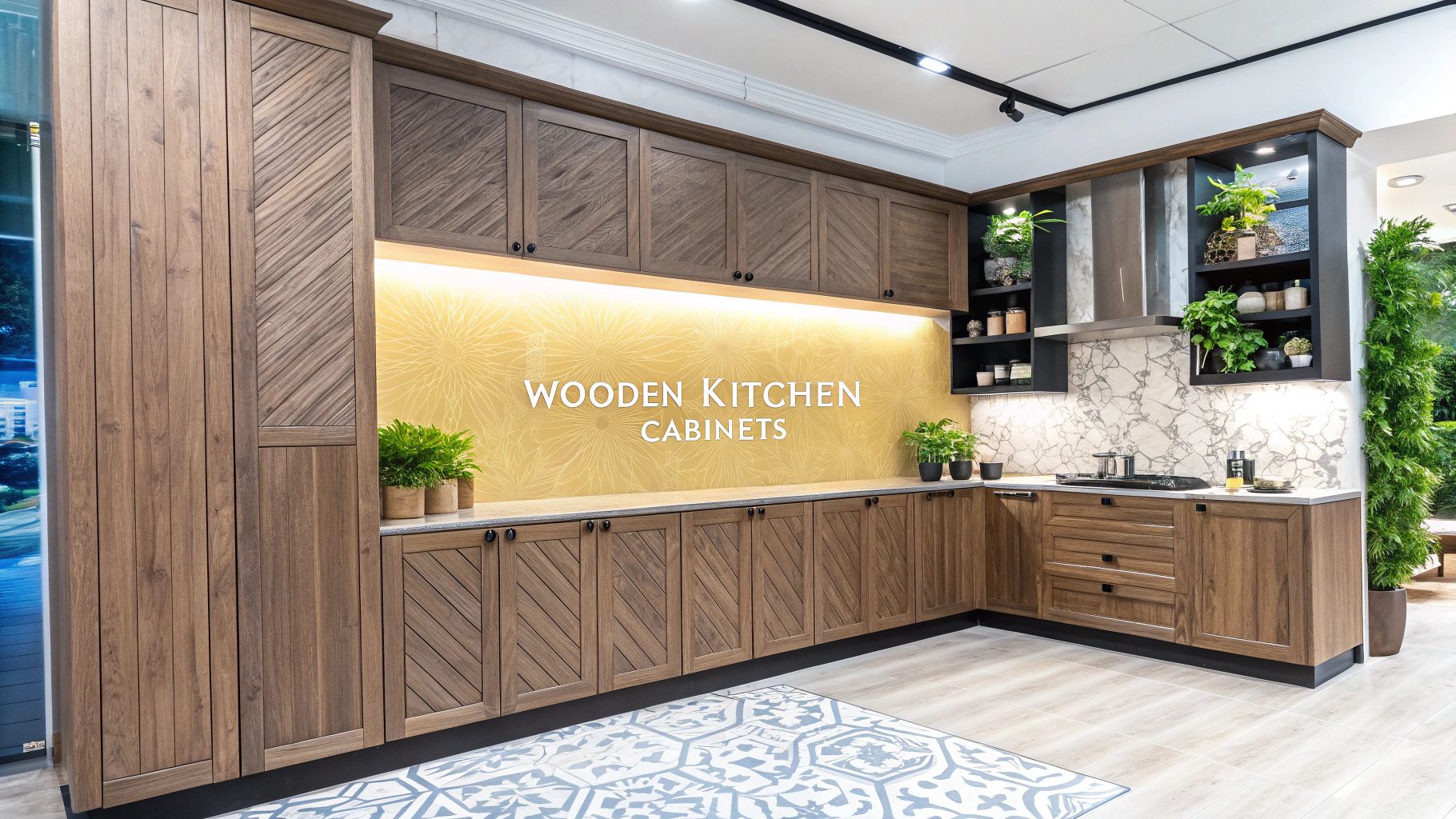
Walk into any thoughtfully designed home in Singapore, and you'll almost always find one element at its heart: a stunning wooden kitchen cabinet. This isn't just a fleeting trend; it's a classic choice that brings natural warmth, timeless character, and genuine value to HDB flats and condos alike.
Why Wooden Cabinets Are a Perfect Fit for Singaporean Kitchens
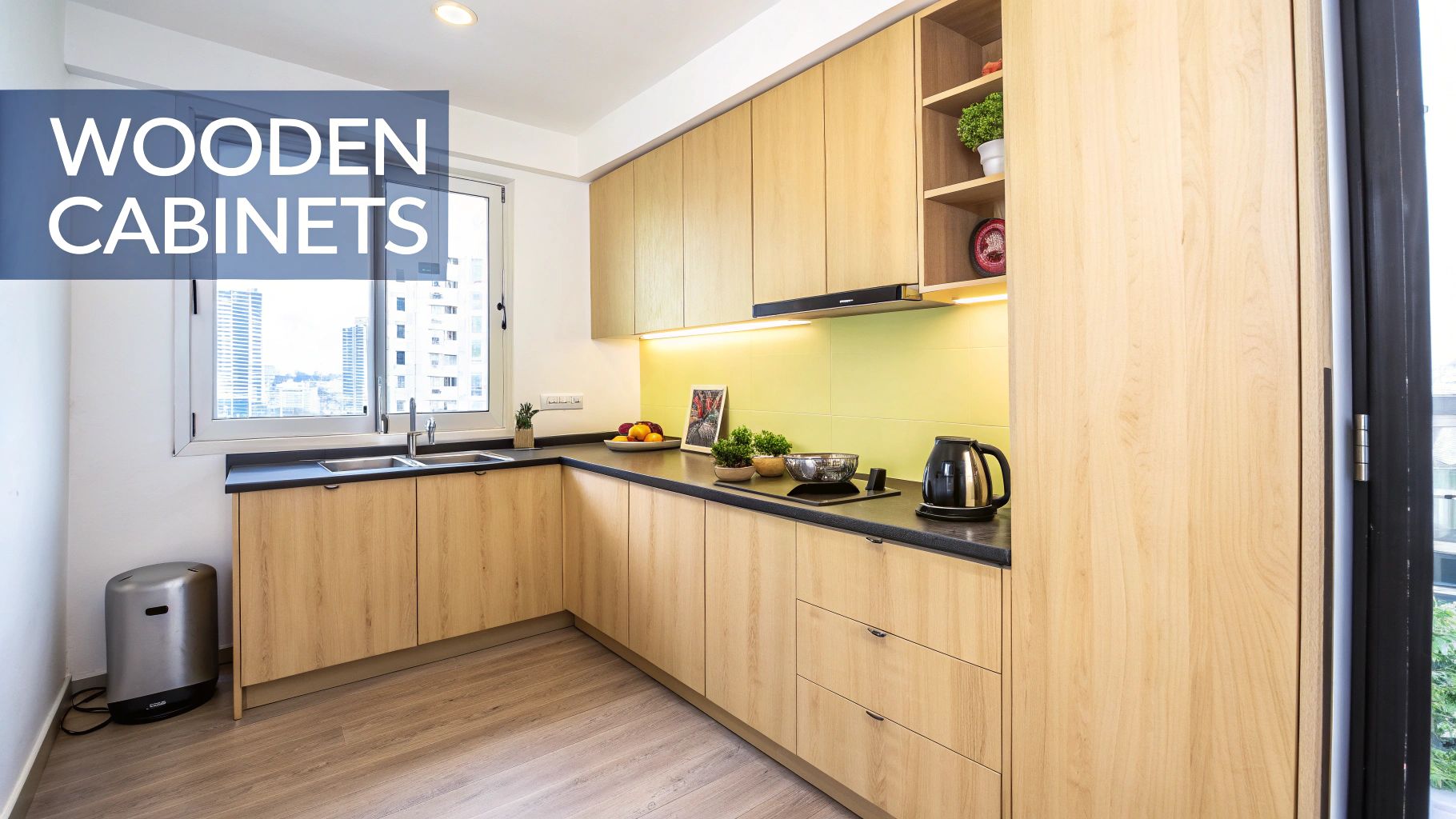
There's a reason a wooden kitchen cabinet remains a top choice for homeowners—it has an incredible ability to be both beautiful and practical. Unlike colder materials like laminate or metal, wood introduces an organic, welcoming vibe that makes the kitchen truly feel like the centre of the home.
It’s also exceptionally versatile. Wood can be shaped and finished to fit nearly any design vision you have.
Whether you’re aiming for the clean, minimalist lines of a Scandinavian-inspired kitchen or the rich, detailed textures of a more traditional style, wood provides the perfect canvas. Time and again, our clients express a desire for a kitchen that feels both modern and cosy. From our experience, nothing delivers on that brief better than well-crafted wood.
Let’s Address the Key Concerns First
When planning a kitchen renovation in Singapore, a few practical questions always come up. We get asked two more than any others: "Can wood really handle our humidity?" and "What is this going to cost me?"
Let's tackle those right away.
- Durability in Our Humid Climate: This is a valid concern, but modern material science and finishing technologies are game-changers. Today's wooden cabinets are engineered to last. By selecting the right materials—like moisture-resistant plywood for the internal structure and properly sealed solid woods or veneers—and ensuring your kitchen has adequate ventilation, issues like warping are largely a thing of the past.
- Budget and Real Value: The cost of a wooden kitchen cabinet isn't a fixed price. The investment can vary significantly, which means there are practical options for different budgets. The final price depends on the type of wood, the complexity of the design, and the hardware you select. We see it as a long-term investment that pays back daily in usability and adds measurable value to your home.
A well-crafted wooden kitchen is much more than storage. It's a core part of your home's character, creating a tangible connection to nature that brings a sense of calm and authenticity into your daily life.
Consider this guide your practical roadmap. We’ll walk you through every key decision in creating your perfect wooden kitchen cabinet, from selecting the right timber to choosing a style that truly fits your lifestyle. Our goal is to equip you with the knowledge to feel completely confident as you begin this exciting renovation journey.
Choosing the Right Wood for Your Kitchen's Climate
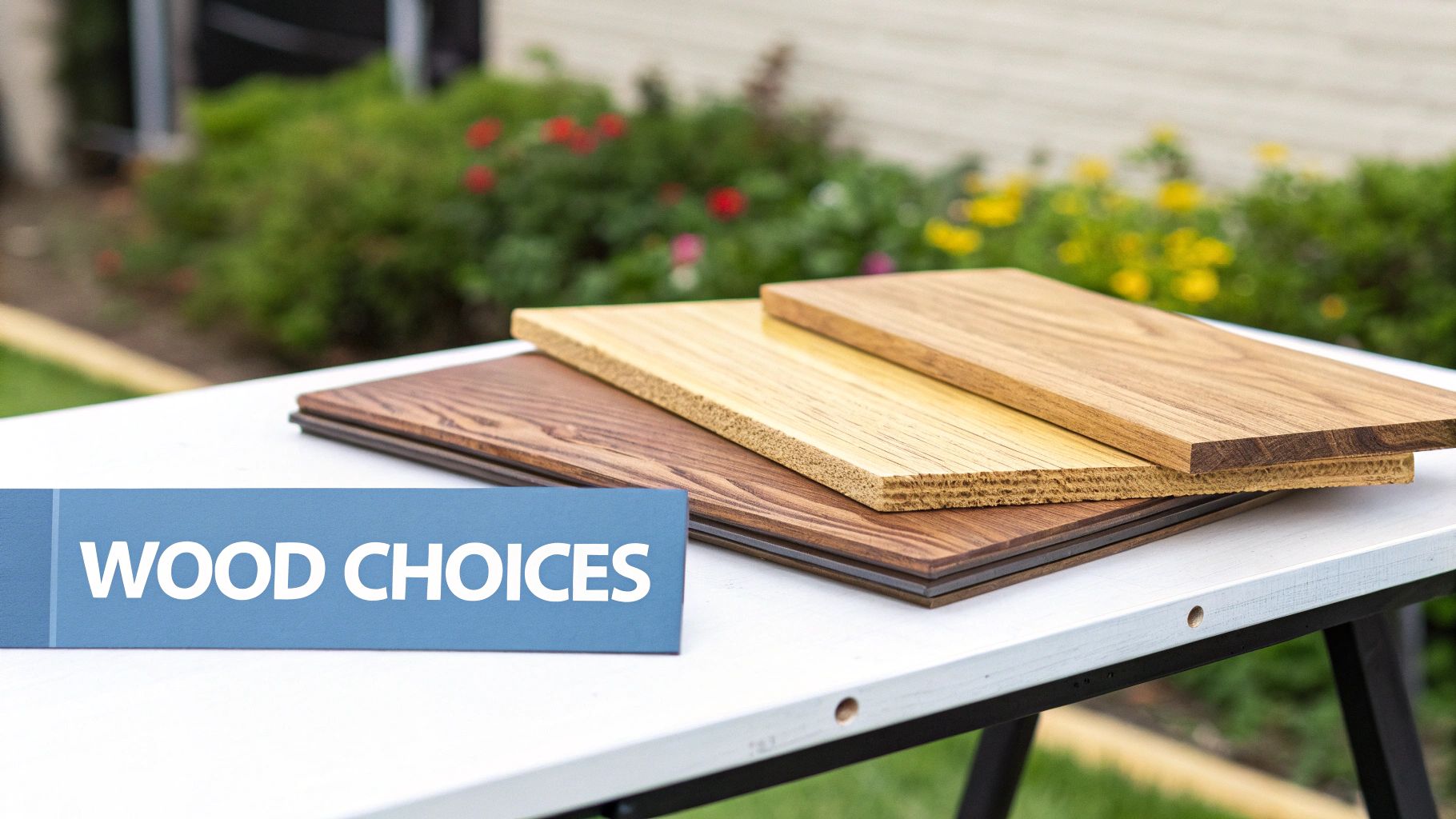
When it comes to building a kitchen that lasts, material selection is everything. It's the foundation for every other design choice you'll make. Especially in Singapore's humid environment, a wooden kitchen cabinet needs to do more than just look good—it has to perform.
This isn’t just about choosing a colour or grain pattern. It’s about understanding how different materials will react to constant moisture, heat from cooking, and the daily wear of a busy kitchen. This single decision will determine how gracefully your kitchen ages and the level of maintenance it requires.
Solid Hardwoods: The Gold Standard for Durability
Solid hardwoods like teak and oak are often seen as the premium choice for a wooden kitchen cabinet, and for good reason. They are naturally dense, incredibly strong, and possess a raw beauty that’s impossible to replicate. Each plank has its own unique grain, bringing an authentic warmth into your home.
Teak, in particular, is a star performer in our climate. It’s rich in natural oils that act as a built-in shield against moisture and pests like termites. This makes it a brilliant, low-maintenance option for cabinets near the sink or stove, where steam and splashes are common.
Oak is another heavyweight champion. Renowned for its strength and prominent grain, it can withstand decades of use. It’s a timeless classic that delivers on both aesthetics and performance, making it a solid investment for any home.
The real advantage of solid wood is its longevity and reparability. Minor scratches or dings can often be sanded out and refinished, restoring your cabinets to their original glory—a benefit most other materials can't offer.
In our experience, clients who value authenticity and longevity often gravitate towards these hardwoods. Based on what we've seen, the demand for resilient and natural materials continues to grow as homeowners look for lasting quality over short-term trends.
Engineered Woods: Smart and Stable Solutions
While solid wood is fantastic, it isn't the only quality option. Engineered woods, particularly high-grade, moisture-resistant plywood, offer a different set of strengths perfectly suited for modern kitchens. This isn't a lesser choice; it's a purpose-built solution.
Plywood is made by bonding thin layers of wood veneer, with the grain of each layer running at a right angle to the next. This cross-graining technique gives it exceptional dimensional stability. In practical terms, it means the wood is far less likely to swell, shrink, or warp with humidity changes—a common concern with solid wood planks.
This stability makes moisture-resistant plywood a superb core material for custom cabinets. We can then finish the exterior with a high-quality wood veneer for a natural look or a durable laminate for a sleek, modern aesthetic. It provides the best of both worlds: the unshakeable core of plywood with the beautiful finish you desire. For a detailed comparison, this guide on the best kitchen cabinet materials offers a great overview of different choices, costs, and durability.
Making the Right Choice for Your Home
So, what’s the right call for your wooden kitchen cabinet? There’s no single answer—it depends on your aesthetic preference, lifestyle, and budget. We typically guide our clients through this decision by asking a few practical questions:
- What look are you aiming for? Do you love the rich, natural character of a solid wood grain, or are you drawn to the clean, consistent finish of a high-pressure laminate?
- How much maintenance are you prepared for? Teak is naturally tough, but all solid woods benefit from occasional care. Laminate surfaces, on the other hand, are extremely easy to clean and require minimal upkeep.
- What is your working budget? Solid hardwoods represent a larger upfront investment, while engineered solutions with premium finishes can deliver a stunning look at a more accessible price point.
Choosing the right material is about finding the sweet spot where your design vision meets the practical demands of your daily life. It’s how you build a kitchen that you’ll love not just today, but for many years to come.
Cabinet Styles and Construction That Work for You
Once you’ve selected the ideal wood, the next step is deciding how your cabinets will be constructed and styled. These decisions define your kitchen's personality and, more importantly, its day-to-day functionality. This is where your vision truly starts to take shape.
The construction method forms the fundamental framework of a cabinet. This isn't just a technical detail; it directly impacts the look, durability, and even the amount of accessible storage space you get. Let's break down the two main approaches.
Framed vs. Frameless Cabinets
Imagine a picture frame—that’s the easiest way to understand the difference between these two construction methods.
Framed Cabinets: This is the traditional method. A solid wood frame, typically around 1.5 inches wide, is attached to the front of the cabinet box. The doors and drawers are then mounted onto this frame. The result is a classic, sturdy look with visible lines, often found in timeless or farmhouse-style kitchens.
Frameless Cabinets (Euro-Style): This modern approach eliminates the face frame. Instead, the cabinet doors attach directly to the sides of the box, creating a sleek, seamless appearance with minimal gaps between doors. It’s a clean, minimalist look that is extremely popular in contemporary Singaporean homes.
From our project experience, especially in compact HDB and condo kitchens, frameless construction is the overwhelming favourite. The reason is purely practical: without the face frame taking up space, you get full, unobstructed access to the cabinet interior. This makes storing and retrieving bulky pots and pans much easier.
This clean aesthetic also helps smaller kitchens feel more open and spacious. The smooth, continuous lines draw the eye across the room, creating an illusion of a larger, more organised space—a smart design strategy that delivers both style and function where every centimetre counts.
Finding Your Perfect Door Style
The cabinet door is the face of your kitchen—it sets the tone for the entire room. While countless variations exist, most designs we create for clients fall into a few key categories that pair beautifully with popular interior themes.
Shaker-Style Doors
This is arguably the most versatile and popular door style. It’s defined by a simple, clean design: a flat recessed centre panel surrounded by four flat border pieces. Its understated elegance allows it to bridge the gap perfectly between traditional and modern aesthetics.
- Best for: Scandinavian, Transitional, and Modern Farmhouse kitchens.
- Actionable Insight: The clean lines make Shaker doors easy to wipe down. For a quick clean, use a microfibre cloth to dust the inner corners of the frame where dust can collect.
Flat-Panel (Slab) Doors
As the name implies, a flat-panel or slab door is a single, solid piece with no frames or ornamentation. This creates a minimalist and highly contemporary look. It's the ultimate choice for an uncluttered design that lets the wood's natural grain or a smooth painted finish be the star.
- Best for: Minimalist, Industrial, and Mid-Century Modern designs.
- Actionable Insight: With no crevices or details, these are the easiest doors to clean. A simple wipe-down is all that's needed, making them a fantastic low-maintenance option for busy households.
Integrated Handle Doors
For the ultimate seamless look, integrated handles are unbeatable. Instead of attaching external hardware, a handle is routed directly into the door or drawer edge, often as a 'J-pull' or a recessed channel. This design keeps the cabinet face completely flat, creating an ultra-modern and sophisticated feel.
- Best for: Ultra-modern and high-end contemporary kitchens.
- Actionable Insight: This style eliminates the need for separate hardware, which can be a cost-saver. It also creates a safer kitchen with no knobs or pulls for clothes to snag on.
Choosing the right combination of construction and style is about balancing aesthetics with practicality. Think about how you use your kitchen, the level of cleaning you’re willing to do, and the overall atmosphere you want to create. That’s how you design a wooden kitchen cabinet that doesn't just look beautiful but works perfectly for you.
Custom Finishes and Smart Storage Solutions
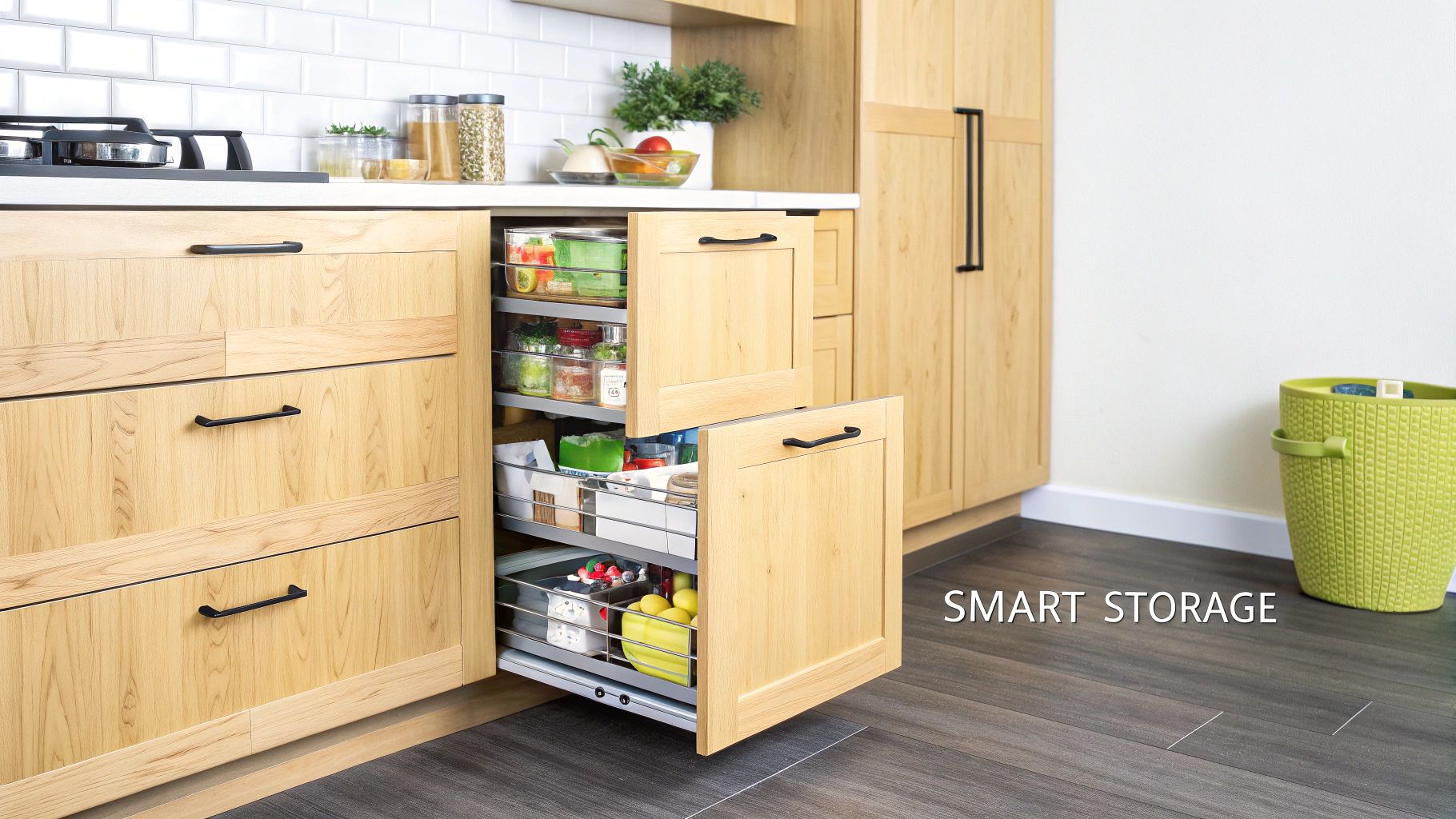
Once you’ve settled on the wood and style for your kitchen cabinets, it’s time for the details that elevate the design. This next layer—finishes and storage solutions—is where you inject personality and transform a set of well-built boxes into a beautiful, hyper-efficient workspace that’s truly yours.
The right finish doesn’t just add colour. It’s also the cabinet's first line of defence, protecting the wood and setting the entire mood for your kitchen. This choice can completely alter the final look, making it a critical piece of the design puzzle.
The Transformative Power of Cabinet Finishes
Think of the finish as the first impression your kitchen makes. The goal is to choose something that not only complements your home’s style but can also withstand the heat, steam, and activity of daily cooking.
Here are the most popular and practical options we work with:
- Wood Stains: Stains are designed to enhance, not hide. They penetrate the wood, highlighting the natural beauty and character of the grain. You can opt for a light, subtle stain that lets the wood’s personality shine, or a deep, rich one for a more dramatic, formal look.
- Paint Finishes: For unlimited colour options, paint is the perfect choice. A professional paint job provides a smooth, durable finish that can create any vibe you desire—from bright and airy with whites and pastels to bold and moody with deep blues or greens. Getting this right is crucial, so understanding the ins and outs of choosing the best paint for kitchen cabinets is key to a beautiful, long-lasting result.
- High-Pressure Laminates (HPL): For a kitchen that needs to be exceptionally durable, HPL is a fantastic choice. It’s made by bonding a decorative sheet to a core material like plywood under intense pressure. The result is an incredibly tough surface that resists scratches, heat, and moisture, available in a vast range of colours and surprisingly realistic wood-grain textures.
Smart Storage for Modern Singaporean Living
In a typical Singaporean HDB or condo, every square centimetre counts. This is where clever, integrated storage becomes an absolute necessity. Good organisation isn’t just about tidiness; it’s about making your kitchen a more efficient and enjoyable space to use.
The demand for smarter cabinetry is growing. Singapore's cabinet market saw an import growth of 9.31% from 2023 to 2024, largely because well-designed wooden cabinets are essential for maximising storage in our compact homes.
A well-organised kitchen saves time and reduces stress. When everything has a designated place and is easy to access, the entire process of cooking feels smoother. It’s about making your space work for you, not the other way around.
We focus on integrating solutions that solve common kitchen frustrations and make a tangible difference in your daily routine.
Here are a few client-favourite solutions that consistently deliver practical value:
- Pull-Out Pantry Systems: These are game-changers for deep cabinets. Instead of getting on your hands and knees to find an item at the back, the entire shelf system glides out to meet you.
- Magic Corner Mechanisms: Corner cabinets are notoriously awkward. A magic corner unit uses interconnected shelves that swing completely out of the cabinet, ensuring no space is wasted and everything is within easy reach.
- Blum Soft-Closing Hinges and Runners: This is a small detail with a huge impact on user experience. Quality hardware from brands like Blum means your doors and drawers close silently and smoothly, adding a touch of quiet refinement and preventing wear and tear from slamming.
- Integrated Cutlery and Spice Organisers: Custom-fitted drawer inserts are the ultimate clutter-busters. They keep your utensils, spices, and cooking tools perfectly organised and exactly where you need them.
By pairing the perfect finish with intelligent storage, your wooden kitchen cabinets become more than just furniture—they become the highly functional, personalised heart of your home.
How to Protect and Maintain Your Wooden Cabinets
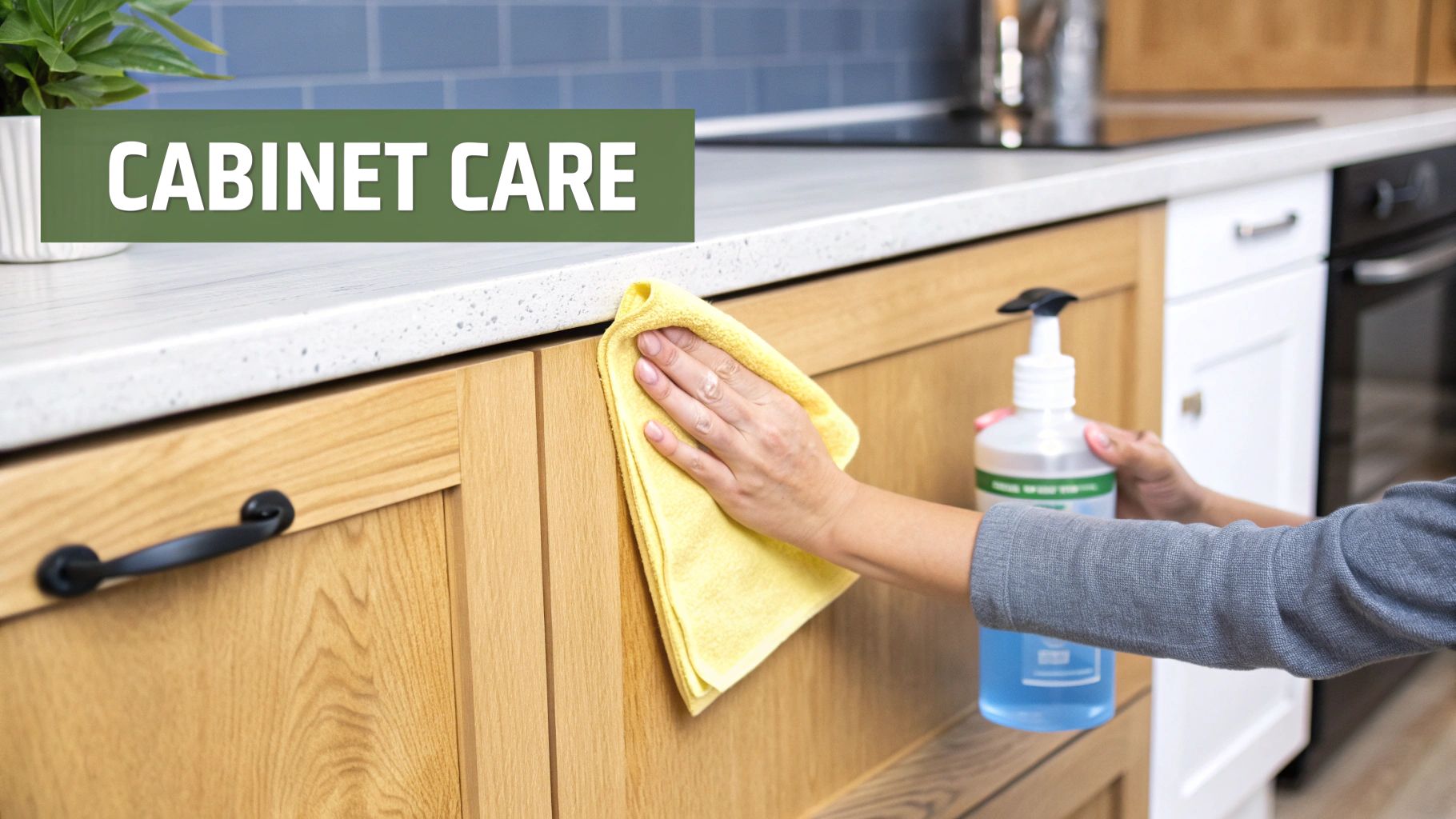
Your new wooden kitchen is a significant investment in your home’s character and value. To keep it looking fantastic for years, especially in Singapore's humidity, all you need is a simple, consistent care routine. This isn't about difficult chores; it's about building practical habits.
The single most important habit is cleaning up spills immediately. A splash of soy sauce or a drip of coffee should be wiped up right away with a soft, damp cloth. This is your best line of defence, preventing liquids from penetrating the wood’s finish and causing stains or moisture damage.
Establishing a Simple Cleaning Routine
Beyond daily spills, a gentle weekly clean will keep your cabinets looking their best. Avoid harsh, all-purpose cleaners or anything containing ammonia or bleach. These chemicals are too aggressive and can strip the protective finish, leaving the wood dry and vulnerable.
A mild, pH-neutral solution is all you need. A few drops of gentle dish soap in a bowl of warm water is perfect.
- Mix Your Solution: Add a small squirt of pH-neutral soap to warm water.
- Wipe Gently: Dip a microfibre cloth into the solution and wring it out until it’s just damp, not dripping. Gently wipe down all cabinet surfaces.
- Rinse and Dry: Go over the surfaces again with a second clean, damp cloth to remove any soap residue. The final, crucial step is to dry everything completely with a separate soft, dry cloth.
Actionable Tip: Always clean with a damp cloth, never a wet one. Excess water is wood's enemy. Drying the surface thoroughly prevents water spots and stops moisture from seeping into the joints and seams of your cabinetry.
Long-Term Protection Against Humidity and Wear
While daily and weekly care forms the foundation, you also need to consider the kitchen environment. Singapore's humidity is a constant factor, but it's easily managed.
Good kitchen ventilation is non-negotiable. Make it a rule to switch on your cooker hood every time you boil water or fry food. This simple action removes steam and greasy air before it can settle on your cabinets, preventing that sticky film that’s tough to clean and stopping long-term moisture issues.
The sealants and finishes applied during fabrication provide a strong barrier, but this can be weakened by physical damage.
- Handling Minor Scratches: For tiny surface scratches, a touch-up pen or a wax stick matched to your cabinet’s finish can work wonders. This quick fix restores the colour and reseals the wood’s protective layer.
- Avoiding Heat Damage: Never place hot pots or pans directly against your cabinet doors or frames. Always use a trivet, and be mindful of where you position heat-generating appliances like toasters or air fryers. Keeping them at a safe distance will prevent the finish from blistering or discolouring.
By making these simple practices part of your routine, you move from reacting to problems to proactively caring for your investment. This approach ensures your wooden cabinets don't just survive but thrive, remaining the beautiful, functional heart of your home for years.
Getting to Grips with Your Kitchen Cabinet Budget
Understanding the cost of new wooden kitchen cabinets can feel complex, but it doesn't have to be. The final price is a direct result of the specific choices you make for your space. Once you know what drives the cost, you can plan your project with confidence.
Essentially, the price is determined by four main factors: the materials you choose, the total length of cabinetry, the design complexity, and the quality of the hardware. Each plays a significant role in the final quote.
The Four Pillars of Your Kitchen Cabinet Cost
Think of your budget as a pie where you decide the size of each slice. By adjusting these different elements, you can create a beautiful, functional kitchen that aligns with your financial plan.
Here’s a practical breakdown of what shapes the cost:
Materials and Finish: This is often the biggest variable. A kitchen built with a durable, moisture-resistant plywood core and finished with high-pressure laminates will be more budget-friendly than one crafted from solid teak or imported oak. The finish itself also matters—a simple stain is very different from a multi-layered, professionally spray-painted finish.
Cabinetry Length (Per-Foot-Run): In Singapore, custom carpentry is almost always priced per-foot-run (PFR). This is the standard industry term for the total length of your upper and lower cabinets. A sprawling condo kitchen will naturally require a larger budget than a more compact HDB layout.
Design Complexity: A clean, straight run of minimalist flat-panel doors is simpler to fabricate than a design with intricate details, curved corners, or glass inlays. The more complex the construction, the more skilled labour and time are required, which is reflected in the cost.
Hardware and Mechanisms: This extends beyond just handles. It includes the hidden components that make your kitchen function smoothly: hinges, drawer runners, and internal organisers. Opting for premium systems from brands like Blum, with their soft-closing mechanisms, will add to the cost but will completely transform the daily user experience.
What to Expect: Realistic Budgets for Singapore Kitchens
Based on our experience outfitting HDB flats and condos across Singapore, we’ve put together some typical budget ranges to give you a realistic starting point.
A smart budget isn't about finding the lowest price. It’s about investing wisely in the features that will deliver the most long-term value and daily satisfaction. It’s about getting it right, not just getting it done cheaply.
Accessible Range (S$6,000 - S$9,000): For this budget, you can achieve high-quality custom cabinets built with moisture-resistant plywood cores and finished with stylish, durable laminates. This is a solid and immensely popular choice for HDB renovations.
Mid-Tier Range (S$9,000 - S$15,000): This range opens up more possibilities, such as beautiful real wood veneers over a plywood base or a flawless, professional painted finish. You can also start incorporating more advanced pull-out storage and higher-end hardware.
Premium Range (S$15,000+): At this level, you enter the realm of true custom luxury. This allows for solid hardwoods like oak and teak, exotic veneers, and the integration of top-of-the-line internal mechanisms and bespoke design features.
The preference for wooden kitchen cabinets is a major contributor to Singapore's wooden furniture market, which reached $56 million in 2024. You can explore more data on the local kitchen furniture market on IndexBox.io.
A Quick Look at the Project Timeline
From our first meeting to the final installation, a typical custom kitchen project takes approximately 4 to 8 weeks.
- Design & Consultation (1-2 weeks): We start by discussing your ideas, taking precise measurements, and finalising the design and material choices.
- Fabrication (2-4 weeks): Once approved, our carpenters begin crafting every component of your new kitchen in our local workshop.
- Installation (1-2 weeks): Our installation team comes to your home to fit the cabinets, countertops, and hardware, bringing the design to life.
This structured process ensures strict quality control at every stage and delivers a kitchen you'll love, right on schedule.
A Few Final Questions We Often Hear
To wrap up, let's address some of the most common questions homeowners ask when planning a new kitchen. These answers are based on our direct experience building them here in Singapore.
Are Wooden Cabinets Really A Good Idea In Singapore's Humidity?
Yes, absolutely—provided they are made correctly. This is the top concern for most homeowners, and it’s a valid one. The key is using the right materials and professional finishing. Modern sealants create a tough, moisture-resistant barrier. Furthermore, materials like teak have natural oils that resist dampness, while engineered options like moisture-resistant plywood are specifically designed for stability. Paired with good kitchen ventilation, wood is a fantastic and durable choice for our climate.
What's A Realistic Budget For Custom Wooden Cabinets In An HDB Kitchen?
For a standard 4-room HDB flat, the cost for custom cabinetry depends entirely on your material and complexity choices.
As a starting point, a budget from around S$6,000 will get you well-made cabinets using a quality laminate finish on a solid plywood core. If you opt for premium materials—such as solid wood doors, real wood veneers, or high-end hardware from brands like Blum—the figure can easily exceed S$15,000. The final price is a direct reflection of your selections.
The best way to approach your budget is as an investment, not just a cost. A well-designed, well-built kitchen adds significant value to your home's daily usability and future resale potential.
What's The Real Difference Between Solid Wood And Wood Veneer?
This is an excellent question because it gets to the heart of cabinet construction. While they may look similar, they have different properties.
- Solid Wood Cabinets: These are made from solid planks of timber like oak, maple, or teak. They offer authentic, unique grain patterns, exceptional durability, and the ability to be sanded and refinished years down the line.
- Wood Veneer Cabinets: These feature a stable core (we always use high-grade plywood) with a thin slice of real wood bonded to the surface. This provides the genuine appearance of exotic or expensive woods at a more accessible price point.
For our climate, wood veneer often offers superior stability. Its layered construction makes it far less likely to warp or split than a solid piece of wood, which makes it an incredibly reliable and practical choice for cabinet doors and large panels.
Ready to build a kitchen that perfectly blends timeless style with practical, everyday function? At KIVO, our team of designers and carpenters is here to walk you through the entire process, making sure your new wooden kitchen cabinets are exactly what you've been dreaming of. Explore our custom carpentry and interior design services to get started. Learn more at Kivo.com.sg.