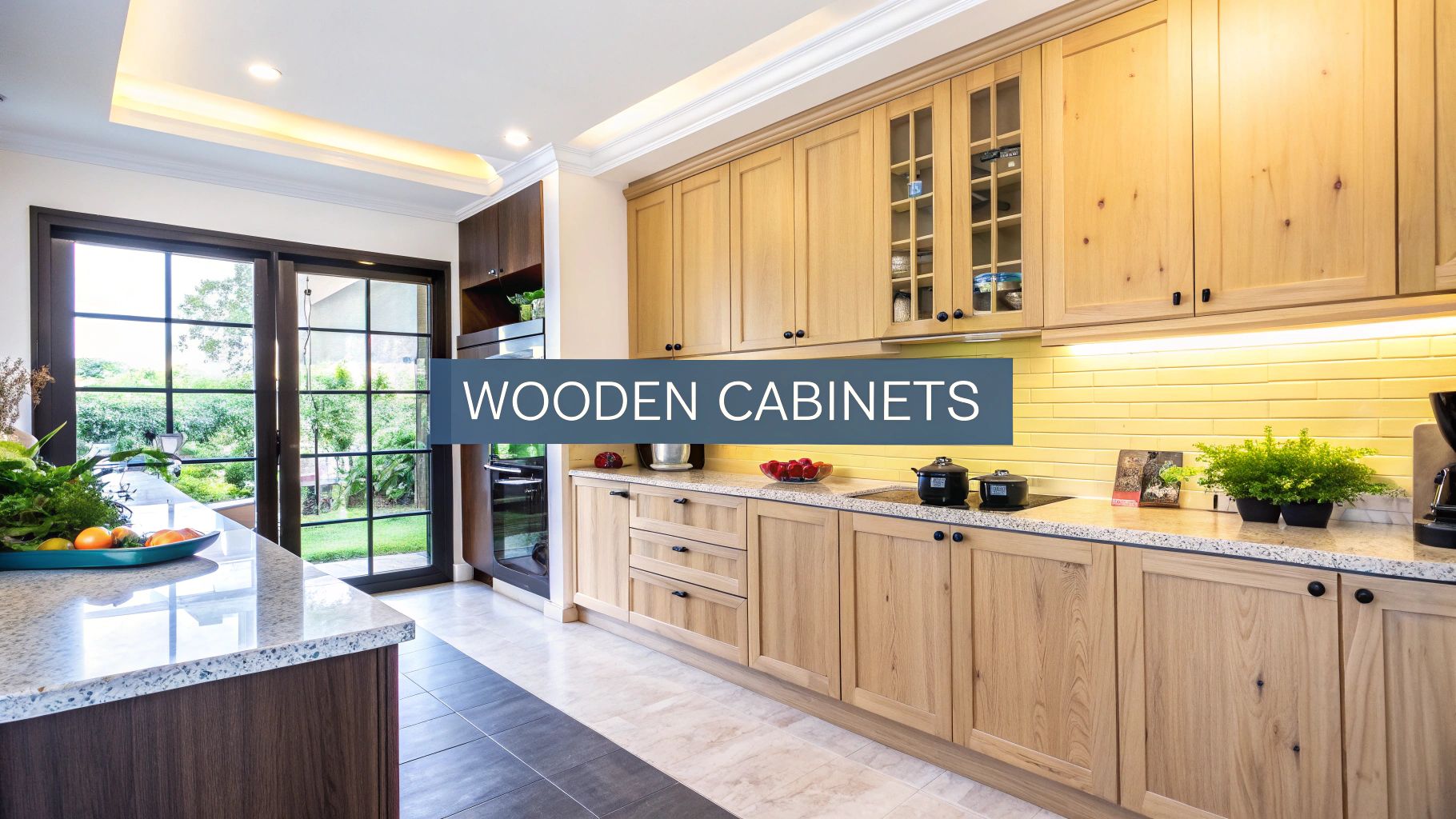
Wooden kitchen cabinets are the soul of any kitchen, setting the tone for a warm, inviting home. But choosing the right ones can feel overwhelming. They’re not just boxes for storage; they’re a long-term investment that defines your kitchen's entire look and daily workflow.
My goal here is to provide clear, actionable insights, drawing from our experience designing kitchens for Singaporean homes. We’ll cover the essential material choices, styles, and budgeting tips to help you make a confident decision.
Your Guide to Choosing Wooden Kitchen cabinets in Singapore
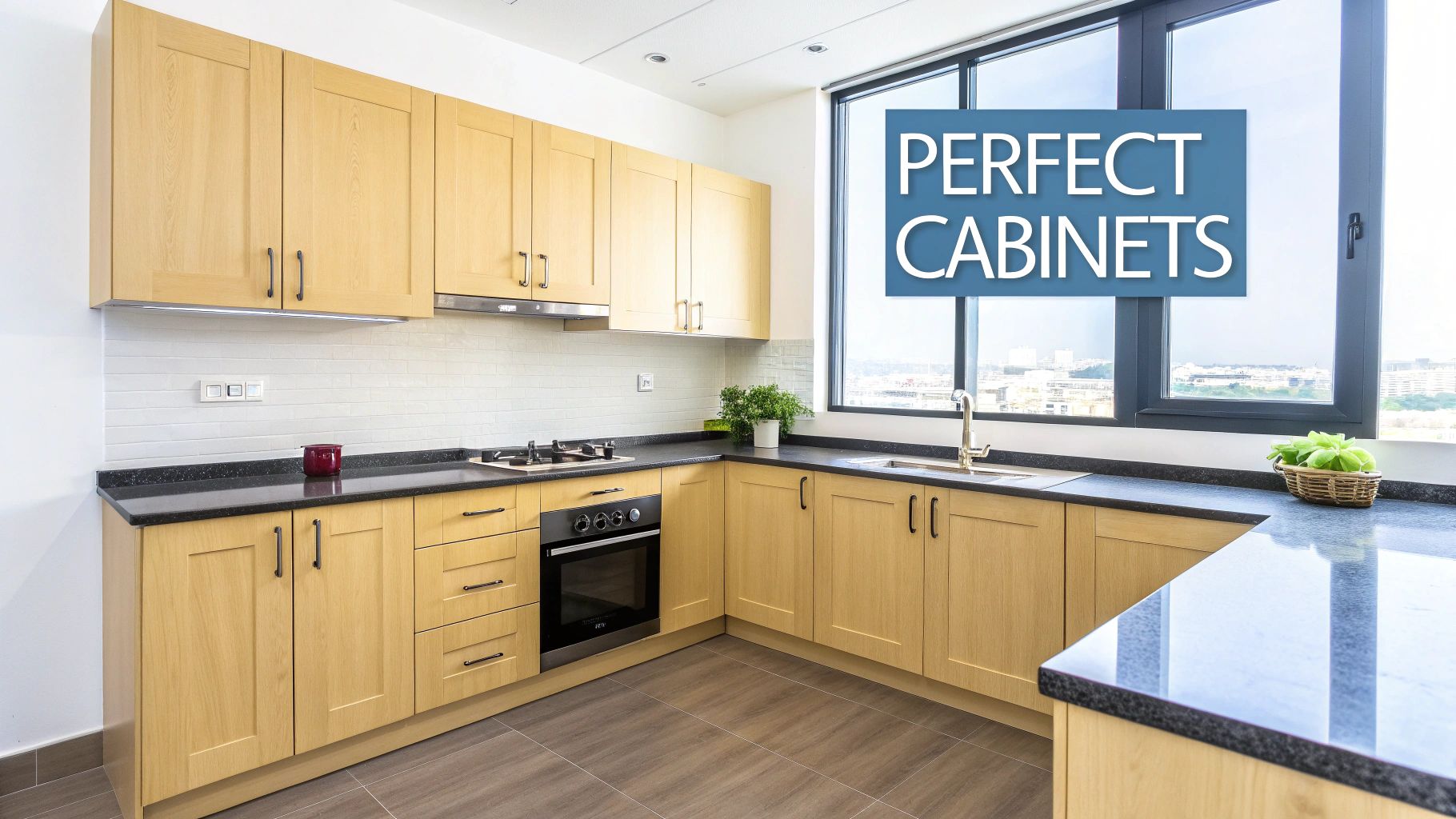
Wooden kitchen cabinets do more than just hold your plates. They bring character, warmth, and durability to the busiest room in your house. Based on countless projects, the journey to a perfect kitchen always starts with a single critical choice: the core material.
Think of this guide as your roadmap. We'll demystify the process, starting with the most important decision you'll make: solid wood versus engineered wood. They both have their place in Singapore, and understanding the practical differences is key to a successful project you’ll love for years.
The Kitchen’s Central Role in Singapore Homes
The kitchen is the true heart of the modern Singaporean home. It’s where families gather and daily routines unfold, which is why it’s so often the first space clients want to renovate. This central role has fuelled a strong demand for high-quality, long-lasting cabinetry.
Kitchen upgrades consistently account for a significant portion of home renovation projects, with homeowners looking to improve both function and aesthetics. You can find out more about Singapore's cabinet market trends to understand the drivers.
Building Your Foundation
To create a kitchen that’s not only beautiful but also suited to your lifestyle, you need to feel confident in your decisions. Here’s a look at what this guide will walk you through:
- Material Selection: A practical breakdown of solid wood versus engineered woods, focusing on which stands up best to Singapore's climate.
- Wood Species: A deep dive into popular choices like oak and teak, and how their unique grains and colours can shape your kitchen’s personality.
- Cabinet Styles & Finishes: From timeless Shaker doors to clean flat panels, we’ll explore different profiles and the finishes that protect them.
- Budgeting & Cost Factors: A transparent look at what drives the price of cabinets, so you can plan your budget without surprises.
Let's start building your dream kitchen, one smart decision at a time.
Decoding Wood Types for the Singapore Climate
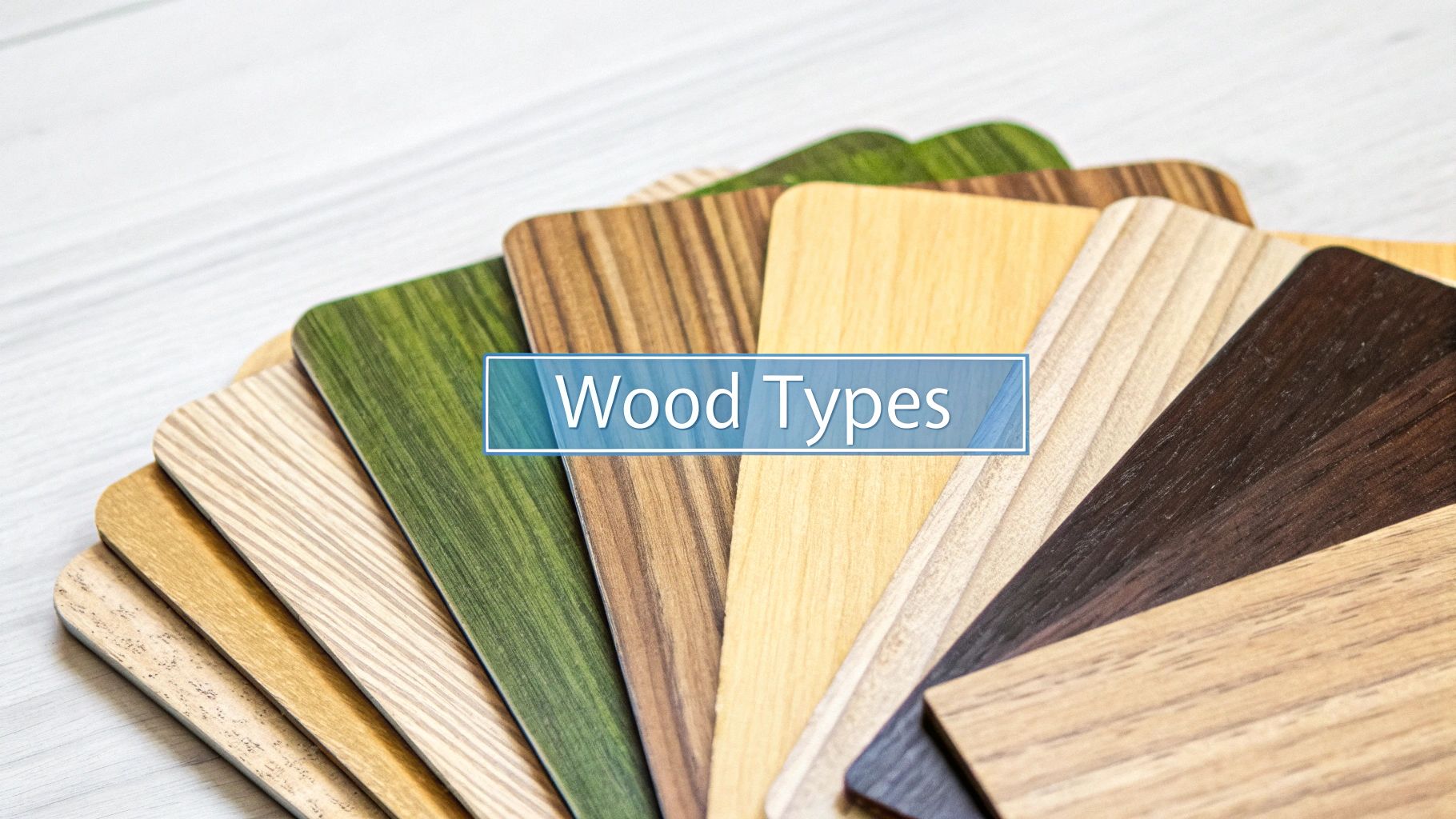
Choosing the right wood for your kitchen cabinets is a practical decision crucial for longevity in Singapore’s humid climate. The wood you pick determines how your cabinets will resist moisture, wear, and tear over the next decade. Get it right, and you’ll have a kitchen that not only looks incredible but also remains structurally sound.
Some timbers are naturally better at handling humidity, while others bring unique grains and colours. Let’s dive into the best options for our local environment.
Hardwoods: The Champions of Durability
For clients who prioritise longevity, solid hardwoods are the top choice. Their dense structure makes them tough against dents, but more importantly, it helps them resist warping from moisture.
Two of our go-to choices for Singaporean homes are Teak and Oak. They aren’t just beautiful—they’re genuine workhorses.
- Teak: Famous for its high natural oil content, Teak is exceptionally resistant to moisture and rot. It has a warm, golden-brown hue that deepens over time, giving any kitchen a rich, luxurious feel. Its straight grain also lends a clean, sophisticated look.
- Oak: A classic for good reason. Oak is incredibly strong. We often use White Oak for its subtle, neutral tones and impressive water resistance. The prominent grain adds wonderful texture, perfect for anything from a rustic farmhouse kitchen to a bright, Scandinavian-inspired space.
Practical Example: For a recent project in a Siglap condominium, we used light White Oak to create an airy, open feeling. The homeowner wanted a minimalist aesthetic, and the Oak’s subtle grain and pale colour were the perfect base, making the compact kitchen feel significantly larger.
Engineered Wood: The Smart and Stable Alternative
While solid hardwoods are a premium choice, modern engineered options offer fantastic stability and are often more budget-friendly. These materials are built in layers, which makes them far less likely to expand and contract with humidity changes—a massive advantage in Singapore.
Engineered wood isn't a compromise; it's a strategic choice for our climate. Its layered core offers superior dimensional stability, making it an ideal foundation for beautiful and long-lasting wooden kitchen cabinets.
The two main players we use are high-quality plywood and MDF (Medium-Density Fibreboard).
- Plywood: Made from thin layers of wood veneer glued together, plywood is exceptionally strong and holds screws tightly. We always specify marine-grade plywood for cabinet boxes, especially in wet areas like under the sink, because of its excellent moisture resistance.
- MDF: Made from compressed wood fibres and resin, MDF has a perfectly smooth, uniform surface with no grain. This makes it the ideal base for a flawless paint finish or for applying real wood veneers, giving you the look of solid wood at a more accessible price.
Making the Right Selection for Your Home
Your final decision will come down to your budget, desired aesthetic, and daily kitchen use. To make things clearer, here’s a quick comparison of the materials we work with most often.
Popular Wood Species for Singapore Kitchens
This table breaks down the most common choices, highlighting what makes each one unique.
| Wood Species | Key Characteristics | Best For | Price Range |
|---|---|---|---|
| Teak | High oil content, moisture-resistant, rich golden-brown colour, straight grain. | Luxury kitchens, homeowners seeking ultimate durability and a timeless look. | High |
| Oak | Very durable, prominent grain, available in light to medium tones. | Versatile designs from modern Scandinavian to classic farmhouse. | Mid to High |
| Plywood | Excellent strength, stable, good moisture resistance (especially marine-grade). | Cabinet carcasses and as a base for veneers. | Low to Mid |
| MDF | Smooth surface, very stable, ideal for painted finishes or as a veneer core. | Painted cabinets, contemporary flat-panel styles, budget-conscious projects. | Low |
The best wooden kitchen cabinets are the ones that fit your lifestyle. Whether you choose the enduring strength of solid Teak or the versatile stability of an engineered core with an Oak veneer, understanding these materials is the first step toward a kitchen you’ll love.
Finding a Cabinet Style to Match Your Home
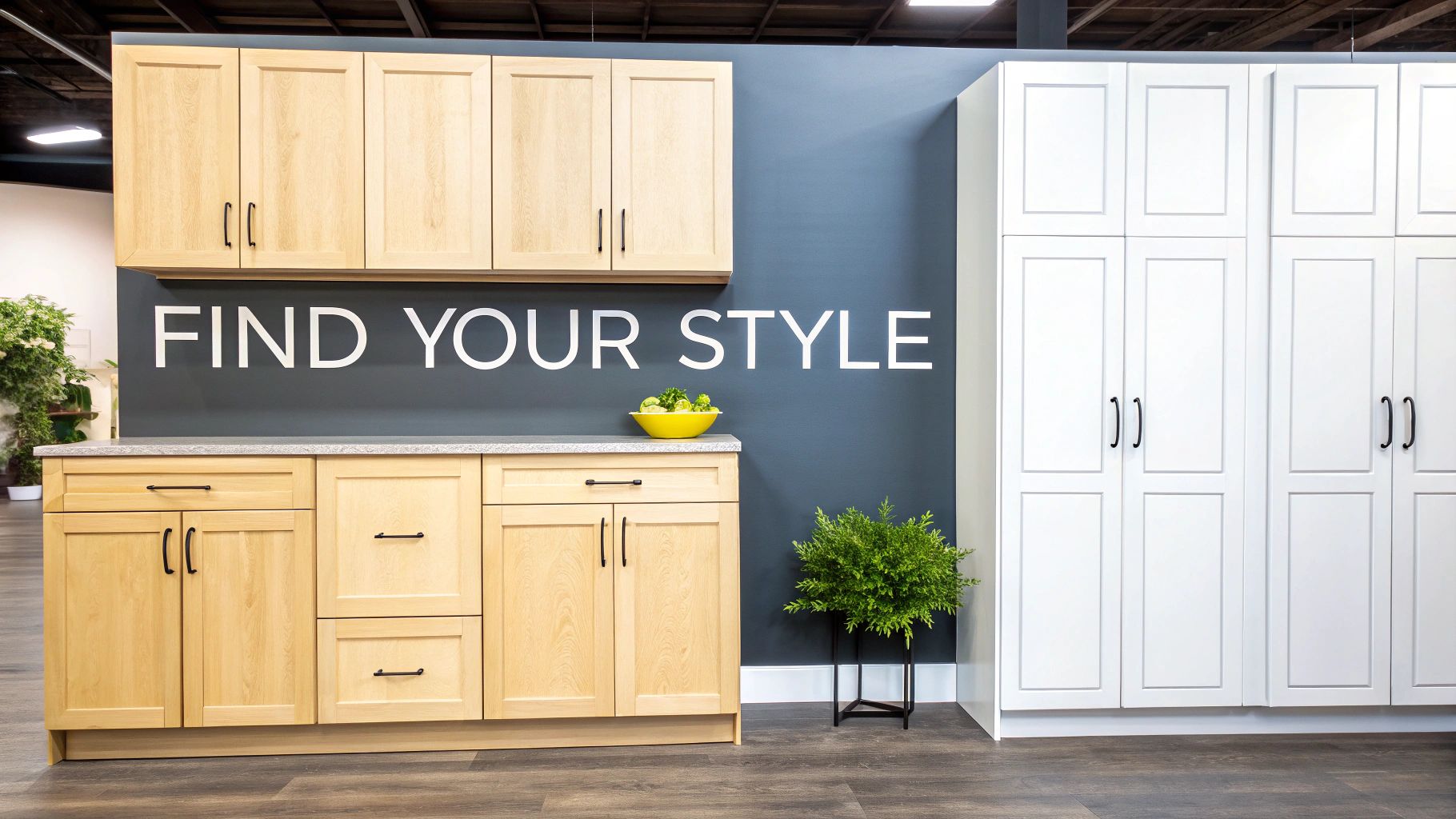
You've settled on the perfect wood. Now for the fun part: choosing a style that brings your home’s personality to life. The cabinet door profile is what truly sets the aesthetic tone for the entire kitchen.
From our experience, a few key styles have become consistent favourites among Singaporean homeowners. These designs are versatile and work beautifully across different interior themes, from an industrial loft in Tiong Bahru to a minimalist BTO flat in Punggol.
Popular Cabinet Door Styles
Picking a door style creates the foundational look. Each design has its own character, and the secret is matching it to your home's architecture and personal taste.
Here are the designs we get asked for most often:
- Shaker Style: The champion of versatility. Defined by a simple frame and a flat recessed centre panel, Shaker doors are clean, functional, and timeless. They bridge the gap between traditional and modern, making them a safe yet stylish bet for almost any kitchen. We use them constantly in classic or transitional designs where warmth and simplicity are key.
- Flat-Panel (or Slab): For a modern, minimalist look, nothing beats a flat-panel door. It’s a single, solid slab with no frills, creating a sleek, unbroken surface. This style is a huge hit in contemporary Singaporean condos where its clean lines help make a room feel larger and less cluttered.
- Handleless (Integrated Handles): Taking the flat-panel idea one step further, handleless designs feature a recessed channel or a "J-pull" grip integrated into the door. This creates an ultra-streamlined aesthetic that is both visually striking and practical.
Think of your cabinet style as the architectural voice of your kitchen. A Shaker door speaks a language of timeless comfort, while a flat-panel door communicates modern simplicity. The style you choose should harmonise with the story you want your home to tell.
Choosing the Right Finish and Protection
The finish defines the final look and acts as the first line of defence against moisture, grease, and daily wear. You have two main paths: staining or painting.
A wood stain enhances the natural beauty of the timber. It soaks into the wood fibres, adding colour while letting the grain and texture shine through. This is the perfect choice if you’ve selected a wood like Oak or Teak for its stunning patterns.
Paint gives you an opaque, solid colour finish. This opens up a world of creativity, from classic whites and greys to bold, dramatic hues. Paint is a great option for MDF or woods with a less interesting grain because it creates a flawless, uniform surface.
The Crucial Role of a Protective Top Coat
Whether you stain or paint, a protective top coat is non-negotiable in Singapore’s humid climate. This clear sealant shields the wood from humidity, spills, and scratches.
Two common and effective options we rely on are polyurethane and lacquer.
| Finish Type | Durability | Application & Look | Best For |
|---|---|---|---|
| Polyurethane | Very high. Creates a hard, plastic-like film that is highly resistant to abrasion and moisture. | Can be brushed or sprayed. Available in various sheens from matte to high-gloss. | High-traffic kitchens needing maximum protection against daily wear and tear. |
| Lacquer | High. Dries quickly to a hard, durable finish that is thinner than polyurethane. | Typically sprayed on for a very smooth finish. Can be prone to yellowing over time with sun exposure. | Achieving a sleek, professional, and often high-gloss finish on painted or stained cabinets. |
Getting the right combination of style, finish, and protective coat is what ensures your wooden kitchen cabinets are not just a beautiful statement piece, but a durable, long-lasting investment.
How to Budget for Your Wooden Cabinets
Working out a clear budget is the most important first step in any kitchen renovation. For most of our clients, the wooden kitchen cabinets are the biggest single cost, so understanding what drives the final price is essential.
Your total investment comes down to four key factors: the wood you choose, the complexity of construction, the door style, and the hardware you select.
Breaking Down the Core Cost Factors
The journey to pricing your dream kitchen cabinets starts with the wood itself. This is often the biggest cost driver.
- Material and Wood Species: Solid hardwood like Teak will cost more than engineered materials. The rule ofthumb is simple: the rarer and more durable the wood, the higher the price.
- Construction Complexity: A standard, straight-run cabinet box is more affordable to build than a custom-angled corner unit or a pantry with pull-out drawers. More complex designs require more time and material.
- Door Style and Finish: A sleek, flat-panel door is generally less expensive than a detailed Shaker-style door. Similarly, a rich, multi-layered painted finish requires more labour than a simple clear protective coat.
A smart budget isn't about finding the cheapest option. It's about putting your money where it matters most. We often advise clients to prioritise a durable material for the cabinet boxes; you can then be more flexible with finishes or hardware to stay on budget.
Understanding Price Estimates in Singapore
To give you a practical starting point, cabinetry in Singapore is usually priced per-foot-run (PFR). This is a linear measurement that helps contractors provide a baseline estimate.
Here’s a rough guide to what you can expect, based on what we see in the local market:
| Cabinet Tier | Estimated PFR (SGD) | Common Materials Used |
|---|---|---|
| Entry-Level | $120 - $180 | MDF or particleboard core with a laminate finish. |
| Mid-Range | $180 - $300 | High-quality plywood core with a real wood veneer or paint. |
| Premium / Custom | $300+ | Solid hardwoods (like Oak or Teak) or fully custom builds. |
Important Note: These numbers usually cover the cabinet boxes and doors. Installation, countertops, hardware, and GST are often quoted separately. Always ask for a clear breakdown of what’s included in any quote.
The Impact of Global Supply Chains
The cost of wooden kitchen cabinets in Singapore is tied to global material sourcing. Since we import most raw timber, swings in international lumber prices have a direct impact here. For instance, supply chain issues between 2020 and 2024 caused noticeable price changes for materials from key regions. If you're interested, you can explore more on kitchen cabinet market dynamics.
Smart Ways to Achieve a Premium Look
You don’t need a top-tier budget for a high-end look. A hybrid approach is an excellent strategy we often recommend.
Practical Example: Use a stable, high-quality plywood for the cabinet boxes—it holds up brilliantly in Singapore's humidity—and then finish with a real wood veneer on the doors. This gives you the authentic grain and beauty of solid wood for a fraction of the cost, achieving the perfect sweet spot between longevity and luxury.
Smart Layouts and Storage Solutions
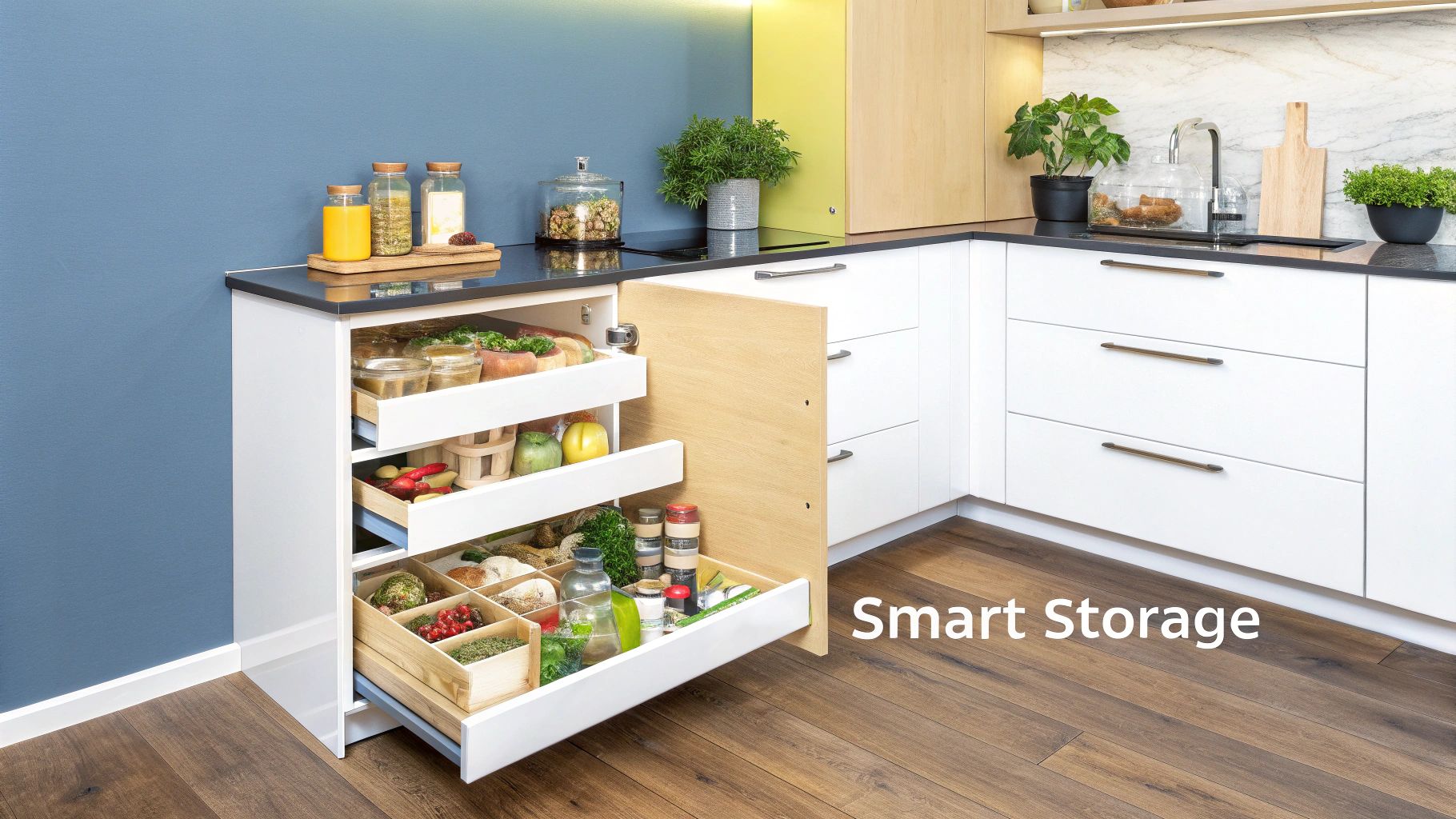
Beautiful wooden kitchen cabinets are just the beginning. The real magic of a great kitchen is its functionality—how the space flows and supports you every day. A smart layout and clever storage turn a pretty kitchen into one that’s a joy to use.
Especially in Singapore, where kitchens can be compact, making every inch count is essential. The goal is to create a workspace that feels intuitive and uncluttered. This means thinking beyond standard shelves and drawers.
Maximising Space with Intelligent Storage
Standard cabinets often create awkward, hard-to-reach dead zones. Modern hardware solutions turn those forgotten corners into prime storage real estate. These are features we build into our designs because they make a tangible difference.
- Pull-Out Pantries: Tall, slim pull-out units are lifesavers, especially in tight spots. They slide out completely, so you can see your entire pantry's contents at a glance. No more finding expired cans at the back!
- Magic Corners and LeMans Units: These are our secret weapons for tricky corner cabinets. Instead of getting on your hands and knees to dig out a pot, these clever systems swing the shelves right out to you.
- Custom Drawer Organisers: We design deep, wide drawers with custom dividers to keep pots and pans organised. For cutlery, multi-tiered inserts can double the usable space in a single drawer.
A well-designed kitchen layout is like a silent partner in your daily routine. It anticipates your next move, placing everything you need within arm’s reach and turning the simple act of cooking into a seamless, enjoyable experience.
Popular Design Strategies for Modern Kitchens
Beyond hidden hardware, the overall look of your wooden kitchen cabinets sets the visual tone. Blending different elements is key to creating a space with personality.
Practical Example: For a client in a new BTO flat, we designed sleek, handleless oak cabinets for a clean, modern feel. To prevent the space from feeling too clinical, we added a small bank of open shelving in a contrasting walnut. It created a warm, personal spot for them to display favourite ceramics and cookbooks.
This mixing and matching is a huge trend. We often pair the warmth of wood with the cool surface of a quartz countertop or the industrial edge of a stainless steel backsplash. This creates a balanced, layered look. Good under-cabinet LED lighting is also non-negotiable—it illuminates your workspace and highlights the textures of your chosen materials.
The kitchen and dining furniture market in Singapore, where wooden cabinets play a starring role, is projected to hit a revenue of about US$94.13 million in 2025. This growth is increasingly shaped by smart technology, like touch-control lighting and sensor-activated drawers. You can explore more about Singapore's kitchen furniture market trends.
Keeping Your Wooden Cabinets Looking Brand New
Think of your wooden kitchen cabinets as a long-term investment. A little care goes a long way, especially in Singapore's humid climate. Proactive maintenance is simple and ensures your cabinets remain the stunning centrepiece of your kitchen.
A gentle, consistent routine is always better than a rare, aggressive deep clean. The goal is to protect the wood's finish, which is its defence against moisture, grease, and stains.
Your Simple Cleaning Routine
For day-to-day upkeep, a quick wipe with a dry, soft cloth is usually enough to handle dust. For a slightly deeper clean once or twice a month, follow this method:
- Mix a Mild Solution: A few drops of gentle dish soap in a bowl of warm water is all you need.
- Dampen, Don't Soak: Dip a soft microfibre cloth into the soapy water, then wring it out until it’s just damp.
- Wipe Gently: Clean the cabinet surfaces, focusing on high-traffic zones like around the cooker and handles.
- Rinse and Dry Immediately: This is the most important step. Use a second clean cloth, dampened with plain water, to wipe off any soap residue. Then, immediately follow up with a dry, soft cloth to remove all moisture.
One of the most common mistakes is letting water sit on wooden cabinets. Always dry surfaces completely after cleaning. This one habit is the single best way to prevent long-term moisture damage like warping or a peeling finish.
What to Avoid at All Costs
The finish on your wooden kitchen cabinets is tough, but not invincible. Using the wrong products can strip this protective layer.
Never use these on your cabinets:
- Harsh Chemicals: Bleach, ammonia-based cleaners, and anything abrasive will damage the finish.
- Silicone-Based Waxes: These create a sticky build-up that attracts dust and is difficult to remove.
- Excessive Water: Never spray water directly onto cabinet doors or use a soaking wet cloth.
Handling Common Issues
Even with the best care, minor issues can pop up. Here’s how to deal with them:
- Minor Scratches: A touch-up pen or marker designed to match your cabinet's stain colour can make small scuffs disappear.
- Grease Stains: For a stubborn patch of grease, a 50/50 solution of white vinegar and water can cut through it. Apply with a damp cloth, wipe clean with a water-dampened cloth, and dry immediately.
- Loose Hardware: Over time, hinge screws can loosen. Simply grab a screwdriver and tighten them. If a screw hole is stripped, a tiny bit of wood filler can give the screw something new to bite into.
Common Questions About Wooden Kitchen Cabinets
Jumping into a kitchen renovation brings up many questions. Here are answers to some of the most common queries we get from clients in Singapore.
Are Solid Wood Cabinets Really Better?
Solid wood has an authentic beauty and durability that makes it an excellent long-term investment. But whether it's "better" depends on your priorities. In Singapore's climate, high-quality engineered wood, like marine-grade plywood, often has an edge with its superior stability against humidity, meaning it’s less likely to warp.
Practical Advice: We often recommend a hybrid approach. Use a stable plywood core for the cabinet boxes (the parts you don't see) and beautiful solid wood or a high-quality wood veneer for the visible doors and drawer fronts. This gives you durability where it counts and the premium look you love.
At the end of the day, the quality of the construction matters just as much as the material. A well-built engineered wood cabinet will always outperform a poorly constructed solid wood one.
How Do I Prevent My Wooden Cabinets from Warping in Singapore?
Managing moisture is key. The most important defence is a high-quality protective finish, like polyurethane or lacquer, that properly seals the wood.
Beyond that, good kitchen ventilation is a must. Always use your extractor hood when cooking to pull steam out of the air. It’s also a good habit to wipe up spills immediately, particularly around the sink. Never let water sit on wood surfaces.
Can I Paint My Existing Wooden Cabinets?
Absolutely. Painting is a fantastic way to give older wooden cabinets a new look without the cost of a full replacement. But be aware: success is all in the prep work. This means thoroughly cleaning and degreasing the surfaces, light sanding so the new paint can grip, and using a high-quality primer and paint made for cabinetry.
If your cabinets have a strong grain, like oak, the texture might still show through after painting. Achieving a perfectly smooth finish is a detailed job, but when done right, it can completely transform your kitchen.
Ready to create a kitchen that perfectly blends timeless style with modern functionality? At KIVO, our team of designers and artisans are here to guide you through every step. Explore our custom carpentry and interior design services to begin your home’s transformation. Start your design journey with Kivo today.